On this page
Table of Contents
If you want the bigger picture of what the electrical trade teaches beyond technical skills, start here: 🔹 “What the Electrical Trade Teaches You: Discipline, Problem-Solving, and Real-World Growth”
After that, this story will hit deeper.
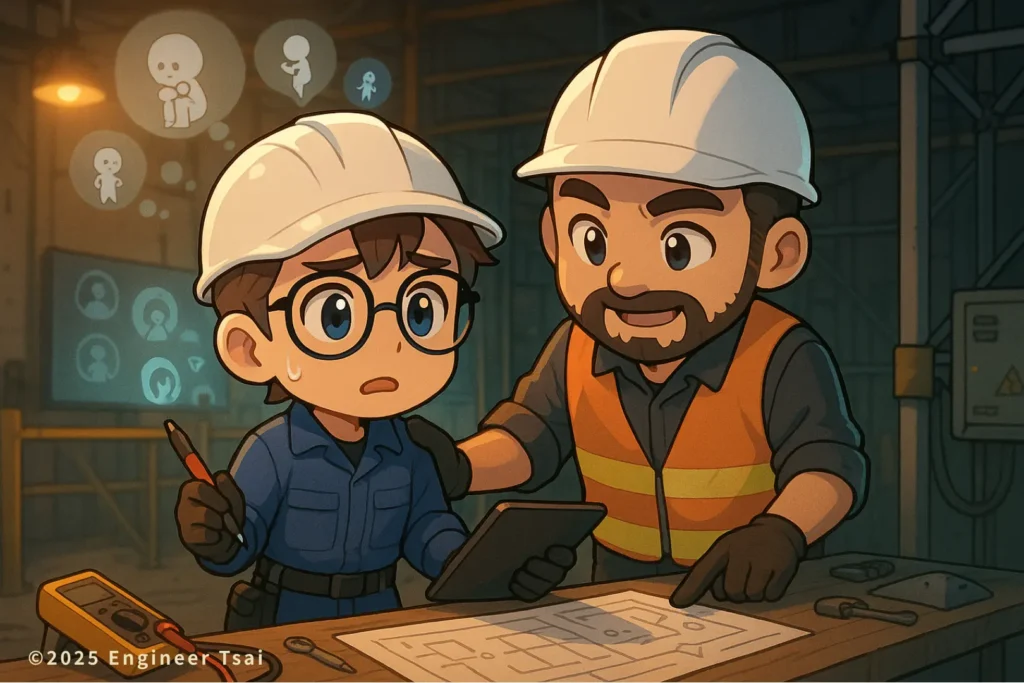
“Have you ever been scared of messing something up?”
If you’re a new engineer afraid of making mistakes on site, it’s almost impossible not to feel that way at some point.
For many people starting out, especially a new engineer afraid of making mistakes around senior coworkers, the biggest stress isn’t the long hours or the messy jobsite. It’s this question:
“If I do something wrong, will I get yelled at? Will people secretly label me as the weak link?”
Being a new engineer afraid of making mistakes is not just a technical issue. It’s a mix of mindset, jobsite culture, and how safe you feel to ask questions.
But if you look around, the engineers who eventually become calm and reliable don’t magically stop making mistakes. They simply become less afraid to ask, less afraid to say “I don’t know,” and more willing to step up and solve problems instead of freezing.
This article is for you if you’re still in that anxious phase on site — a route map from “afraid of messing up” to “proactive problem-solver” for any new engineer afraid of making mistakes. You’ll see three common anxiety modes, real jobsite situations, and a few small habits you can start today to shift how you show up at work.
Which Type Are You? 3 Jobsite Anxiety Modes for New Engineers Afraid of Making Mistakes
Let’s hold up a mirror for a second and see which type sounds most like you as a new engineer.
- “I don’t want to mess this up” type
You want to ask about everything, but you’re scared of doing anything wrong on your own. You wait for step-by-step instructions from a senior engineer or foreman. When you see dense drawings or hear the crew using jargon, your brain goes straight to: “If I mess this up, we’ll have to redo everything… what if they never trust me again?”
You end every day exhausted, but still feel like you’re not good enough. - “Act like everything’s fine” type
On the outside, you look calm. On the inside, it’s chaos. When a problem pops up in the field, you quietly push it down your to-do list and think, “Maybe someone else will notice and fix it first. I just need to survive today.”
The issue doesn’t go away — it grows. By the time it finally surfaces, it’s a bigger problem, and your stress is now double. - “Let me figure this out” type (the evolving version)
When something doesn’t look right, you check the drawings and specs, search manuals or internal docs, and ask a senior for context. You might test a small step in a safe way. Even if you fail, you take notes on why.
Over time, people start asking you what you think. You slowly graduate from “the new kid” to “someone we can trust on site.”
Classic Anxiety Situations for a New Engineer Afraid of Making Mistakes
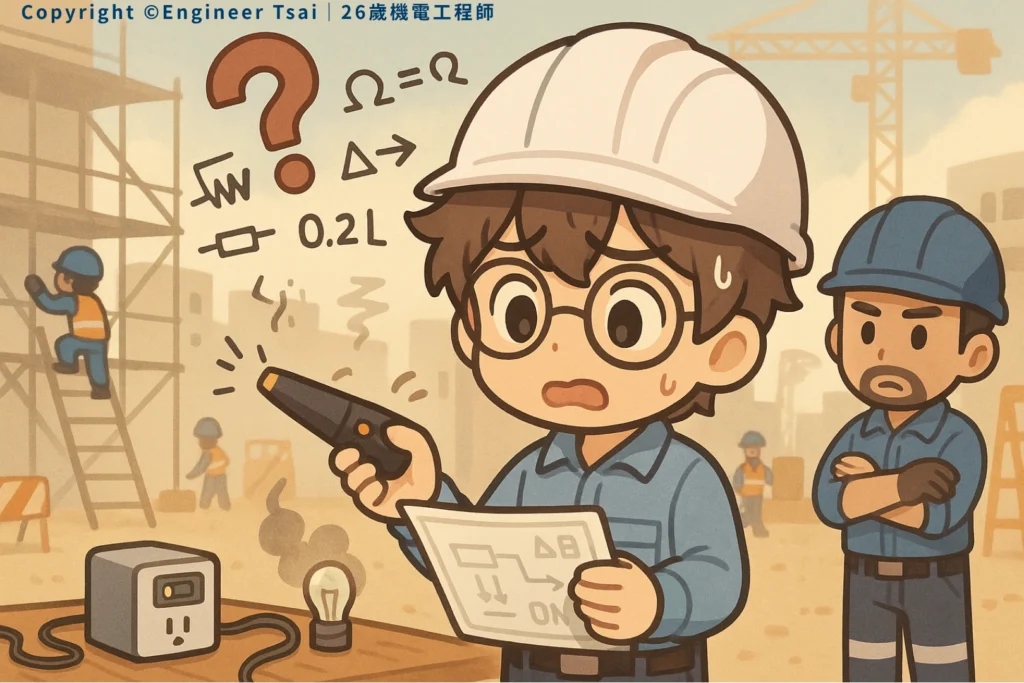
- You stare at a drawing and think, “If I ask, will they say: ‘You don’t even know this?’ or ‘Did you skip the basics?’”
- A senior gives you an assignment, but you’re too nervous to clarify the details. You go ahead anyway, feeling stressed the entire time.
- You realize you made a mistake, and your brain starts a full drama series: “Are they talking about me behind my back? Will my lead stop trusting me from now on?”
- When something serious happens, your instinct is to make yourself small and invisible, hoping you won’t get called out in the next meeting.
These reactions are extremely common. Almost every engineer has gone through this. If you see yourself in these stories, you’re exactly the kind of new engineer afraid of making mistakes this article is written for. The difference is not whether you feel this way. The difference is whether you get stuck here for years — or use this phase as a fast-growth period to become someone who can actually carry responsibility.
What the Jobsite Really Needs (Hint: Not “Perfect” Engineers)
On real projects, there is no such thing as 100% “correct.” Even senior engineers and superintendents get surprised by site conditions, client changes, or last-minute redesigns.
The people who stand out are rarely the ones who never mess up. They’re the ones who speak up when something doesn’t look right, own their mistakes before they snowball, and help clean up and prevent the same issue next time. This is closely related to what many companies call “psychological safety” — the idea that people can raise concerns or admit gaps without being punished. If you’re curious about the research behind this, this Harvard Business Review piece is a solid starting point (read the article here).
The jobsite doesn’t need a new engineer who never makes mistakes. It needs a new engineer afraid of making mistakes who doesn’t hide from them. The more you freeze up out of fear, the easier it is to stay stuck in the “junior forever” role. The more you lean into solving problems, the faster people notice you — and the faster you grow.
Being a new engineer afraid of making mistakes won’t ruin your career. Staying frozen and passive might.
From Afraid to Proactive: A 3-Step Upgrade for New Engineers
- When you mess up, face it first — don’t run
Mistakes aren’t the real danger. Hiding them is. When something goes wrong and you honestly own it and help fix it, most seniors and leads will remember you as honest, responsible, and someone they can trust with more work later.
Many engineers can point to one specific moment when they didn’t run from a mistake — and that’s when things started to change for them. - Ask better questions instead of “So what do I do?”
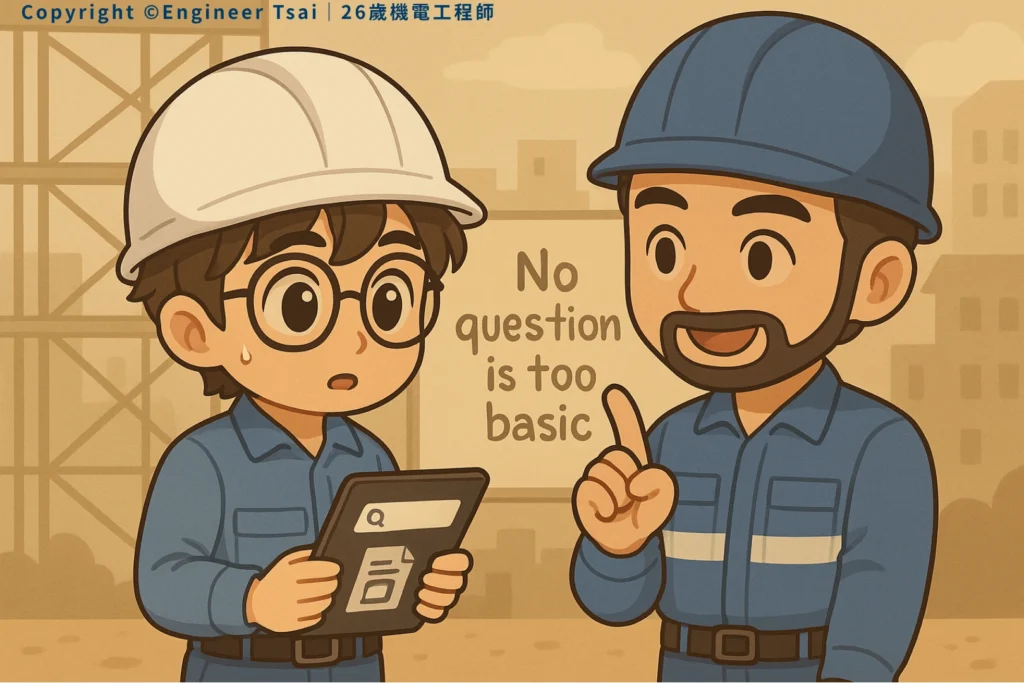
There’s a big difference between “Uh… what should I do here?” and:
“I noticed a conflict between A and B. I checked the drawings and the spec, but I’m still not sure which one takes priority. Could you point me in the right direction?”
This shows you already tried to understand, you respect their time, and you’re here to learn how to think — not just collect answers. - Try to solve first, then ask for a check
Make this your default routine:
1) Look at the drawings, spec, and any installation standards.
2) Search internal docs or trusted references.
3) Write down your best guess and why you think it makes sense.
4) Then bring it to a senior and say: “Here’s what I think we should do and why. Could you double-check if I’m missing any risk?”
Over time, you’ll notice you find information faster, your judgment gets more accurate, and your fear shifts from “I’m going to screw everything up” to “I’m nervous, but I know I can figure this out or ask for help early.”
Jobsite One-Liners for When You’re Anxious
“There’s no perfect jobsite — only engineers who are willing to keep learning.”
“The sooner you admit you don’t know, the faster you close the gap.”
Do You Have Jobsite Anxiety Too? Share Your Story
Think about your last few weeks: did fear of messing up make you delay a decision or avoid asking a question? Or was there a moment where you finally asked for help or fixed something — and realized, “People weren’t as harsh as I imagined, and I’m not as hopeless as I thought”?
If you’re willing, share a short story in the comments — your anxious moment or your turning point. Your experience might be exactly the encouragement another new engineer afraid of making mistakes needs to see today.
Call to Action|Follow Engineer Tsai and Grow with Other Engineers
If you like engineering content that isn’t just formulas and codes — but also talks about mindset, jobsite culture, and real stories — you’re in the right place.
This space isn’t here to turn you into a “perfect engineer.” It’s here to walk with you from a new engineer afraid of making mistakes, to someone who asks better questions, solves real problems, and slowly grows into a person who can carry more responsibility.
In the next article, we’ll talk about a line you hear all the time on projects: “The real learning starts when you make mistakes.” We’ll break down what that actually means — and how to use your mistakes as a structured learning engine instead of just painful memories.
📌 Further reading
🔹“Series vs Parallel Circuits: What’s the Difference?”
Complex systems often come from simple patterns. Learning to break down circuits is a lot like breaking down a messy problem at work — it lowers your anxiety because you can finally see the structure.
🔹“Beginner’s Guide: How to Use a Multimeter to Measure Voltage and Current”
Getting comfortable with basic tools like a multimeter is often the first step from “I’m scared of touching anything” to “I can at least test and see what’s going on.” When you can measure and judge for yourself, the fear of making mistakes drops a lot.
🔹“Field Notes for Engineers: How to Capture What You Learn So You Don’t Forget It” (in progress)
Good field notes aren’t just a diary. They’re your personal “experience accelerator.” Engineers who document well usually grow much faster than those who rely only on memory.
🔹For a broader industry view, this article on mentoring in engineering offers a helpful outside perspective: The Importance of Mentoring in Engineering. It’s a good reminder that even senior engineers didn’t start confident — they had guides along the way.
New Engineer Afraid of Making Mistakes – FAQ
Q1: I’m a new engineer and constantly afraid of messing up. Is that normal?
Yes. Most engineers feel this way when they first step onto a jobsite or into an MEP project. If you’re a new engineer afraid of making mistakes, that feeling is normal — it means you care about safety and quality. The goal is not to erase that feeling completely. The goal is to keep moving while you’re scared — to ask questions, double-check, and fix issues instead of hiding them. The moment you start facing problems instead of running from them, you’re already moving toward the next level.
Q2: If I ask too many questions on site, will people think I’m annoying or clueless?
It depends less on how many questions you ask and more on how you ask them. If you walk up with zero prep and say, “So… what do I do?”, people may feel you didn’t even try. A better approach is: “I saw X on the drawing but Y in the field. I checked the spec and looked up Z, but I’m still not sure which way is correct. Can you help me see what I’m missing?” This shows effort and respect. Most senior engineers are happy to help someone who clearly wants to learn.
Q3: I already made a mistake. How do I stop it from getting worse?
Here’s a simple three-step play: 1) Be honest quickly. Tell the relevant people what happened instead of hoping it stays hidden. 2) State the facts clearly: what you did, when you noticed it, and what you think the current risk is. 3) Bring options, not just apologies. For example: “I mixed up A and B here and that could cause XX risk. I can see two possible ways to fix it — Option 1 and Option 2. Which one would you recommend?” This keeps the damage small and shows you’re responsible and solutions-focused.
Q4: How can I slowly become more of a “solve-it” engineer instead of someone who just freezes?
Try building these three small habits into your week: 1) Write down one thing you learned from the field every day. It can be tiny — a detail about wiring, a coordination issue, a safety note. 2) When you hit a problem, research for 10 minutes before asking: check drawings, specs, and internal docs first, then bring your best guess to a senior. 3) After every mistake or correction, write a “next time” note: If this situation comes up again, I will do A, B, C instead. Do this for a few months and you’ll notice a shift. You’ll still be nervous sometimes, but you’ll feel much more capable — and other people will feel it too.
Let your anxiety become fuel, not a cage. Even if you’re a new engineer afraid of making mistakes today, you can absolutely grow into someone who solves problems with confidence — and this week is a good week to start.