On this page
Table of contents

If you want a full understanding of how home electrical systems work, start with the safety overview: 🔹 “Home Electrical Safety Guide: Panels, Breakers, Grounding, AFCI/GFCI, and Common Faults”
Once you know the big picture, this article becomes much easier to follow.
(Most electricians aren’t scared of big projects – they’re scared of the small warning signs you never notice.)
If you’ve spotted signs of electrical problems in your home, they probably looked like this:
lights that randomly get brighter and dimmer, an outlet that suddenly stops working, or breakers that keep tripping for “no reason.”
Many people think, “It’s probably just a loose plug. It’ll fix itself.” But in reality, these are all early warning signs of home electrical problems – and ignoring them can be risky.
Key idea:
“Electrical problems at home are like the first day of a fever – if you ignore them, a small issue can turn into something serious.”
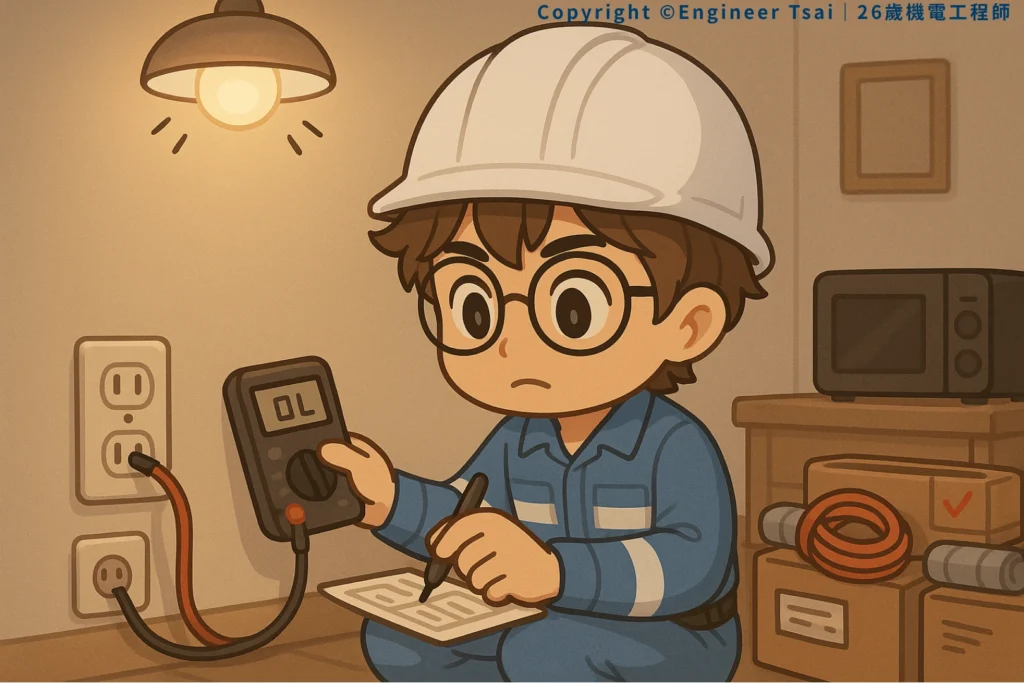
6 common signs of electrical problems in your home
Most home electrical problems don’t start with sparks, smoke, or flames. They start as tiny annoyances: a light that acts funny, an outlet that only works sometimes, an appliance that feels a little “off” when you touch it…
If you can catch these signs of electrical problems in your home early and deal with them, you can dramatically cut your risk of tripping breakers, electrical fires, or even shock.
1. Flickering or dimming lights: unstable voltage
Do your lights flicker, pulse, or occasionally go brighter and dimmer for no clear reason?
Sometimes it’s just an old bulb. But very often, it’s a sign of unstable voltage or loose connections on that circuit – one of the most common signs of electrical problems in a house.
What you can do first:
Instead of swapping bulbs over and over, start with these checks:
- Check your breaker panel for any breakers that feel hot or look worn.
- See whether other lights or outlets on the same circuit are also flickering or behaving strangely.
- If several fixtures on the same circuit are unstable, it’s time to have a licensed electrician inspect the wiring and connections.
2. Outlets that suddenly stop working
You plug something in and nothing happens? Before you assume the outlet is “just broken” and grab a replacement, remember this can be a symptom of a larger home electrical issue – like a tripped breaker, a loose connection, or an overloaded circuit.
Smart next steps:
- Go to your breaker panel and see if any breaker is tripped (usually in the middle position). Turn it fully OFF, then back ON once.
- Check if a GFCI outlet (the one with TEST/RESET buttons) might be feeding that outlet. Press RESET and see if the power comes back.
- If you’re comfortable and know how to use one, use a multimeter or a plug-in outlet tester to see whether there’s voltage at the outlet.
- Never “test” an outlet by shorting the slots with a piece of metal or wire. That’s how people get shocked or start fires.
3. Tingly or buzzing appliance cases
If you touch a metal appliance – like a fridge, microwave, washing machine, or metal lamp – and feel a tingly, buzzing, or prickly sensation, stop using it immediately.
This usually points to poor grounding or an internal fault that’s letting current leak to the case. That’s not “just static” – it’s a serious electrical safety risk.
Friendly safety reminder:
- Unplug the appliance right away and stop using it until it’s inspected.
- Make sure outlets in kitchens, bathrooms, laundry rooms, garages, and outdoor areas are properly grounded and protected by GFCI devices.
- If more than one appliance in the same area feels tingly, you may have a grounding or wiring problem on that circuit or at the panel level.
4. Breakers that trip all the time
Does your main breaker or a certain circuit trip every time you run a few big appliances at once?
People often joke about it and blame “the power company,” but frequent tripping is usually your electrical system saying, “I’m overloaded or wired poorly.”
Common reasons:
- An undersized main breaker for your actual household load
- Older wiring and panels that were never upgraded as more appliances were added over the years
- Poorly planned circuits with too many heavy loads on the same breaker
Field story:
I once visited an older apartment where the power would trip every time the owner ran the microwave and rice cooker together. The main breaker was only 30 amps and the circuits were overloaded by today’s standards. After upgrading the service and redistributing loads onto more circuits, the “random” trips stopped – and so did the worry about overheated wires inside the walls.
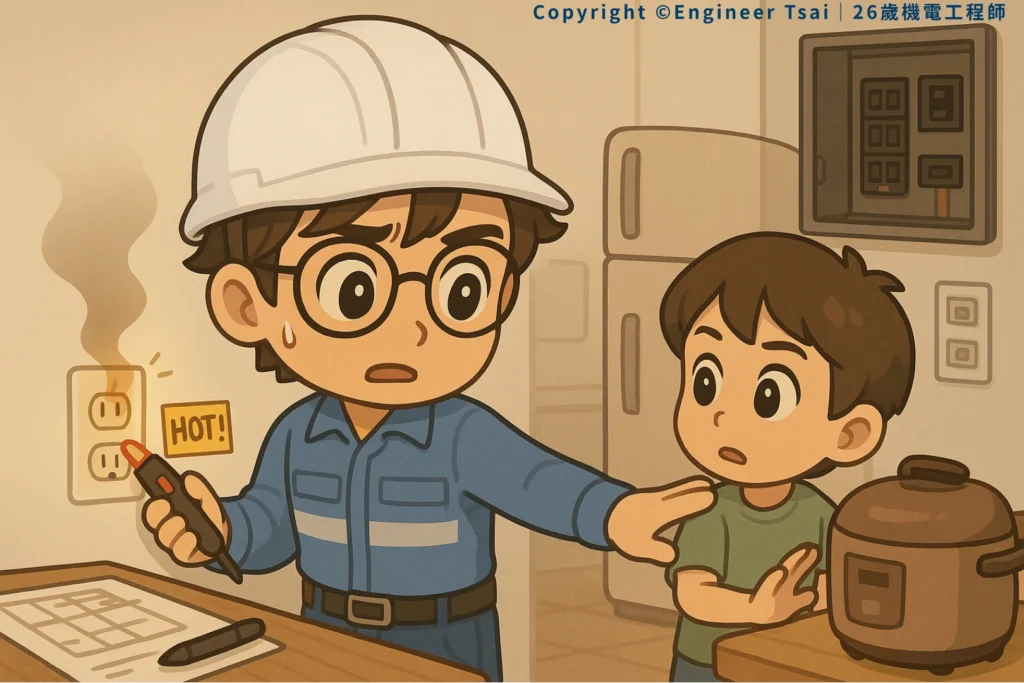
5. Hot or discolored outlets and power strips
If an outlet, switch plate, or power strip feels hot to the touch – or the plastic is yellowed, brown, or slightly charred – do not keep using it.
This usually means too much current, loose connections, or both. Over time, that can turn into a fire risk, and it’s one of the most commonly ignored home electrical safety problems.
What you should do:
- Unplug everything from that outlet or power strip immediately.
- Replace cheap or damaged power strips with good-quality, UL-listed ones.
- If a wall outlet itself is hot or discolored, have a licensed electrician open it and check the wiring and load.
6. Several appliances failing at the same time
When one old appliance dies, that’s annoying but expected. When several appliances in the same area fail within a short time, that’s a sign you should pay attention.
Often, this points to:
- A voltage surge from the grid or nearby equipment
- Unstable voltage or wiring problems on that branch circuit
- Storms, nearby construction, or utility work causing spikes or sags
How to protect your home:
- Use surge protectors for your most important electronics and some major appliances.
- During major storms or known utility work, unplug or shut off sensitive equipment when possible.
- If several devices on the same circuit “die together,” don’t just replace them – have the circuit inspected for underlying electrical problems in your home.
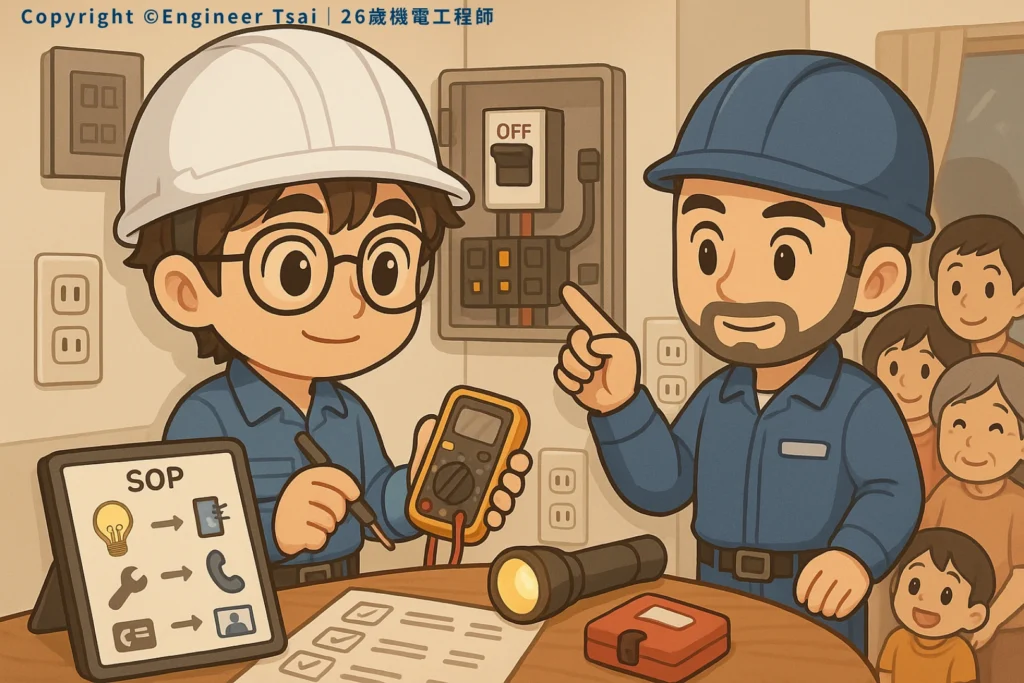
Simple step-by-step electrical check (your SOP before calling an electrician)
- Observe the symptoms – Are lights flickering? Are some outlets dead? Does any appliance feel tingly, hot, or “off”?
- Check the main breaker and branch breakers – Look for tripped breakers or any breaker that feels unusually warm.
- Use a tester, not a shortcut – Use a multimeter or plug-in tester to see whether an outlet actually has power. Don’t “test” by shorting anything with metal.
- Look for heat, discoloration, and smell – Warm outlets, browned plastic, or any burnt smell are not normal.
- Ask your neighbors – If the whole building or block is having issues, it might be a utility problem rather than just your wiring.
- Know your limit – If the issue involves the panel, inside-the-wall wiring, repeated tripping, or suspected arcing or burning, it’s time to call a licensed electrician and stop guessing.
Conclusion: catch small electrical problems early
Electrical safety at home isn’t something to put off. Once you start noticing odd behavior – flickering lights, hot outlets, tripping breakers, tingly appliances – those aren’t just quirks. They’re classic signs of electrical problems in your home that deserve your attention.
Spending a little time now to check, document, and get help is almost always cheaper than:
- Replacing multiple damaged appliances
- Paying for major rewiring after something overheats
- Dealing with an actual electrical fire or serious shock
Have you ever had a “small” electrical issue turn into a big repair later?
Did a professional electrician fix something that instantly made your home feel safer?
Share your story in the comments – your experience might help the next homeowner catch a hidden problem early.
📌 Further reading
🔹What Is a Short Circuit and How Do You Prevent It?
Understand short circuits from the ground up and level up your home electrical safety.
🔹Beginner’s guide: how to use a multimeter safely at home
Learn to use a multimeter the right way so basic troubleshooting becomes less scary.
🔹Electrical Safety Foundation International (ESFI) – Home electrical safety resources
Official checklists, statistics, and safety tips from a U.S. non-profit focused on preventing electrical shocks and fires.
🔹NFPA – Electrical fire safety in the home
Learn how electrical issues start home fires and what you can do to reduce the risk where you live.
❓ FAQ: home electrical problems
Q1 | Are flickering lights always the power company’s fault?
Not always. If your utility has a problem, it usually affects the whole street or building. But many signs of electrical problems in your home actually come from inside: loose connections, overloaded circuits, or failing switches and outlets. Pay attention to whether the issue is limited to one room or one circuit. If it’s localized, it’s time to have your home wiring checked.
Q2 | An outlet is dead. Can I just replace it myself?
It’s safer not to assume it’s “just the outlet.” The best first step is to use a plug-in tester or multimeter to confirm there’s really no power, then check the breaker and any GFCI outlets that might feed it. A dead outlet can be a symptom of a tripped breaker, loose wiring, or overheated connections. If you see burn marks, smell something strange, or the breaker keeps tripping, call a licensed electrician instead of guessing.
Q3 | I get a small shock or tingle from an appliance. Is that normal?
No. A clear tingle or buzzing feeling when you touch a metal appliance is not normal. It often means a grounding problem or a fault inside the appliance that’s letting electricity leak to the case. Unplug it immediately, stop using it, and have both the appliance and the outlet checked. This is one of the more serious signs of electrical problems in your home and shouldn’t be ignored.
Q4 | My breakers trip all the time. Should I call the utility or an electrician?
If your whole neighborhood is losing power or multiple homes are affected, call your utility. But if only your home has frequent tripping—especially when you turn on big appliances—it usually points to overloaded circuits, an undersized panel, or aging wiring. Those are issues for a licensed electrician to diagnose and fix, not the power company.
Q5 | When is it absolutely time to call a licensed electrician?
Don’t wait if you notice any of these: outlets, switches, or the panel feel hot; there is a burning or melting smell; outlets or breakers show burn marks; you feel tingling from metal appliances; breakers trip more and more often; or you live in an older home that has never been updated while your power use has gone way up. These are classic signs of electrical problems in your home that deserve a professional inspection.