On this page
Table of contents

If you want the bigger picture of what the electrical trade teaches beyond technical skills, start here: 🔹 “What the Electrical Trade Teaches You: Discipline, Problem-Solving, and Real-World Growth”
After that, this story will hit deeper.
Construction drawings vs field experience is a gap every new engineer eventually feels on real jobsites. You can read plans all day, but what people really respect is when you can use field experience to quietly make problems disappear.
In my early years, I was the classic “just follow the drawings” person — clutching a set of plans and thinking that as long as I traced every line and symbol, nothing would go wrong.
Reality feels very different. No matter how clear the drawings look, the field is full of surprises. In this article, we’ll talk honestly about construction drawings vs field experience, and what I wish someone had told me in my first year.
Construction drawings vs field experience: common traps you’ve probably seen
- On the drawings, a wall outlet is reserved in the perfect spot by the wall. Once the furniture arrives, half of it is covered, and suddenly no one can actually plug anything in.
- The conduit layout looks flawless on paper. On site, an older beam or column size doesn’t match the drawings, the bend jams, and you end up re-running the entire run from scratch.
- Materials show up late, short, or with the wrong specs. The drawings might be perfectly labeled, but if the right boxes never arrive, you’re stuck juggling substitutions and calling suppliers just to keep the schedule alive.
- Some senior tradespeople barely look at the plans. They walk the job once, tweak the routing, and somehow make everything cleaner and faster — while every newcomer stands there wondering how they came up with that approach.
At the end of the day, drawings are a reference; the jobsite is the real teacher.
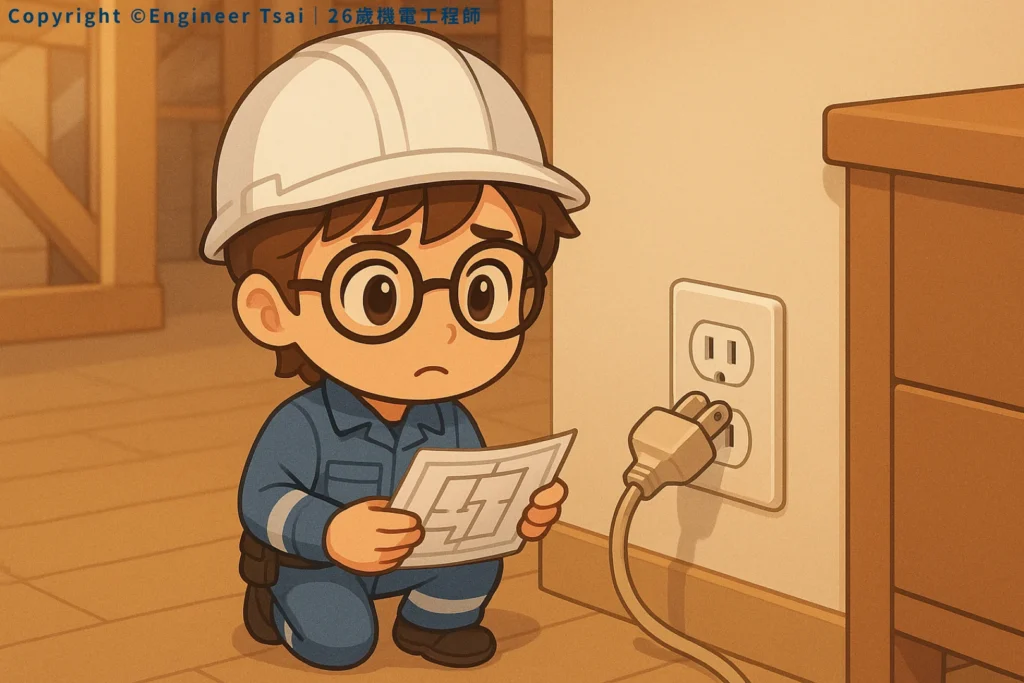
Three lessons the jobsite taught me: from drawings to field experience
1. Reading drawings matters, but on-site communication matters more
No one walks onto their first jobsite already fluent in every symbol and detail. Most of us start by staring at the plans alone, trying to “figure it out” and hoping we don’t ask anything that sounds stupid.
Later you realize that almost every dimension, elevation, and layout you truly remember came from talking it through with the superintendent, foreman, or designer on site — one question at a time.
Whether you can catch a mismatch between drawings and reality early enough doesn’t just depend on how well you read plans. It depends on whether you’re willing to speak up and clarify things before concrete gets poured or walls are closed up.That’s the real difference between construction drawings vs field experience.
“People who ask good questions are a lot happier than people who silently stare at drawings.”
2. Variables are normal; having a Plan B is a real skill
Many newcomers panic the moment something goes wrong in the field. The veterans stay calm: “What on this job can’t be adjusted?”
Over time, you realize the scariest part of construction isn’t that things change — it’s when the team freezes because no one has a backup plan.
Thinking through alternatives ahead of time, and practicing how to coordinate with designers, inspectors, and other trades, is what lets you survive and stay sane on real-world jobsites.
“The worst thing on site isn’t a mistake — it’s having no Plan B.”
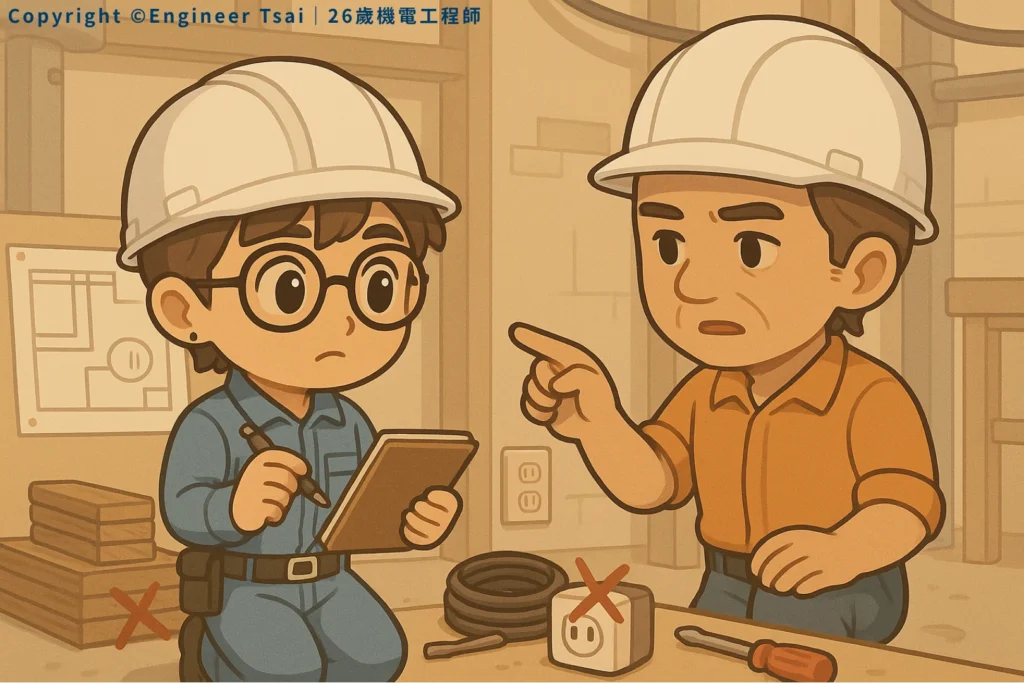
3. Real pros can explain, not just follow orders
Owners, GCs, and designers will often ask you, “Why are we doing it this way?”
If all you can say is, “That’s what the drawings show,” you look like a robot arm instead of a professional.
When you can draw on your field experience and clearly explain, “Here’s why this change makes more sense,” or “Here’s why this option is safer and more cost-effective,” that’s when people start treating you like a trusted expert instead of “just labor.”
“When you understand the principles and the field, you have real choices in your career.”
Three practical tips to turn drawings into your own field experience
- Carry the drawings with you — and use the field as your classroom
Circle the symbols, notes, and dimensions you don’t fully get yet. Then walk the job with those questions in hand, match them to real equipment and locations, and ask a foreman or senior tech to explain in plain “jobsite language.” One good five-minute explanation on site beats an hour of guessing alone at a desk. - When something goes wrong, pause and write down 2–3 possible options
Everyone gets stuck. The issue isn’t that there’s a problem — it’s what you do next. Before you say “This can’t be done,” list out a few realistic options (move location, change routing, adjust materials, or sequence work differently), then bring those to the designer or owner. Coming in with options instead of just a complaint builds trust very quickly. - Turn every mistake and fix into a short “jobsite note” for yourself
You’re not just trying to avoid future mistakes — you’re slowly building your own field playbook. Even if you only write three lines a day: What went wrong? How did we resolve it? What could we flag earlier next time? A few years from now, those notes will be some of the most valuable “training material” you own.
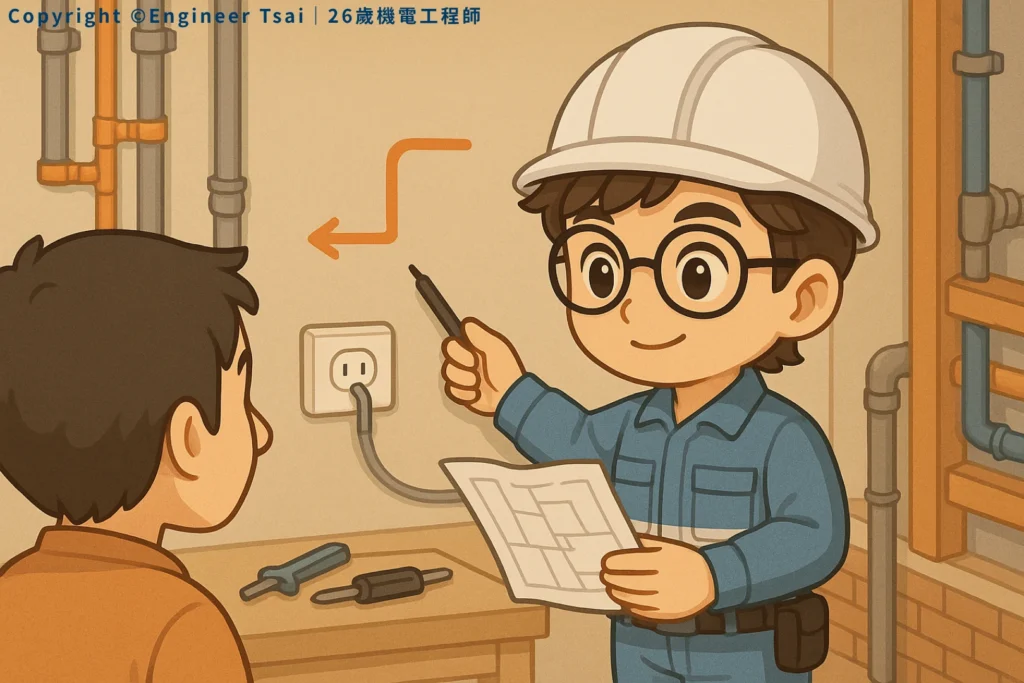
Do you have field stories beyond the drawings?
Have you ever started a job confident because the drawings looked perfect — only to discover that the field was a completely different story? Or has a senior tradesperson ever said one sentence that changed the way you look at plans forever?
Share your stories in the comments. Your experience might save someone else from stepping into the same trap — and it helps make sure that field experience beyond the drawings doesn’t just disappear when the job is done.
Take action: join Engineer Tsai and turn drawings into real-world skills
If you want to grow from “just following the drawings” into someone who can think clearly on site, follow Engineer Tsai.
We’ll keep sharing real jobsite examples, learning roadmaps, and simple tools to help you turn the lines on a plan into solid, confident field experience.
📌 Further reading
🔹“Conductors vs Insulators: A Practical Electrical Safety Guide”
Choosing the right materials is the foundation of safety. This article walks through how different conductors and insulators are used in real electrical work.
🔹“Beginner’s Guide to Using a Multimeter: Measuring Voltage and Current Safely”
If you work in the field, your multimeter is your best friend. This piece uses diagrams and step-by-step examples to show how to read real numbers safely.
🔹“Jobsite Note-Taking: How to Capture Field Experience Without Losing the Details” (coming soon)
Field experience shouldn’t rely on memory alone. This article will share how I organize jobsite notes so the important lessons don’t fade after each project ends.
The jobsite will always teach you things that never appear on the drawings.
Every small adjustment and every problem you solve is quietly building your next layer of field experience.
Construction drawings vs field experience – FAQ
Q1: I’m new to the jobsite. Should I master the drawings first or head straight into the field?
Both matter, but you can sequence them smartly. Start by scanning the drawings once, mark the symbols and dimensions you don’t fully understand, then bring those questions with you when you walk the site. Match the plans to real equipment and spaces, and ask the superintendent or a senior tech to explain. It’s faster and much safer than guessing alone.
Q2: Will senior people get annoyed if I ask too many questions?
If you’ve done some homework and you’re not asking them to explain every single line, most experienced people are happy to help. Group your questions, ask them at a reasonable time, and offer to help with simple tasks while they explain. That looks a lot better than pretending to understand and creating rework later.
Q3: If things keep going wrong on site, does that mean I’m not cut out for this?
Not necessarily. In your first few years, it’s normal to step on landmines. What really matters is whether you take time to write down what happened, why it happened, and how it was fixed. People who reflect and organize their experience often grow faster than those who just “look good” at the beginning.
Q4: Do small jobs and maintenance work still count as real field experience?
Absolutely. Running a new branch circuit, replacing an outlet, or troubleshooting a tripping breaker all teach you how to connect drawings with reality, talk to clients, and handle surprises. The size of the job doesn’t matter as much as whether you’re paying attention and taking something away from each visit.
As you keep stacking these experiences, one day you’ll notice that people have started calling you “the one with real field experience.”