On this page
Table of contents
If you want a full understanding of how home electrical systems work, start with the safety overview: 🔹 “Home Electrical Safety Guide: Panels, Breakers, Grounding, AFCI/GFCI, and Common Faults”
Once you know the big picture, this article becomes much easier to follow.
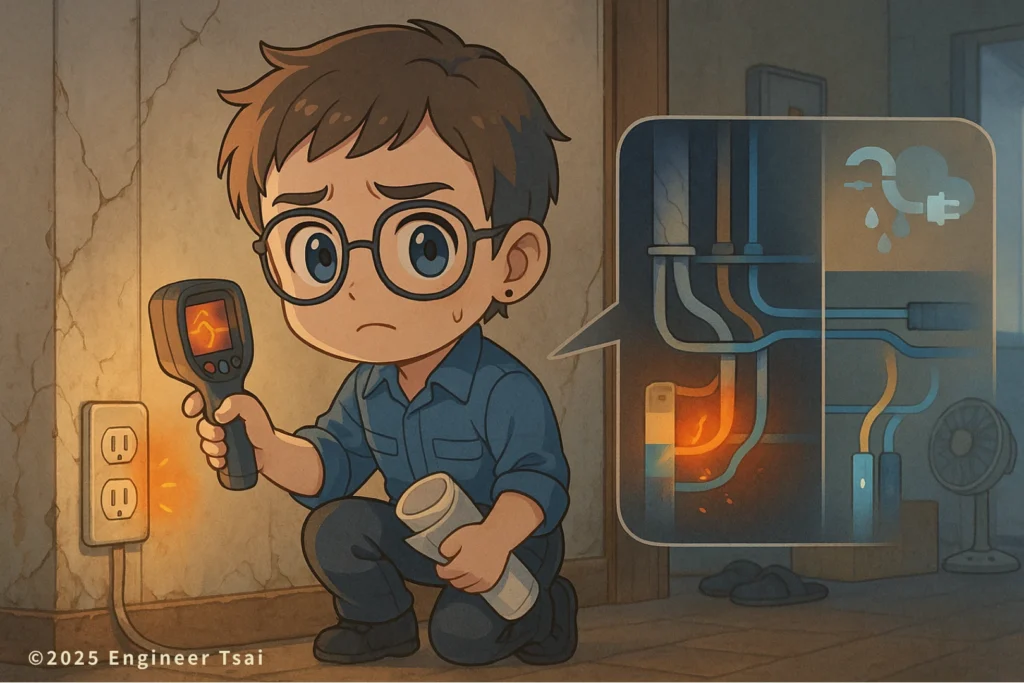
Have you ever thought about the fact that the wiring in your house has a lifespan too?
People upgrade furniture, AC units, and smart gadgets all the time, but old house wiring often sits in the walls for 20, 30, even 40 years without a real checkup.
The problem is, aging and overloaded wiring are one of the biggest hidden causes of home electrical fires, tripped breakers, and “mystery” power issues in older houses. Organizations like the National Fire Protection Association (NFPA) and the U.S. Consumer Product Safety Commission (CPSC) regularly highlight how often electrical failures and outdated wiring contribute to home fires and electric shocks.
This guide walks you through, in plain English, what happens as old house wiring ages, the warning signs to watch for, and when it’s time to call a licensed electrician.
Key takeaways
“Wiring is like plumbing – over time it can leak, clog, and fail.”
The difference is: a plumbing leak makes a puddle on the floor. When old house wiring fails, the result can be shocks, constant tripping breakers, or in the worst case, a house fire.
1. Common problems with old house wiring
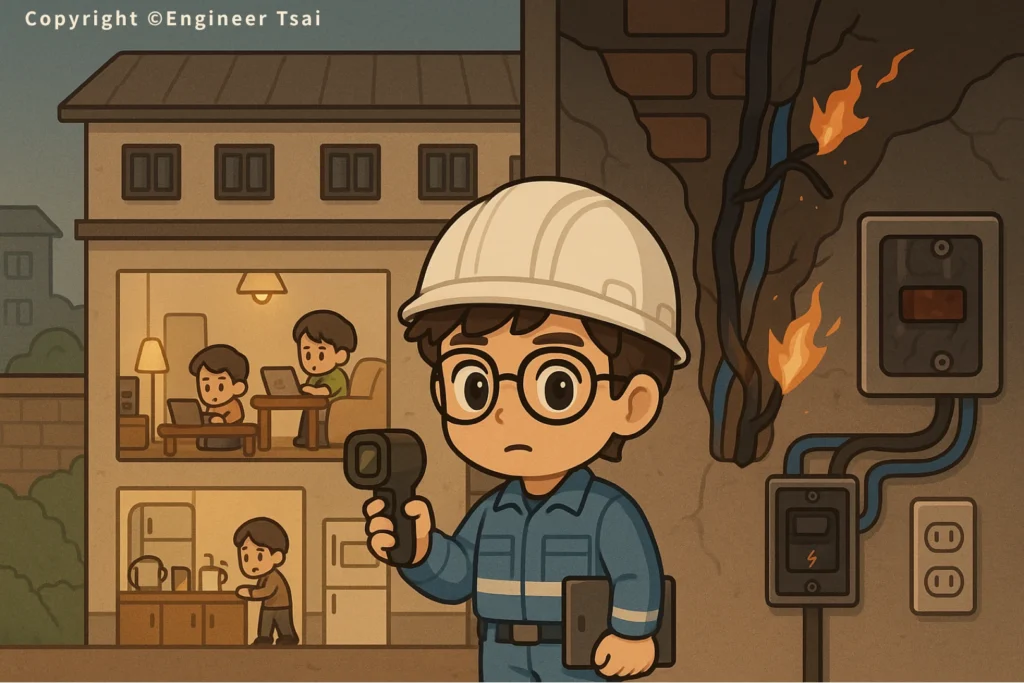
If your home was built 30, 40, or 50+ years ago, there’s a good chance you’re still relying on old house wiring that was never designed for today’s loads.
- Too many outlets on one circuit – one breaker quietly feeds a long chain of rooms and outlets.
- Not enough outlets, no grounding – two-prong receptacles everywhere, plus power strips and extension cords daisy-chained across the room.
- Undersized conductors for modern appliances – wiring sized for a few lights and a TV, now feeding AC units, space heaters, microwaves, and more.
Real-life example:
“We had the fridge, microwave, and toaster oven running at the same time. The lights dimmed, then everything suddenly went dark. When the electrician opened the panel, the insulation on one of the conductors was brown and brittle from years of overload.”
To the homeowner, it just felt like “the breaker is annoying.” To a professional, it was clearly old house wiring sending a warning signal.
2. How old house wiring ages over time
2.1 Insulation cracks and hardens
In hot attics, damp basements, and exterior walls, the insulation around the conductor slowly dries out, hardens, and begins to crack or flake off.
Once the metal conductor is exposed, any movement, vibration, or contact with other metal can trigger short circuits or arcing inside your old house wiring.
2.2 Connections loosen and corrode
In many older homes you still find “twist and tape” connections, loose wire nuts, or back-stabbed receptacles.
Over time, these points loosen and oxidize. Poor contact creates heat under load, which is why so many burned outlets trace back to aging connections in old house wiring.
2.3 Undersized circuits, oversized loads
When your house was built, the electrical design probably assumed a few lights, maybe a TV, and some small appliances.
Today, one home might have multiple AC units, gaming PCs, space heaters, hair dryers, air fryers, and more.
If the circuits were never upgraded, you end up with old house wiring under constant overload – hotter conductors, more frequent trips, and faster insulation wear.
2.4 Ungrounded outlets and missing protection
Many older houses still have two-prong outlets with no equipment ground, plus missing GFCI protection where modern code would require it.
Without grounding and proper protection, fault current has nowhere safe to go, and shock risk goes up whenever old house wiring starts to fail.
2.5 Hidden risks inside walls and ceilings
Combine brittle insulation, loose connections, dust, wood framing, and maybe a few rodent chew marks, and you get fire risk where you can’t see it – inside walls and ceilings.
From the outside, you may only notice a flicker, a smell, or a breaker trip. Inside, your old house wiring might already be overheating.
3. Warning signs your old house wiring is in trouble
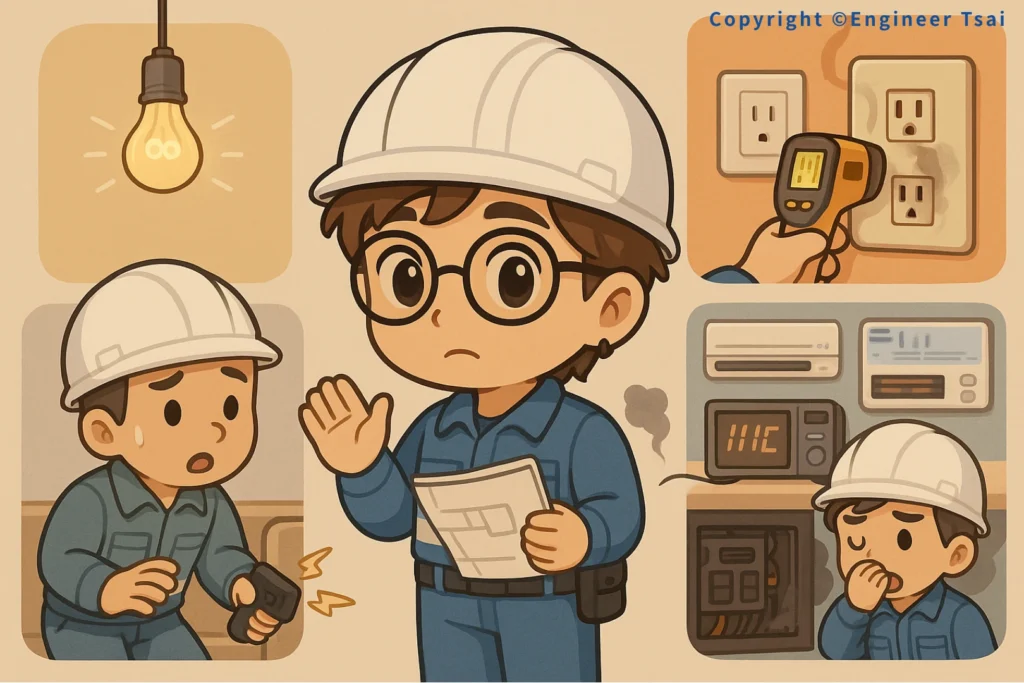
You don’t have to tear open walls to spot early warning signs. Start with the small things you can see, feel, or smell in daily life:
- Lights that flicker or dim when appliances turn on – often a sign of loose connections or voltage drop.
- Outlets or switches that feel warm or look discolored – heat has been building up for a while.
- Breakers that trip often when you use normal appliances – circuits may be overloaded or wiring may be aging.
- A tingling or buzzing sensation when you touch metal appliances – possible leakage current or grounding problems.
- A burning plastic smell near the panel or outlets – this is a “call an electrician now” situation, not a “wait and see.”
One sentence to remember:
“When your home’s electrical system starts acting weird, your old house wiring is probably asking for help – don’t ignore it.”
4. How to check and prevent old house wiring hazards
This is not about tearing things apart yourself. Think in terms of a smart sequence: observe → investigate → upgrade.
- Schedule a professional electrical inspection
If your home is 30+ years old, has had multiple unexplained trips, or has added big loads over the years, it’s worth having a licensed electrician:
check the panel and breakers, look at circuit loading and wire sizing, and inspect accessible parts of your old house wiring. - Pay attention to “small” symptoms instead of ignoring them
Warm outlets, flickering lights, or a faint burning smell are not “normal old house behavior.”
Many electrical fires look sudden, but old house wiring usually gives clues first. - Check the load before adding big new appliances
Before you install a new range, dryer, HVAC unit, or tankless water heater, have an electrician confirm:
whether your panel and existing circuits can safely handle the load, or whether your old house wiring needs upgrades or dedicated circuits. - Plan for rewiring or panel upgrades in very old homes
For many 40–60+ year-old houses, the safest long-term solution is a proper service and panel upgrade plus new circuits for high-demand areas.
It’s an investment, but compared to the cost of a fire or constant patch repairs, a well-designed system is often the better deal. - If your budget is tight, start with the highest-impact safety fixes
Even if a full rewire isn’t possible right now, you can still make your old house wiring safer by:
adding GFCI and AFCI protection where appropriate, fixing obviously overheated outlets, and improving grounding and bonding.
5. Old house wiring – FAQ
Q: If everything looks fine, why worry about old house wiring?
A: Even if outlets and switches look normal on the surface, many problems in old house wiring hide inside walls, ceilings, and junction boxes.
By the time you see scorch marks or smell melting plastic, the risk is already high. A preventive inspection and targeted upgrades are usually cheaper — and much safer — than fixing damage after a fire.
Q: My breakers trip a lot. Does that mean my old house wiring is bad?
A: Not always, but it is a warning sign. Frequent trips can mean overloaded circuits, loose or aging connections, or in some cases a faulty breaker.
If your home is older and certain circuits always trip when you use normal appliances, it’s worth having an electrician check both the panel and your old house wiring.
Q: Do I only need to worry about old house wiring in the kitchen and bathroom?
A: Kitchens and bathrooms are high-priority areas, but they’re not the only concern.
Living rooms with lots of electronics, bedrooms with space heaters or window units, and garages with power tools all put stress on old house wiring. A whole-home look at circuits, loads, and protection gives you a much clearer safety picture.
Q: Does upgrading old house wiring mean tearing out all my walls?
A: Not necessarily. In many homes, electricians can reuse existing chases or conduit to pull new conductors, add new circuits from the panel to key locations, or rewire room-by-room during other renovations.
Some cutting and patching may be needed, but it doesn’t always mean a full gut job. The key is to let a pro walk the house and explain what’s realistic for your layout, age, and budget.
6. Conclusion: safer old house wiring, safer home
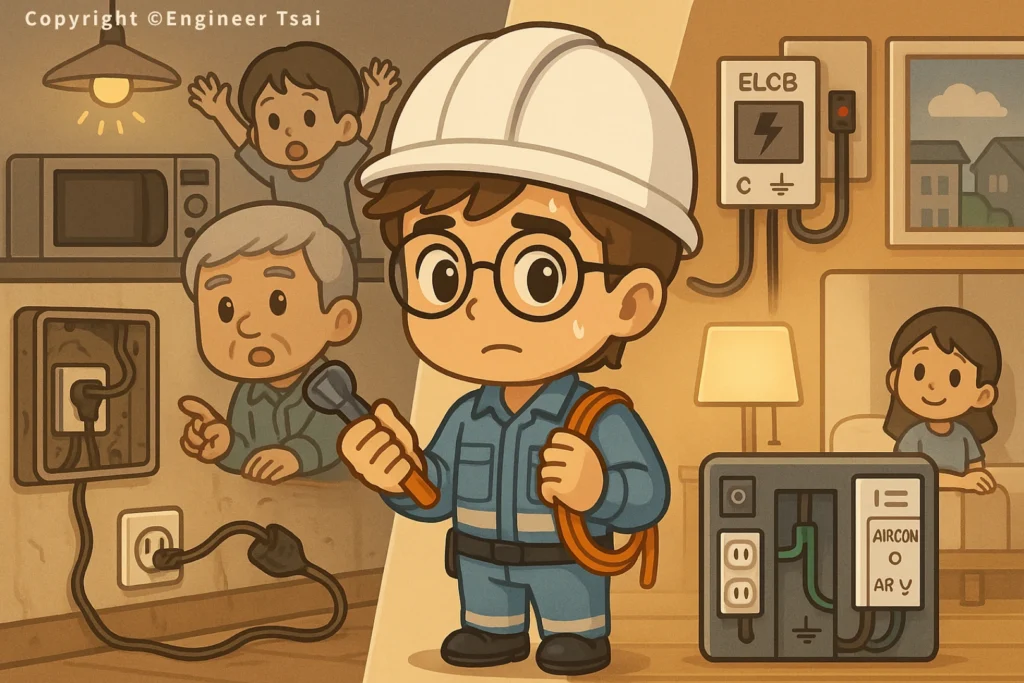
When you renovate an older home, it’s easy to focus on the things you can see — paint, flooring, cabinets, and fixtures. But the electrical system is the invisible backbone that keeps everything running, and in many older houses that backbone is old house wiring that hasn’t been checked in decades.
If your home is 20, 30, or 40+ years old and you’ve never had the wiring inspected, treating an electrical safety check as part of taking care of your family is a smart move.
Ask questions, take notes, and make a plan — even if upgrades happen in stages. “No fire yet” is not the same as “everything is safe.”
📌 Further reading:
🔹“What Is a Short Circuit? How It Happens and How to Prevent It”
Understand how short circuits actually happen and what you can do to prevent them at home.
🔹“Beginner’s Guide to Using a Multimeter: Measuring Voltage and Current Safely”
Learn how to use a multimeter so you can better understand what’s going on in your system and have clearer conversations with your electrician.
🔹Electrical Safety Foundation International – Home Electrical Safety
A U.S.-based nonprofit’s overview of common home electrical hazards and practical safety tips.
Have you ever dealt with old house wiring issues, tripped breakers, or appliances that died unexpectedly?
Feel free to share your story in the comments — and pass this guide to friends or family living in older homes so they can stay safe too.