
On this page
Table of Contents

If you want a full understanding of how home electrical systems work, start with the safety overview: 🔹 “Home Electrical Safety Guide: Panels, Breakers, Grounding, AFCI/GFCI, and Common Faults”
Once you know the big picture, this article becomes much easier to follow.
Do you remember the last time everything in your home suddenly went dark?
Maybe you were about to go to bed. Maybe you had friends over and the kitchen was running the microwave and the oven at the same time.
The lights blinked, the room went black, and everyone froze for a second.
Then the question hit:
“Uh… what now? Do I need to call an electrician right away?”
What really decides how that night ends isn’t whether you have an electrician’s phone number.
It’s this:
Have you learned a simple, safe checklist you can follow when your breaker keeps tripping at home?
In this guide, we’ll walk through the most common situations in a typical U.S. home and answer the big question:
“My breaker keeps tripping – what should I do, step by step?”
We’ll start by checking whether it’s a neighborhood outage or just your home, then move into what you can safely check yourself and when you should stop and call a licensed electrician.
1. That moment when everything goes dark: you’re not the only one
Every household runs into power problems at some point.
New construction, old apartments, suburban homes, city condos—breaker trips happen everywhere.
So when the whole place suddenly goes dark, remember this first:
You’re not the only person who’s ever felt totally lost when the power went out.
Almost everyone you know—friends, coworkers, neighbors—has had that moment of panic:
“Did I break something? Is this dangerous? Is it my fault?”
And that’s exactly why learning a simple “breaker keeps tripping” checklist matters.
When you can stay calm, grab a flashlight, and walk your family through the steps, you’re not just the person who “fixes stuff.”
You become the one who keeps everyone safe and grounded when the house feels out of control.
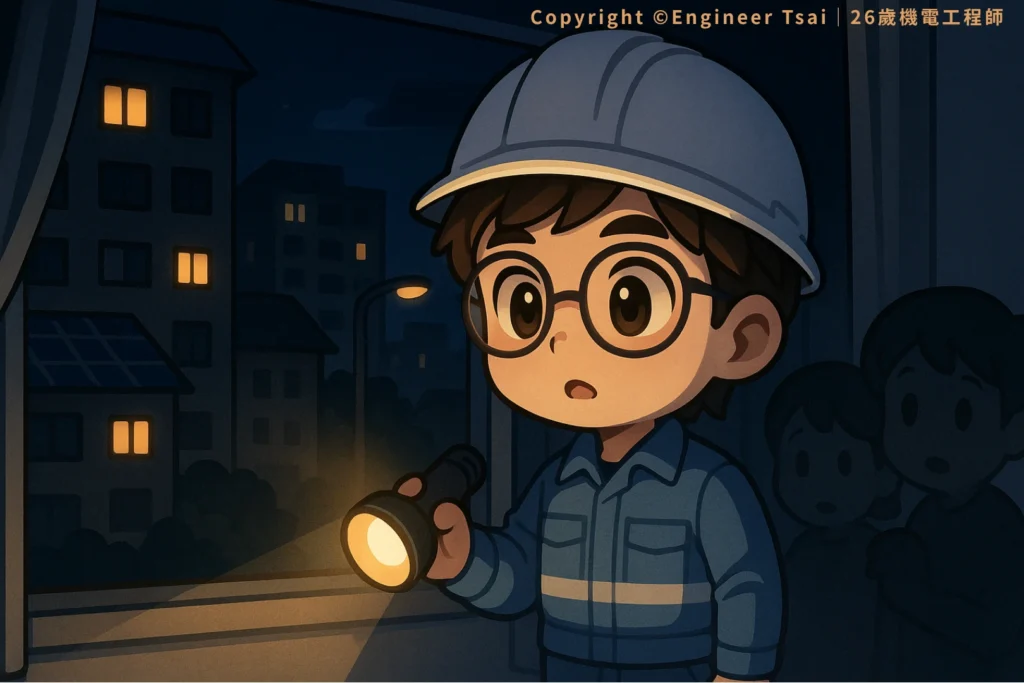
2. Step one: Is it a neighborhood outage or just your home?
Before you touch your breaker panel, do this:
Check what’s happening outside your home before you focus on what’s inside.
Quick way to tell (don’t waste energy on the wrong problem)
- Look out the window. Are your neighbors’ lights on?
- Are hallway lights, exit signs, or elevators in your building still working?
- On a house or townhouse: do the streetlights or the house across the street still have power?
If the whole block is dark, it’s probably a utility or neighborhood outage.
In that case:
- There’s no point flipping your breakers over and over.
- Check your local power company’s outage map or hotline and wait for them to restore power.
If only your place is dark while other homes have lights, or only part of your home lost power, then you’re most likely dealing with:
- A tripped main breaker, or
- A tripped branch breaker feeding one room or one set of outlets.
That’s when you switch into indoor troubleshooting mode.
💡 Quick rule:
“Whole neighborhood” = call/check the power company.
“Just my home or one room” = check your breaker panel.
3. Back inside: open the breaker panel and see what actually tripped
In a U.S. home, your breaker panel is usually in one of these spots:
- In the garage
- In the basement
- In a hallway or utility closet
- In an exterior panel box on the side of the house
3.1 Find the panel and recognize the main vs. the branch breakers
Open the panel door and you’ll usually see:
- A row (or several rows) of smaller switches
- These are your branch breakers.
- They control specific areas: kitchen outlets, living room, bedroom circuits, AC, bathroom, etc.
- One larger switch at the top or bottom marked “MAIN” or with a higher amp rating (e.g., 100A, 150A, 200A)
- This is your main breaker, which can shut off power to the entire panel.
Just seeing which of these has moved to the OFF or “middle” position already tells you a lot.
3.2 Is it the main breaker or just one circuit?
- If the main breaker tripped and your whole house is out:
That can mean you pulled more power than your service can handle or there’s a more serious fault somewhere. - If just one branch breaker tripped and only one room or one area is dark:
That’s usually a local overload or a problem with one appliance or one section of wiring.
3.3 Small but powerful inspection tricks
- Look for a breaker that’s not fully ON or OFF, but stuck in the middle.
- Gently press it all the way to OFF first, then firmly back to ON. That’s how most breakers reset.
- If a specific breaker label says “Kitchen,” “Bath,” or “Living Room,” think about which appliances were running when the lights went out.
📝 Pro tip:
On a calm day when nothing’s wrong, take time to label your panel:
“Living room,” “Kitchen outlets,” “Dishwasher,” “AC,” etc.
Future you will thank you when you’re not guessing in the dark.
4. Don’t flip everything on at once: find the real cause
One of the most common mistakes is this:
Breaker trips → flip it back on immediately → it trips again → panic.
A breaker doesn’t trip “for fun.”
It’s there to protect your wiring from overheating, short circuits, or ground faults. When it keeps tripping, something is wrong.
In most homes, the real cause falls into three big categories.
4.1 Too many high-wattage appliances on the same circuit (overload)
Classic example: in the kitchen, you have the:
- Microwave
- Toaster oven
- Electric kettle
- Coffee maker
all running on the same set of outlets fed by one breaker.
Even if nothing is “broken,” that circuit can easily be overloaded and trip.
4.2 One faulty or damaged appliance
Some common red flags:
- Old space heaters or window AC units that trip breakers when they start
- Extension cords that are bent, pinched under furniture, or look burned
- Appliances that got wet (bathroom, basement, laundry area)
Even if the outlet is fine, one bad device can keep tripping the breaker every time you plug it in.
4.3 Loose or burnt outlet / wiring (higher risk)
This is where things become more serious. Watch for:
- A burning smell near an outlet or switch
- Brown or black marks around an outlet or plug
- Crackling, buzzing, or visible sparks
If you see or smell any of these, stop. This is a fire-risk situation, not just a minor nuisance.
4.4 A safer troubleshooting order you can follow
Here’s a simple, safer way to narrow things down:
- Unplug everything on the affected circuit
- Turn off power strips, unplug space heaters, small appliances, etc.
- Reset the tripped breaker
- Push it fully to OFF, then back to ON.
- Plug devices back in one by one
- Turn each one on and watch what happens.
- Notice the “trigger”
- If the breaker trips again right after you plug in or turn on a specific device, that device or that outlet is the likely problem.
- Stop using it and have it checked or replaced.
🔐 Memory hook:
“Unplug first, then reset the breaker.”
Not the other way around. It’s the easiest way to find the real culprit without hammering your electrical system.
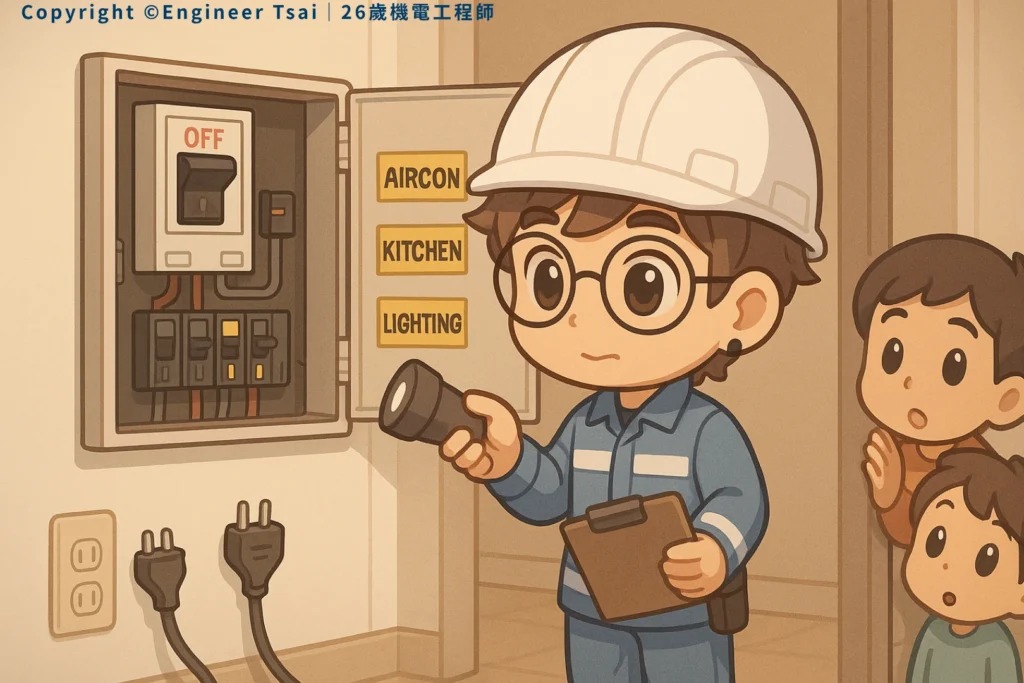
5. When the breaker keeps tripping: when to stop and call a pro
Here’s a simple golden rule:
If a breaker trips immediately every time you reset it—even with everything unplugged—stop troubleshooting.
Add any of these signs, and it’s time to shut things down and call a licensed electrician:
- You smell burning or see smoke
- An outlet, switch, or part of the panel is discolored or feels hot
- You hear buzzing or crackling from the panel or an outlet
- The main breaker itself keeps tripping
At that point, you may be looking at:
- Damaged wiring
- Loose connections in a junction box or outlet
- Water intrusion in an exterior or bathroom circuit
- A failing panel or main breaker
This is no longer “DIY troubleshooting.”
Your best move is to:
- Turn the main breaker fully OFF
- Keep the area dry and clear
- Call a licensed electrician and describe what you saw and smelled
Your goal is not to “prove you can fix it alone.”
Your goal is to get everyone home safe tonight and still have a house tomorrow.
6. While everything’s working: label and organize your panel
The safest time to prepare for a power problem is when the power is perfectly fine.
Think of it like a fire drill: you don’t plan it during a fire.
Here are a few small projects that pay off big the next time a breaker trips:
- Label every breaker clearly
Use a label maker or sticky labels: “Kitchen GFCI,” “Living room outlets,” “Bedroom 2,” “Washer/Dryer,” “AC,” etc. - Test which outlets belong to which breakers
Plug a small lamp or phone charger into an outlet, flip one breaker off, and see where the power goes out. Make notes as you go. - Take a clear photo of your panel labels
Save it in your family group chat so everyone knows which breaker controls what.
Next time a circuit trips, you won’t be randomly flipping every breaker.
You’ll know exactly which one to look at and which rooms it affects.
7. “Breaker keeps tripping” troubleshooting checklist (follow-along version)
If you only remember one thing from this article, let it be this simple 7-step checklist you can actually follow in the dark:
- Look outside first
- Are the neighbors’ lights, hallway lights, or streetlights still on?
- If everything outside is dark too, it’s probably a utility outage.
- Open your breaker panel
- Look for any breaker that’s not fully ON—especially one stuck in the middle.
- Identify the tripped breaker
- Main breaker = whole house
- One branch breaker = one room or one set of outlets
- Unplug everything on that circuit
- Power strips, small appliances, space heaters, etc.
- Reset the breaker
- Push it fully OFF, then back ON once.
- Plug items back in one at a time
- See if one particular device makes the breaker trip again. If so, stop using it and have it checked or replaced.
- If it still trips with everything unplugged
- Turn the breaker back OFF (or shut off the main), stop experimenting, and call a licensed electrician.
Once you’ve done this a few times, you’ll feel less like you’re “just guessing” and more like you’re running a clear, calm process.
8. U.S. cost ranges: what you can DIY vs. when to pay for help
After the lights go out and come back, the next question is usually:
“Okay, but how much is this going to cost?”
Numbers vary a lot by city and by electrician, but here are typical ballpark ranges in the U.S.:
- Replacing a standard single circuit breaker
- Parts for a 15–20A breaker: about $5–$20 each
- With labor, a simple breaker replacement is often $100–$200 total
- Service call / diagnostic visit from an electrician
- Many electricians charge $100–$200 just to come out and diagnose the issue, then additional labor if repairs are needed.
- More complex work (rewiring, panel issues, upgrades)
- If the problem is inside the walls or the panel itself is old and failing, costs can climb into the hundreds or even thousands of dollars, depending on how much needs to be repaired or upgraded.
These are not quotes, just realistic ranges so you’re not blindsided.
Simple idea:
If the fix stays at the “reset, unplug, rearrange load” level, you can often handle it yourself.
Once wires, breakers, or panels are involved, your money is buying safety and peace of mind.
9. FAQ – What to do when your breaker keeps tripping
Here are some common questions U.S. homeowners and renters ask when their power keeps going out.
Q0 | My breaker keeps tripping. Is there a super simple version of what to do?
Yes. Think of this as your one-line cheat sheet:
Look outside → check the panel → unplug devices → reset the breaker once → if it trips right away again, call a pro.
More specifically:
Check if it’s a neighborhood outage or just your home.
Open the panel and see which breaker is tripped.
Unplug devices on that circuit before resetting the breaker.
If it trips immediately again, or you see/smell anything strange, stop and call an electrician.
The checklist in section 7 is this simple version, just broken into slower, clearer steps.
Q1 | The power keeps going off and coming back on. Is that “normal”?
If a breaker occasionally trips when a lot of things are on at once, that usually points to overloading a circuit.
Try this:
Spread high-wattage appliances (microwave, toaster oven, portable heater, etc.) across different outlets and circuits.
Avoid running too many big appliances at the exact same time on the same strip or outlet.
If you’ve already reduced the load and it still trips frequently, it’s time to have an electrician check:
Whether the circuit is properly sized, and
Whether the wiring and connections are in good condition.
Q2 | I’m renting. Who should I call first if the breaker keeps tripping?
If you’re a renter in the U.S.:
For one-off, simple trips, you can follow the basic checklist in this article.
If you see burn marks, melted plastic, or smell something burning, or if the breaker keeps tripping no matter what you unplug:
Turn the problem breaker (or the main) OFF.
Take clear photos of the outlets, panel, and any damage.
Contact your landlord, property manager, or building maintenance, and let them coordinate with a licensed electrician.
That way, you’re not stuck with the bill for problems that belong to the building itself.
Q3 | Can I replace a branch breaker or the main breaker by myself?
From a pure “skill” perspective, some people on the internet will tell you they do it themselves.
From a safety and liability perspective, here’s the honest take:
If you don’t fully understand which conductors are hot, neutral, and ground—and when they’re truly de-energized—don’t work inside the panel.
Mistakes like choosing the wrong breaker type or amp rating, or landing wires on the wrong terminals, may not show up today but can create long-term fire risks.
Resetting a breaker is okay for most homeowners.
Replacing a breaker or opening the panel cover is where a licensed electrician earns their money.
Q4 | It’s late at night, the breaker keeps tripping, and I can’t get an electrician. What should I do?
If it seems like a simple overload or one faulty device and you’ve found the likely culprit:
Turn that breaker OFF for the night,
Unplug the problem device, and
Wait until daytime to use that circuit again after it’s been checked.
If you notice burning smells, smoke, or an outlet that looks damaged:
Turn the main breaker fully OFF.
Keep people (and pets) away from that part of the house.
If you’re genuinely worried about fire, don’t hesitate to call emergency services.
Your comfort can wait. Your safety can’t.
Q5 | How can I prevent my breaker from constantly tripping?
A few daily habits go a long way:
Don’t plug every big appliance into the same outlet strip.
Avoid overloading cheap extension cords, especially ones that are coiled up or crushed under furniture.
If your home is older and you have frequent trips, ask an electrician whether you need additional circuits or upgraded wiring.
Label your panel and keep a photo of it in your phone so you’re never guessing which breaker does what.
Each of these is a small action you can start today, even if everything is working fine right now.
10. From “power outage panic” to “I’ve got this”
Most people will face several power issues over the course of their lives—some small, some scary.
The difference is:
- Do you freeze and wait for someone else to show up, or
- Can you calmly walk through a clear, safe process before you call for help?
Learning what to do when your breaker keeps tripping isn’t about turning you into a full-time electrician.
It’s about giving you enough understanding to:
- Protect your family
- Avoid dangerous situations
- Know when you can try one more step—and when it’s time to stop
Next time the lights go out, remember:
- Check outside first
- Open the panel and see what tripped
- Unplug first, then reset
- If it trips again immediately—or anything looks or smells wrong—turn it off and call a pro
Step by step, electricity becomes less of a mysterious threat and more of something you understand and can manage.
When your home breaker keeps tripping, the goal isn’t to become a full-time electrician overnight. It’s to have a calm, repeatable checklist you can walk through before you call a pro.
📌 Further reading for U.S. homeowners:
🔹 How to Safely Shut Off Your Main Breaker Before Any Electrical Work
Before you troubleshoot a tripping breaker or touch any outlet, learn how to safely shut off your main breaker. It’s the first step in staying safe around your home’s electrical system.
🔹 Beginner’s Guide: How to Use a Multimeter to Check Voltage and Current
Want to double-check whether an outlet is live or confirm that the power is really off? This beginner-friendly multimeter guide walks you through simple, safe checks you can do yourself.
🔹 5 Essential Electrical Tools Every Homeowner Should Own
From a non-contact voltage tester to a solid multimeter, here are the basic tools that make home electrical troubleshooting safer, easier, and less stressful when a breaker keeps tripping.
📌 Further reading from U.S. safety organizations
🔹 Ready.gov – Power Outages
Official U.S. guidance on how to prepare for, handle, and recover from power outages at home.
🔹 NFPA – Home Electrical Safety
National Fire Protection Association’s overview of common home electrical hazards and how breakers and GFCIs help prevent fires.
What kind of “breaker keeps tripping” situation do you run into most often? Which step still makes you hesitate and wonder, “Should I really do this myself?”
Share your experience in the comments, or follow along if you want more real-world, down-to-earth electrical tips for everyday life.
In the next article, we’ll walk through how to slowly track down which specific appliance or device is actually causing your breaker to trip.
Read next in this topic
- What Is a Short Circuit? 7 Things Every Homeowner Should Know
- Smart Home Energy Management: A Simple Starter Guide for Safer, Cheaper Power at Home
- What Is Electrical Grounding? A Simple Guide to Safer Power at Home
- How to Choose Home Lighting: A Practical Guide from an Engineer Who Learned the Hard Way
- Home Electrical Safety: Turning Off Your Main Breaker Made Simple
- Home Electrical Safety and Power Outage Preparedness: A Practical Guide for U.S. Households
- What to Do When Your Breaker Keeps Tripping at Home
- How to Avoid Electrical Fires When Using Smart Outlets at Home
- From Power Outages to Food Shortages: Hurricane Prep Made Simple
- 6 Common Signs of Electrical Problems in Your Home (And What to Do First)
- Loose Electrical Outlet? Here’s How to Repair It Safely
- Top Mistakes in Home Electrical Setup (and How to Fix Them)
- Do Home Wires Really Wear Out? The Truth About Old House Wiring In The U.S.
- How to Weatherproof Your Home: Windows and Doors Made Easy
- Static Shock in Winter? 5 Causes + 5 Fixes (Home + Clothes)
- Electric Meter Reading Explained (5-Step Guide): What kWh Really Means on Your Bill
- Home Electrical Safety in the AI Era: From Short Circuits to Old Wiring (and Your First 0–3 Months as an Electrician)
- How to Choose an Extension Cord Safely: 5 Rules to Prevent Overheating
- Home Electrical Panel and Outlet Guide: How to Plan Safer Circuits for Your Home
- Same Breaker Keeps Tripping? 7 Real Reasons (Wattage, Inrush, Loose Connections)

