Table of Contents
Table of Contents

If you want the bigger picture of what the electrical trade teaches beyond technical skills, start here: 🔹 “What the Electrical Trade Teaches You: Discipline, Problem-Solving, and Real-World Growth”
After that, this story will hit deeper.
Have you ever walked onto a jobsite where boxes of gear are stacked everywhere, no one is sure what actually arrived, and the schedule is already slipping? That’s usually not bad luck — it’s a construction material management problem.
This article is a practical, field-tested guide to construction material management and quality inspection on U.S. jobsites. Whether you’re a junior engineer, site superintendent, or tradesperson who keeps getting pulled into “help with receiving,” you’ll see where projects most often go wrong and how a simple, documented process can save time, money, and headaches.
You’ve probably seen this on a jobsite where construction material management was basically “hope for the best.”
Materials show up. Everyone crowds around the pallets, opens boxes, starts counting. A few minutes later you realize: the specs don’t match the drawings, the quantities are off, and the brand isn’t what was approved in the submittals. Even worse, some critical items haven’t arrived yet, but the schedule is already halfway down the road.
The jobsite gets messy. People rush to find substitutions, change the installation method on the fly, and push the crew to “just get it done.” Safety, quality, and final inspection all turn into one big gamble. All of this is the jobsite’s way of telling you: construction material management and quality inspection are not “nice-to-have” paperwork – they are core project controls.
On most U.S. jobsites, material management and quality inspection are survival skills. If you think this is only the job of the superintendent, warehouse clerk, or QA/QC engineer, you’re missing the bigger picture. As long as you set foot on the jobsite – from apprentice to project engineer – this will eventually become your problem too.
Construction Material Management: From Purchase Order to Receiving – Where Projects Go Wrong
1. Drawings vs. reality – unclear specs and mismatched materials
People love to say: “If you just follow the drawings, you’ll be fine.”
In real construction, it’s rarely that simple.
One of the most common failure points is this: what’s shown on the design drawings or spec book doesn’t line up with what the supplier can actually deliver. Sometimes the part number is off by one character, but the physical size is completely different. Sometimes the connector standard changes, so parts look like they should fit – until you realize the whole run has to be redone.
If you don’t use a proper material receiving and inspection process to compare drawings, submittals, purchase orders, and what’s actually delivered before installation, you’re setting yourself up for rework. Once it’s installed and you discover it fails code, spec, or the inspector’s checklist, you’re looking at wasted material, double labor, and a schedule that just slipped for no good reason.
Pro tip:
Before placing an order, spend 10 extra minutes getting the right people on the same page: designer or engineer of record, field engineer or superintendent, and the supplier. Confirm specs, sizes, brands, colors, and certifications. Attach cut sheets or catalog pages whenever you can.
On delivery day, bring drawings, POs, and cut sheets with you to the jobsite. Use a simple jobsite material receiving log and check every line item. That small bit of discipline can save you a lot of “angry phone call” time later.
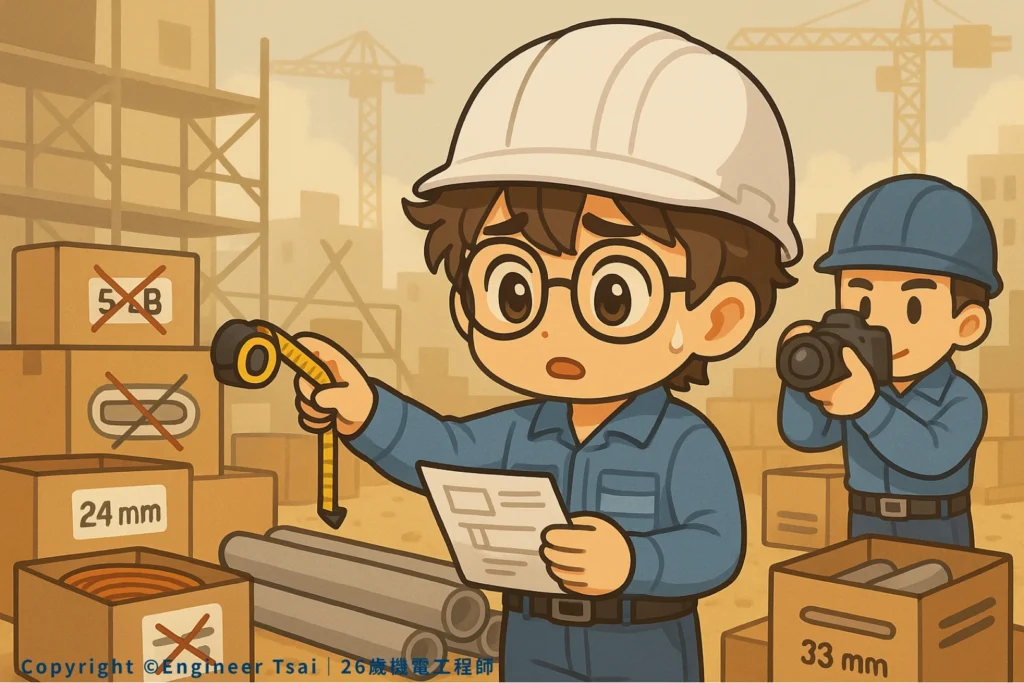
2. Materials arrive late and the entire jobsite is stuck
You’ve probably heard this line: “Everyone’s here… just waiting on materials.”
On a real jobsite, that’s not an exaggeration at all. In peak season, with supply chain issues and long lead times, one critical missing item can freeze an entire floor’s progress.
Typical scenarios:
The branch conduits are all hung, but that special fitting still hasn’t arrived. The ceiling grid is half closed, but the fire protection materials are still “on the truck somewhere.” The owner is pushing the schedule, and the field team is forced to rip things open and change the sequence. No one is happy.
Practical advice:
・For critical materials (main feeders, switchboards, transformers, fire protection equipment, specialized devices, etc.), build a separate critical material delivery schedule and flag anything that is “no-go for work” if it’s missing.
・For imported or custom-made items, account for lead time, shipping, customs, and possible delays – not just the supplier’s optimistic “about two weeks.”
・Keep regular contact with your supplier and warehouse. If anything unusual happens with a shipment, you want to hear about it early, not the morning your crew is standing around with nothing to install. Have “Plan B” options ready where possible.
3. Receiving, labeling, logging – none of these steps are optional
When materials hit the jobsite, the first step is not “tell the crew to grab what they need.” The first step is receiving inspection: open, measure, check, and document.
To save cost or time, some contractors will mix shipments, relabel boxes, swap in cheaper materials, or ignore damage that happened in transit. Dents, water damage, wrong ratings – most of that can only be caught in that first receiving moment.
On-site checklist that actually works:
- Bring a tape measure, caliper, and a phone or camera to every receiving. Check size, appearance, and markings in one go.
- Any material that looks suspicious or damaged gets tagged immediately and photographed. Ask the supplier’s or manufacturer’s rep to sign off on the receiving form and note the issue.
- For materials that pass inspection, label them on the spot: date, batch, floor/area, intended system (lighting, power, HVAC, fire, etc.), and, if possible, the corresponding drawing or detail. Future you will thank you when you’re trying to trace where a specific batch went.
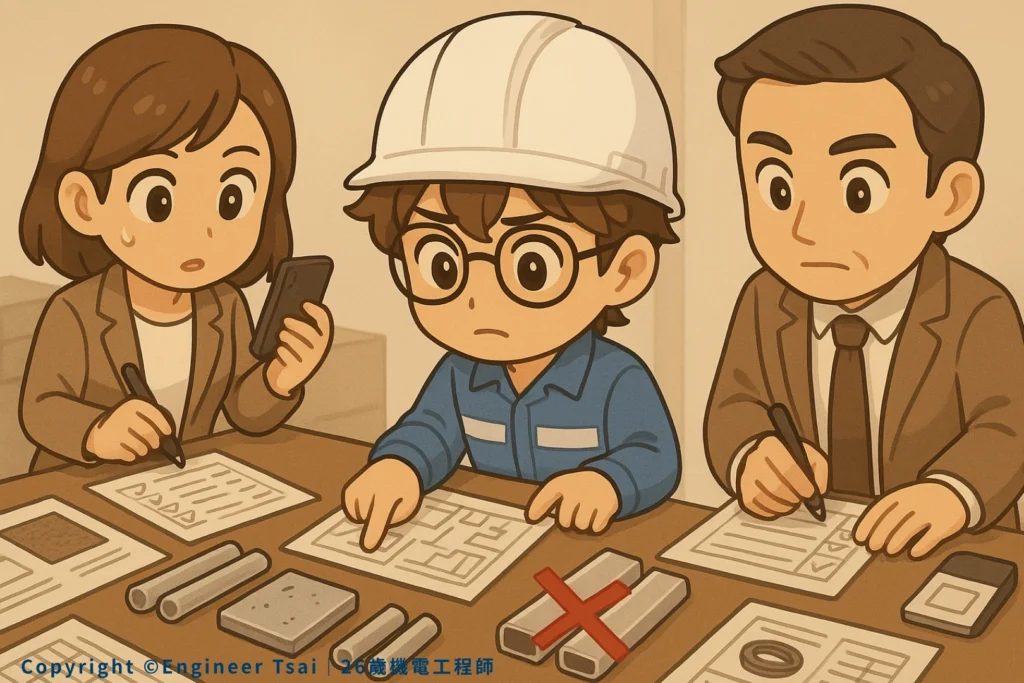
Quality Inspection: Not Just a Checkbox – It Can Literally Save Lives
1. The “walk-through only” inspection that misses real risk
On some projects, “quality inspection” is basically a walk-through: if it looks okay from a distance, it gets a stamp. If the inspector or owner’s rep doesn’t complain, everyone moves on.
The scary part is this: the most dangerous issues are usually the ones you can’t see from a quick walk-through. Undersized conductors, thin-wall conduit where it shouldn’t be, fire-rated materials swapped for cheaper options, missing supports, lazy routing that ignores code – those are the things that come back later as fires, shocks, and structural failures.
Doing quality inspection properly is not about being picky – it’s how you protect future occupants and yourself.
What to keep in mind:
・Check every item on the inspection form. If you’re not sure about something, ask a senior coworker, QA/QC, or the inspector to review it with you.
・Don’t skip sampling: measure conductor sizes, open up a few finished areas to check firestopping and fill, verify supports and spacing in concealed spaces.
・When the spec calls for pressure tests, water tests, functional tests, or burn-in periods – do them. The cost of rework later will be far higher than the half-day you “saved” by skipping tests.
2. If it’s not documented, it didn’t happen
Any inspection item that is disputed, deferred, or conditionally accepted needs three things: photos, written notes, and signatures.
A huge portion of jobsite disputes come from this trio: “We didn’t write it down,” “We didn’t take pictures,” and “We assumed everyone remembered.” By the time you’re closing out the project, everyone has a different version of what was agreed – and no one can prove their side.
Documentation approach that actually reduces headaches:
- Use a simple quality inspection log with checkboxes and a notes column for every item.
- Take photos for every area and every floor. Name folders or files with date, floor, and location in plain language so you can find them later.
- When there’s an issue, get the contractor, owner’s rep/inspector, and supplier or trade lead to sign off on the agreed fix and timeline. That way, discussions later are based on records, not memory.
3. Jobsite collaboration can’t run on “trust me” alone
You’ve probably heard some version of: “Boss, I promise it’s fine.”
In construction, promises only count when they’re backed by records and test results.
A solid construction material management and quality inspection process is not about distrusting your partners. It’s about protecting everyone on the job. When you can pull up photos, logs, and inspection forms, responsibility doesn’t automatically fall on the newest person on site. Instead, the team can talk in terms of process and decisions, not blame.
Field quotes to remember
“The tighter your material inspection, the easier your jobsite life.”
“Inspections aren’t about slowing people down – they’re how everyone gets home on time and in one piece.”
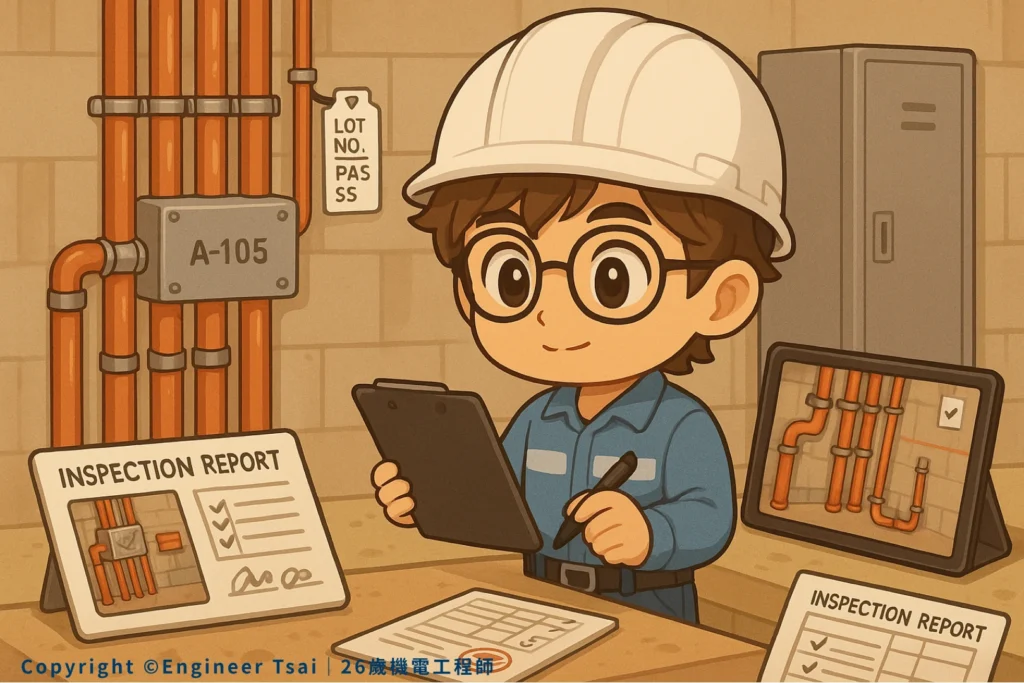
Jobsite cheat sheet (save for later)
- When materials arrive, take photos and label them first. Anything out of spec gets tagged and reported immediately.
- For important inspections, get all three parties on site whenever possible (field team, designer/inspector, and supplier or GC). Talk through issues on the spot.
- If you’re unsure about quality, document it. Don’t be afraid of “too many notes” – those records might be what protect you later.
- Back up inspection records regularly and organize them (by floor, system, or area). Future you – or the next project engineer – will thank you.
Your next move: making your jobsite safer and more organized, one day at a time
What kind of material or inspection landmine are you most worried about right now?
Specs that don’t match, wrong deliveries, or “he said, she said” arguments between trades?
Drop your stories in the comments – or share the material management flow that actually works for your team. You can also send this article to someone on your project who handles materials every day, and build better jobsite material management habits together.
If you like practical, real-jobsite breakdowns like this, hit follow. I’ll be talking next about how AI and IoT are changing jobsite roles – and what that means for field engineers and electricians on U.S. projects.
📌 Recommended reading:
🔹“DIY-Friendly Guide to Current and Voltage: Unlock the Basics”
Many inspection disputes actually come down to one thing: how much current and voltage is really safe here? Once you understand the fundamentals, jobsite conversations don’t have to end in shouting matches.
🔹“How Transformers Change Voltage: Principles, Types, and Real-World Uses”
Stable power quality and fewer nuisance trips often start with the right transformer choice up front. This article walks through real examples and key selection tips.
🔹“Field Safety Starter Pack: 5 Safety Rules Every Construction Pro Should Know” (in progress)
Beyond material management and inspection, jobsite safety is the floor everything else stands on. I’m putting together a checklist based on what I’ve actually seen in the field over the years.
Good construction material management and a consistent quality inspection routine won’t turn every project into a fairy tale. But they will give you clear records, fewer surprises, and a lot more leverage when something goes wrong.
Construction Material Management & Quality Inspection FAQ
Q1: Do I really need a dedicated person for construction material management?
A: On larger projects, you’ll often see a warehouse clerk, material coordinator, or dedicated QA/QC role handling this full-time. But even on smaller jobs, it helps to appoint at least one “material point person.” That person owns communication with suppliers and with the field crew, and keeps track of orders, deliveries, inspections, and returns so information doesn’t get lost across group chats and emails.
Q2: For small projects, do I really need such a complete material inspection flow?
A: You don’t have to copy a big public project’s full QA/QC process. But the basics — checking specs against the drawings, reviewing catalog cuts, taking photos, and keeping simple records — are worth doing on every job. When something goes wrong, the owner won’t be any less upset just because the budget was small. A simple but consistent material management process is exactly how smaller contractors build a better reputation.
Q3: The material doesn’t match the spec, but the owner wants it installed now. What should I do?
A: This happens a lot. The key is: don’t rely only on verbal approvals. At minimum, do three things: (1) clearly document the actual delivered spec, the differences, and potential risks; (2) take photos; (3) ask the owner or inspector to sign off on the record acknowledging the deviation and decision. This isn’t about pushing responsibility away — it’s about making sure the decision is transparent and recorded, so the job doesn’t blame the field crew later.
Q4: We don’t have a system or app. Can paper-based material management still work?
A: Yes. Many long-standing contractors survived for decades on paper records. You can start with three core tools: (1) a material in/out log; (2) a basic inspection checklist; (3) photos stored in an organized cloud folder. Once the team is used to this workflow, then you can look at adding a digital system or app. Tools can be upgraded later — habits need to come first.
Q5: I’m still new. Is there anything I can start doing today?
A: Absolutely. Start with three habits: (1) whenever materials show up, take a second to read the label and compare it to the drawing or spec; (2) join a few material inspections with your seniors and quietly take your own notes and photos; (3) whenever you see a “weird” material or installation, write it down and ask about it later. These are the building blocks of being able to run construction material management yourself one day.
Further Reading on Construction Material Management & QA
If you want to go deeper than this article, these official resources are a great starting point for construction material management, safety, and quality control:
- OSHA – Materials Handling and Storage (official OSHA guidance on safe handling, storage, and housekeeping for construction materials)
- NIOSH – Construction Safety & Health Topics (research-based insights and recommendations on common construction hazards and controls)
- U.S. Army Corps of Engineers – Construction Quality Management Student Guide (how federal projects structure quality control, documentation, and three-phase inspections)
Read next in this topic
- Your First Major Electrical Failure – Do You Remember How It Felt?
- Why “It’s Easy, Right?” Makes Every Engineer Cringe
- Smart Warehouse Automation: The Complete 2025 Guide for Decision-Makers
- What Construction Work Teaches About Patience, Progress, and Personal Growth
- 10 Construction Site Safety Mistakes That Drive Every Pro Crazy (and How to Fix Them)
- Smart Warehouse Field Engineering Made Easy: 2025 Guide for Engineers
- How to Spot (and Stop) Unsafe Behaviors on Your Crew
- Field-Proven Tips for Successful MEP Integration—From Planning to Inspection
- New Engineer Afraid of Making Mistakes? How to Turn Jobsite Anxiety into Growth
- Top Material Handling Mistakes And How To Fix Them On The Jobsite
- Why Great Employees Fail in the Wrong Roles—NBA-Style Insights
- The Truth About Blueprints: Field Fixes Every Pro Should Know