These Electrical Guides turn core electrical concepts into short, field-tested lessons with diagrams and checklists. Start with the basics, then follow a learning path for home wiring, safety, and components. Each Electrical Guide ends with a quick task, a tool list, and a study map so you can practice today and return later with confidence.
First, search a topic. Then, pick one guide and finish a quick task. Afterward, use the checklist to confirm the result. Additionally, each article links to tools and study maps, so you can learn fast and act with confidence.
To start, browse the latest posts. Then, pick one guide and try a single task. Afterward, use the checklist to confirm the result. In addition, each article links to tools and study maps, so you can learn and act with confidence.
All articles
-
Preparing Your Texas Electrical Crew for a Data Center Job
Plan extra study for a data center assignment: power-path drawings, records, backup systems and low-voltage coordination for apprentices and Journeymen.
-
Hiring a Texas Apprentice Who Brings Hours From Another Job
A first-week conversation for Texas contractors hiring an apprentice with previous hours: find the records, identify supervisors and agree on the next…
-
Electrical Theory Reading for New Hires at a Texas Contracting Shop
Existing electrical theory pages to share with new helpers and apprentices, from electrical quantities to grounding, bonding and protective functions.
-
Journeyman Mentors: Better Feedback for Texas Apprentices
Arrange useful feedback between a Journeyman and an apprentice: confirm review timing, keep corrections clear and choose the next Texas skill-tree topic…
-
A Shop Practice Area for Your New Electrical Helper in Texas
Plan supervised, unpowered practice for a new electrical helper at your shop. Use existing pulling and termination readings, record feedback and choose…
-
New Electrical Helpers: Build a Habit of Checking the Task
Help a new electrical helper review an assignment, raise questions and hand over unfinished work. Choose the next Texas skill-tree reading together.
-
Test Equipment Reading for New Electrical Helpers in Texas
Choose extra reading for helpers approaching measurement work: instrument types, meter vocabulary and test-result notes, alongside your company’s own training.
-
Getting a New Electrical Helper to the Jobsite in Texas
A commute discussion for Texas electrical employers hiring a new helper: confirm the meeting point, site updates and the contact for a…
-
Reporting Reading for New Electrical Hires in Texas
Existing reporting reading for Texas electrical employers welcoming helpers and apprentices, with optional ways to share links and choose further study.
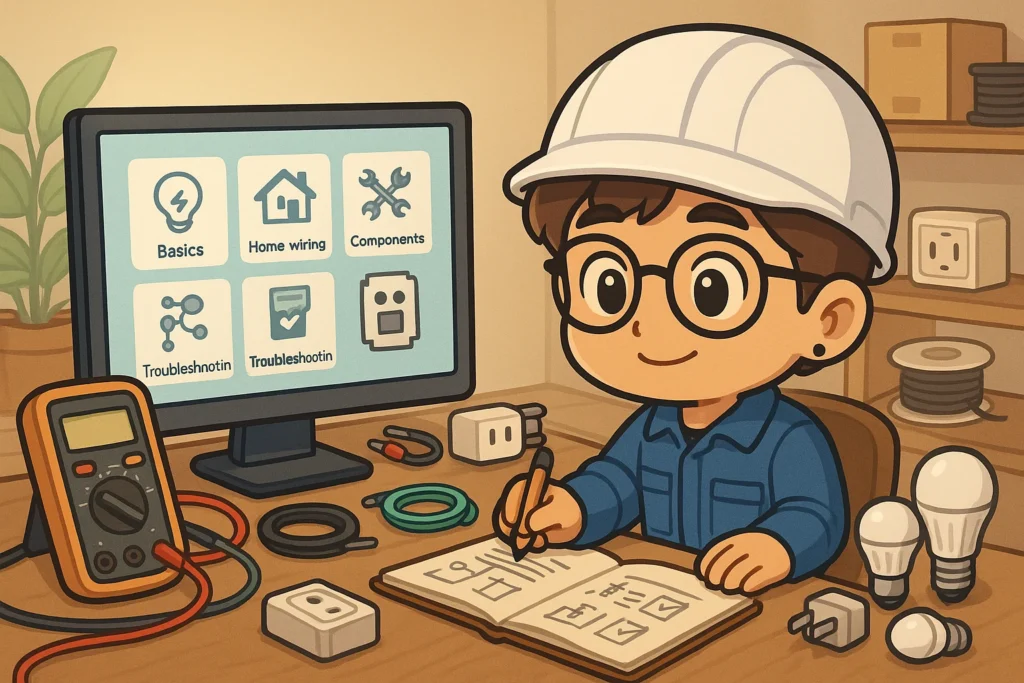
About this Electrical Guides Library
This page is your index for all electrical guides on Tsai Electro. Moreover, you can search and filter tutorials covering basics, home wiring, components, safety and troubleshooting. Because each guide keeps theory short and focuses on steps, diagrams and checklists, you learn faster. As a result, you can move from reading to doing with less guesswork.
Topics These Electrical Guides Cover
Electrical fundamentals · Ohm’s law · AC/DC basics · Home wiring and outlets · Protective devices and relays · Meters and safe measurement · Components and LED drivers · Troubleshooting common faults and practical fixes.
How to Use These Electrical Guides
- First, use the search box or category pills to find a topic.
- Next, open one guide and complete a single task with the checklist.
- Finally, save the tools and diagrams linked inside each article for later jobs.
FAQ
Where should beginners start?
For beginners, start with Tutorials, then the “Electrical Basics” path; after that, move to wiring and safety.
Are these tutorials safe for DIY?
Yes, but always follow safety notes; if unsure, consult a licensed professional.
What tools do I need?
Typically, a non-contact tester, a multimeter, insulated screwdrivers and proper PPE are enough.
What’s the difference between Articles and Tutorials?
In short, Tutorials are step-by-step lessons, whereas Articles are quick reads for specific topics.
Can I use these guides for my home wiring?
However, codes differ by region; therefore, always follow your local electrical code.
Popular paths: