
On this page
Table of Contents

If you want a full understanding of how home electrical systems work, start with the safety overview: 🔹 “Home Electrical Safety Guide: Panels, Breakers, Grounding, AFCI/GFCI, and Common Faults”
Once you know the big picture, this article becomes much easier to follow.
When the power goes out at home, it’s rarely just because “you turned on too many things.”
More often, it’s poorly planned circuits, an aging panel, and zero preparation for what to do when everything suddenly goes dark.
Some people’s only reaction to a blackout is yelling, “Call an electrician!”
But in the safest homes, the home power outage plan starts long before the lights go out: circuits are labeled, backup power is ready, and everyone knows what to do without waiting for a professional to show up.
This guide is not a DIY repair manual or an emergency “fix it now” checklist. Instead, we’ll walk through everyday planning: how you split your circuits, protect critical devices, upgrade older wiring, use smart plugs, and run simple family drills—so your home power outage plan becomes a system you can actually use.
Even if the whole house goes dark, your family can still stay calm, organized, and safe.
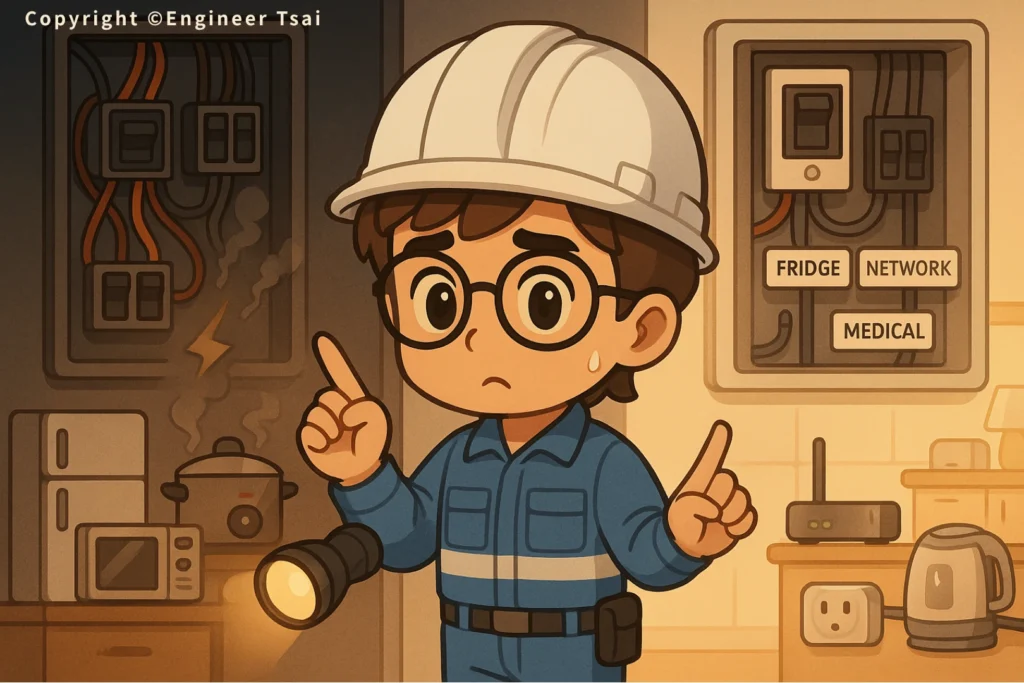
1. Start with your circuits: give your home some breathing room
Open your breaker panel for a second. Does it look like this: one big main breaker and a bunch of unlabeled small ones?
For a lot of homes in the U.S., the real problem isn’t “no electrician.” It’s that nobody ever planned the circuits properly—so when the power goes out, the home power outage plan is simply “hope for the best.”
Here are a few situations I see all the time:
- The refrigerator shares a circuit with the microwave and electric kettle. Every time someone cooks, the breaker trips and your groceries are at risk.
- The Wi-Fi router and TV are on the same circuit as half the living room, so when something overloads, your cameras and smart doorbell all go offline at once.
- A family member uses medical equipment (oxygen concentrator, hospital bed, etc.), but it’s still plugged into a random outlet on a shared circuit. One trip, everything shuts off—high risk, zero protection.
Action tips (circuit-based power outage planning):
- Give the refrigerator, network gear, and medical devices their own dedicated circuits whenever possible. In the panel, use clear labels like “Fridge Only” or “Router + Cameras.”
- If you can, hire a licensed electrician to pull those critical loads off “mystery circuits.” Don’t just keep adding power strips and extension cords—that only increases overload and fire risk.
- If someone in your home depends on medical equipment, talk with your electrician about a dedicated circuit plus a small UPS. That becomes the “advanced version” of your home power outage plan for medical needs.
2. Prevention beats emergency repairs: routine checks that make outages easier
Many people only notice problems at the exact moment the lights go out:
“That wire has been old for years.”
“That outlet has been loose forever.”
For your home, the most effective power outage preparedness actually starts far before the outage.
Quick home checkup (every 6 months):
- Breaker panel: Is the door rusted or damaged? Do any breakers feel stuck or hard to switch? Are the labels clear enough that anyone in the family could understand them?
- Outlets and power strips: Do heavily used outlets feel warm or look discolored? When you plug something in, does the plug feel loose or wiggle easily?
- High-power appliances (microwave, oven, space heaters, window A/C, electric water heater): Do you see a pattern where “every time we turn this on, the breaker trips”? If yes, don’t just keep flipping the breaker back on—have a pro check whether it’s a circuit design or wiring issue.
Upgrade tips (so your home power outage plan has real backup):
- Panel upgrades for older homes: If you live in an older house or apartment, ask a licensed electrician whether your panel and breakers should be upgraded (for example, to modern breakers with better overload and ground-fault protection). It helps with everyday safety and makes future outages easier to handle.
- Pair critical loads with a UPS: For key devices—especially the fridge, Wi-Fi router, and medical equipment—consider small, dedicated UPS units (uninterruptible power supplies). Even 30–60 minutes of backup can buy you time to respond, move food, or switch locations.
- Whole-home checkup every few years: If your place is 20+ years old, having an electrician do a “full health check” every 3–5 years is usually cheaper (and less stressful) than repeated emergency calls when something finally fails.
3. Smart home power: using tech to strengthen your power outage plan
A solid home power outage plan doesn’t have to rely only on an old-school breaker panel. Modern smart-home devices can quietly add extra layers of protection in the background.
- Smart plugs and energy monitors: These can track how much power a single outlet or circuit is using. If power suddenly spikes or a device overheats, some systems can send an alert to your phone—or even shut off that outlet automatically.
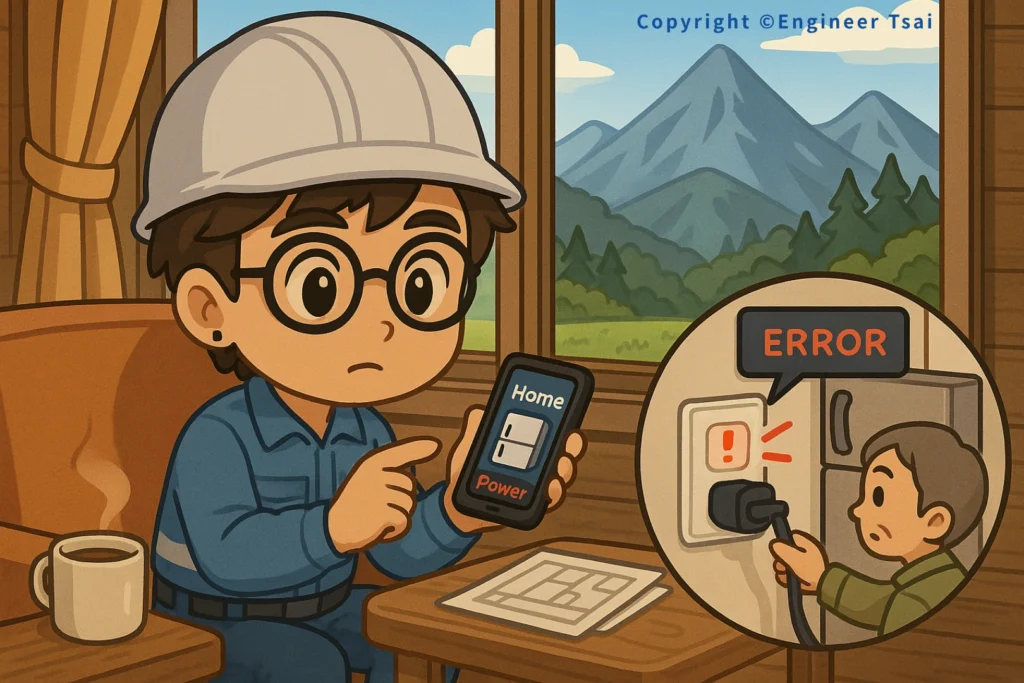
- Remote monitoring apps: When you’re traveling, you can still see the status of key circuits. If the circuit feeding your fridge or cameras goes down, you can ask a neighbor, friend, or building manager to check before the food spoils or security cameras go offline for hours.
- Voice control and scheduled lighting: For homes with kids or older adults, being able to turn on key lights by voice (or automatically) reduces the risk of falls during sudden outages or when the power comes back.
Real-life example:
A friend of mine was on a business trip during a major storm. Through his smart plug app, he noticed the “fridge circuit” had gone offline. He quickly called a neighbor to check on the house and found that an old breaker had tripped early.
Without that smart layer in his home power outage plan, he would’ve come home to a refrigerator full of spoiled food.
4. Practice as a family: the more you drill, the less you panic
In a lot of homes, a blackout feels like “camping in the living room” for the kids.
That’s fun for them—but a truly effective home power outage plan isn’t about luck. It’s about everyone knowing, “When the power goes out, here’s what I do next.”
Action tips (run a real mini-drill):
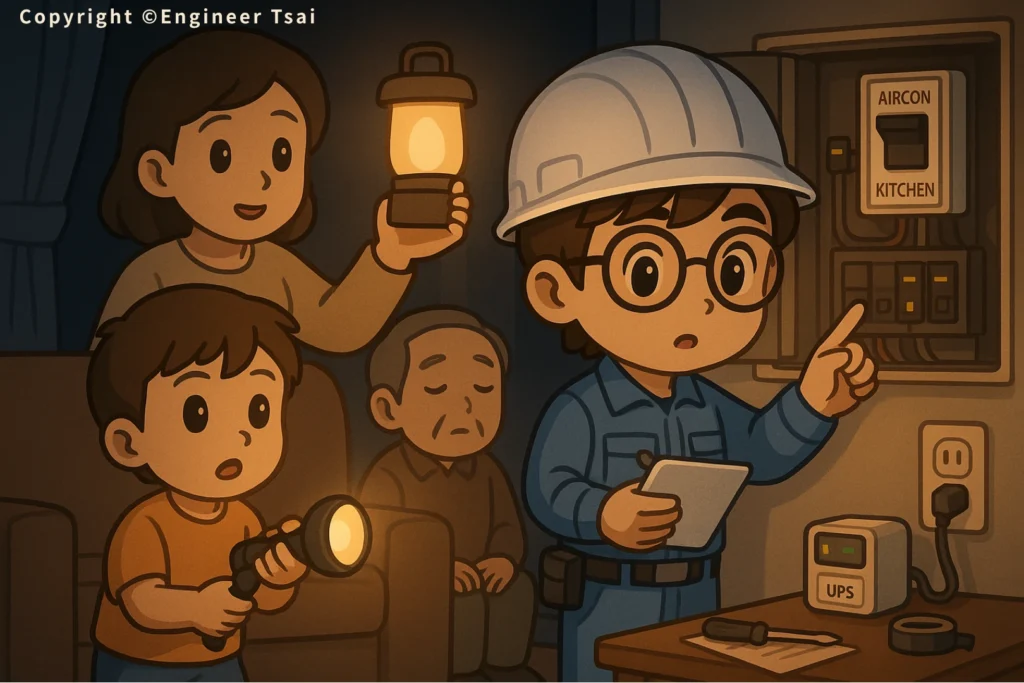
- Simulate a full power outage: Pick an evening and intentionally shut off the main breaker for 5–10 minutes. Treat it as a practice run, not a prank.
- Assign roles: Who grabs the flashlights? Who stays with the kids or older relatives? Who goes to the breaker panel? Who checks on the fridge, medical equipment, or router?
- Debrief afterward: Were the flashlights easy to find? Is the path to the panel safe to walk in low light? Are emergency contacts and portable chargers kept in consistent, easy-to-reach spots?
- Repeat before high-risk seasons: Do a short drill once a year—or every 6 months if you live in an area with frequent storms, wildfires, or grid issues. Make it part of your family’s standing home power outage plan.
5. Common home power outage mistakes – how many do you recognize?
Some habits feel “convenient” but quietly weaken your power outage preparedness and overall safety.
- Everything on one power strip: The TV, game consoles, robot vacuum, and multiple chargers all daisy-chained into one strip. When that strip or circuit trips, half your living room dies—and troubleshooting becomes a headache.
- Unlabeled breakers: During an outage, the only strategy is flipping breakers randomly and hoping the right one clicks. Some people even slam a tripped breaker back on without knowing what caused it in the first place.
- “Set and forget” UPS units: You buy an uninterruptible power supply, plug things in, and never test it again. The day you actually need it, the battery is long dead and provides almost no backup.
- Medical devices on shared circuits: Medical equipment sharing a circuit with window A/C, space heaters, or random outlets. It looks convenient, but any issue on that circuit can directly impact someone’s health. This is the last place you want to cut corners.
One sentence to remember:
Power outages aren’t the scary part—being unprepared is.
With a little planning and a few small changes, you can remove a lot of the risk before the lights ever go out.
6. Annual home power outage checklist
Not sure where to start? Use this as your basic home power outage checklist and build from there:
- Label key circuits and separate critical loads: Make sure the fridge, network gear, and medical devices have clear labels, and ideally their own circuits.
- Inspect the panel and wiring: Look for rust, odd smells, or heat around the panel. In older homes, talk to an electrician about a full inspection or possible upgrades.
- Test UPS units and power banks: Every 3–6 months, charge and discharge your UPS and portable batteries to confirm they still hold a charge and can support your devices.
- Install smart plugs or energy monitors: Start with one or two critical circuits (fridge, router + security cameras). A little extra visibility goes a long way in your home power outage plan.
- Run a family outage drill: At least once a year, practice your roles, confirm where tools and flashlights are, and verify all important phone numbers are easy to find.
7. Closing thoughts: when your home power outage plan is in place, life feels different
Instead of scrambling every time the power goes out, treat your home power outage plan as a small project for your household.
One circuit adjustment, one routine check, one short family drill—each step buys you more time and more options when something unexpected happens.
Electricity at home shouldn’t just be “as long as it works, it’s fine.”
The real confidence comes from knowing that even if the lights go off, everyone knows what to do next. That “we’ll be okay even in the dark” feeling is something you build over time.
📌 Further reading:
🔹 “Breaker Tripping at Home: A Simple Step-by-Step Troubleshooting Guide”
What should you check first when a breaker trips? This guide helps you read the situation calmly before you reset anything—perfect to pair with your home power outage plan.
🔹 “5 Essential Electrical Tools Every Homeowner Should Own”
Having the right basic tools makes everyday issues and outage checks much easier to handle on your own.
🔹 “What Is Grounding? The First Step to Staying Safe Around Electricity”
If you want your power outage preparedness to be rock-solid, your grounding system needs to be in good shape too.
📌 Official resources to support your home power outage plan
🔹 Ready.gov – Power Outages
U.S. federal guidance on what to do before, during, and after a power outage. You can combine this with your own home checklist and family plan.
🔹 American Red Cross – Power Outage Safety Tips
Practical advice on staying safe, protecting food, and caring for vulnerable family members during extended outages.
Does your household already have a home power outage plan? Have you upgraded circuits, added a UPS, or done a family drill that really helped?
Share your stories in the comments—your experience might help someone else feel a lot less stressed the next time the lights go out.
❓ FAQ – Home power outage plan questions
Q1 | My breakers trip a lot. Should I call an electrician first or build a home power outage plan?
If you’re seeing frequent tripping—especially “every time we turn on this one thing, the whole area goes dark”—start by calling a licensed electrician. You want to rule out serious issues like overloaded circuits, bad connections, or aging equipment. Once obvious problems are fixed, use this guide to label circuits, separate critical loads, and set up UPS units and smart plugs. Think of it as doing both: repair + home power outage plan at the same time.
Q2 | I’m renting. Is it still worth creating a home power outage plan?
Yes—just keep it renter-friendly. You may not be allowed to change the panel or wiring, but you can still: (1) learn where the breaker panel is and label what you can; (2) decide where flashlights and power banks are stored; (3) agree on roles with roommates or family; (4) use a small UPS for your router or work equipment; and (5) report hot or damaged outlets to your landlord with photos. That’s a great “lightweight” home power outage plan for renters.
Q3 | Do I really need UPS units and power banks?
Not every home needs a huge backup system, but most should have at least: (1) a few reliable power banks for phones and basic lighting; and (2) a small UPS for critical gear like your Wi-Fi router, work equipment, or medical devices. For families with older adults, young kids, or people working from home, a short buffer during an outage often means the difference between “inconvenient” and “unsafe.” Treat it as part of your power outage preparedness budget.
Q4 | We have medical equipment at home. What extra steps should we take?
In addition to the circuit planning and UPS suggestions in this article, add a few more steps: (1) ask the doctor or equipment provider how long the device can safely be without power; (2) plan backup options, such as a secondary device, a nearby location with reliable power, or emergency transport if needed; (3) write a simple “medical power outage card” with instructions, time limits, and emergency phone numbers, and keep it near the equipment or breaker panel. That way, anyone in the home can follow your home power outage plan under stress.
Q5 | How often should we practice our home power outage plan?
For most households, once a year is enough. If you live in an area with frequent storms, wildfires, or grid issues, consider a short drill every 6 months. The goal isn’t to memorize a script—it’s to make sure everyone knows: where the panel is, where the flashlights are, who checks on kids or older relatives, and who looks after the fridge and medical devices. The more familiar this feels, the calmer you’ll be when a real outage happens.
Read next in this topic
- What Is a Short Circuit? 7 Things Every Homeowner Should Know
- Smart Home Energy Management: A Simple Starter Guide for Safer, Cheaper Power at Home
- What Is Electrical Grounding? A Simple Guide to Safer Power at Home
- How to Choose Home Lighting: A Practical Guide from an Engineer Who Learned the Hard Way
- Home Electrical Safety: Turning Off Your Main Breaker Made Simple
- Home Electrical Safety and Power Outage Preparedness: A Practical Guide for U.S. Households
- What to Do When Your Breaker Keeps Tripping at Home
- How to Avoid Electrical Fires When Using Smart Outlets at Home
- From Power Outages to Food Shortages: Hurricane Prep Made Simple
- 6 Common Signs of Electrical Problems in Your Home (And What to Do First)
- Loose Electrical Outlet? Here’s How to Repair It Safely
- Top Mistakes in Home Electrical Setup (and How to Fix Them)
- Do Home Wires Really Wear Out? The Truth About Old House Wiring In The U.S.
- How to Weatherproof Your Home: Windows and Doors Made Easy
- Static Shock in Winter? 5 Causes + 5 Fixes (Home + Clothes)
- Electric Meter Reading Explained (5-Step Guide): What kWh Really Means on Your Bill
- Home Electrical Safety in the AI Era: From Short Circuits to Old Wiring (and Your First 0–3 Months as an Electrician)
- How to Choose an Extension Cord Safely: 5 Rules to Prevent Overheating
- Home Electrical Panel and Outlet Guide: How to Plan Safer Circuits for Your Home
- Same Breaker Keeps Tripping? 7 Real Reasons (Wattage, Inrush, Loose Connections)

