
On this page
Table of contents
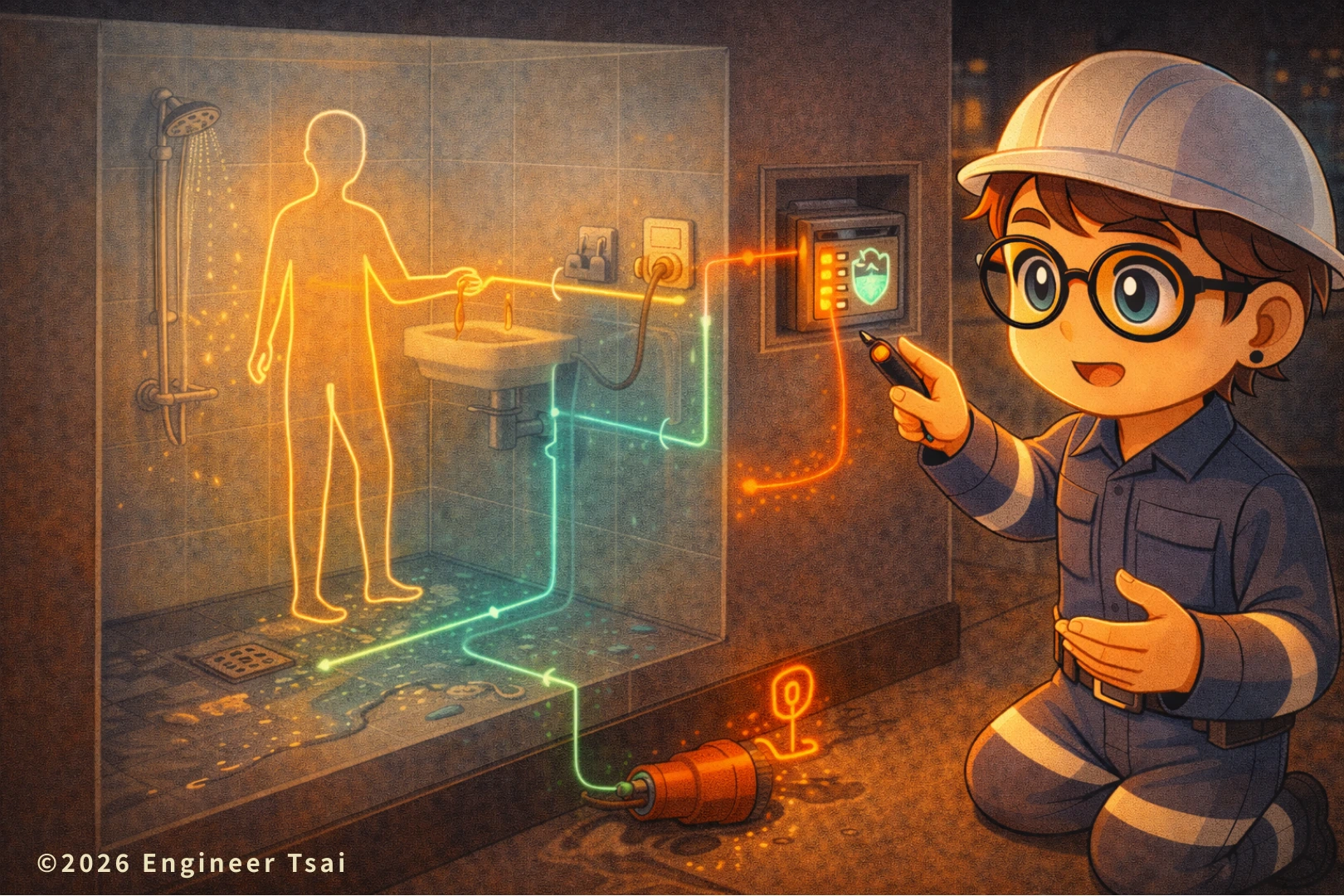
How a GFCI protects you can be explained in one line: it’s not there to “protect the appliance,” it’s there to protect you. If your GFCI feels “too sensitive” or “keeps tripping,” it’s usually because you only see the inconvenience — not the shock path it’s blocking. That’s the whole point of How a GFCI protects you.
In this guide, I’ll break it down in plain English: what it protects, how it decides to trip, and what to do safely when it keeps tripping. You’ll walk away with practical decision logic — the kind that actually helps in real life — and you’ll finally feel you understand How a GFCI protects you without reading a textbook.
▶️ Watch now: understand How a GFCI protects you in 90 seconds
Start with the short video to get the big picture: how a standard breaker differs from a GFCI/RCD, why bathrooms and outdoor outlets trip more often, and what your first safe step should be so you don’t make it worse — a quick visual on How a GFCI protects you.
Chapter 1 — What a GFCI (RCD) actually protects: it’s not “annoying trips,” it’s shock risk
Here’s a common scene: you turn on a bathroom heater fan, a hair dryer, a washing machine in the laundry area, or you plug an extension cord outside… and pop — it trips. You reset it, and it trips again. The first thought is usually: “Is this thing too sensitive? Can I just remove it?”
But if you come back to the real question — How a GFCI protects you — the answer is simple: it reduces the chance that your body becomes the return path. This is exactly How a GFCI protects you when something goes wrong near water or metal.
In most cases, a GFCI (the US term; internationally you’ll also hear RCD) trips because it detects that some current didn’t come back the normal way. That missing current might be leaking into a metal case, a damp wall, wet flooring, or — worst case — through you. The trip is the device saying: “I don’t like this path. I’m cutting power now.”
Think of it like an electrical airbag. Most days it feels unnecessary. The day it matters, it usually matters a lot — and you’ll understand How a GFCI protects you the moment it trips for a good reason.
Safety note: this article is about decision logic and safe first steps. If you smell burning, see smoke, feel heat at an outlet, or the GFCI trips immediately the moment you reset it, stop and call a licensed electrician. Don’t keep “trying again.”
Chapter 2 — One table to get it: GFCI/RCD vs circuit breaker (MCB)
| Protection device | What it mainly detects | When it commonly trips | What it won’t always protect you from |
|---|---|---|---|
| Circuit breaker (MCB / standard breaker) | Overload (too much current for too long) / short circuit (massive current instantly) | Too many devices on one circuit, damaged wiring shorting | Small leakage currents — especially “slow leaks” from moisture or aging insulation |
| RCD (international term) | Ground-fault leakage (current going where it shouldn’t) | Bathrooms, outdoors, damp areas, aging appliances, moisture creating a leak path | Overload / short circuit (usually paired with a breaker) |
| GFCI (US term) | Ground-fault leakage (human shock protection focus) | Bathrooms, kitchens, garages, basements, laundry areas, outdoors | Overload / short circuit (still the breaker’s job) |
| GFCI breaker (panel) | Breaker + GFCI protection in one device | Provides ground-fault protection for the whole circuit | Not “everything”: loose connections and worn outlets can still overheat and need repair |
One sentence to remember: a breaker protects wiring from overheating and fire risk; a GFCI protects people from shock paths. Different jobs. Not replacements. If you only remember one idea about How a GFCI protects you, remember this separation of roles.
Chapter 3 — Plain-English logic: it compares “current out” vs “current back”
So, How a GFCI protects you is surprisingly straightforward: in normal operation, the current leaving on the hot conductor should match the current returning on the neutral. The GFCI constantly compares those two.
If it sees a mismatch — even a small one (typically around a few milliamps) — it assumes current is leaking somewhere it shouldn’t, and it trips quickly. That fast trip is a core part of How a GFCI protects you.
That “somewhere else” is often: moisture, damaged insulation, a metal case, a wet surface, or a person. That’s why a GFCI doesn’t care how “big” the appliance is — it cares whether electricity is taking a wrong path. And that’s the simplest way to picture How a GFCI protects you.
If you want the mental picture behind “leakage paths,” grounding, and bonding, pair this with your grounding article (it makes bathrooms/outdoors instantly make sense): Grounding vs bonding (related read).
Chapter 4 — Where you need it most: bathrooms, kitchens, laundry, outdoors (it’s not superstition)
You’ll notice GFCIs show up in the same kinds of places: near water, near metal, and where your body is more likely to be grounded — bathrooms, kitchens, laundry areas, garages, basements, outdoors. Those locations are exactly where How a GFCI protects you matters most.
Why? Moisture makes it easier for “almost-not-a-connection” to become a real leak path. And in those spaces you’re more likely to be barefoot, damp, and touching metal fixtures — conditions that can turn a small leakage current into a real hazard.
If you’re checking receptacles (especially in bathrooms/outdoors), this related post is the safer starting point: How to identify grounding/neutral at an outlet (related read).
Chapter 5 — Safe checks you can do: TEST/RESET, one-time reset rule, when to stop
(1) Identify what you have
In the US, GFCI protection is commonly either a GFCI receptacle (with TEST/RESET buttons) or a GFCI breaker in the panel. Internationally you may see “RCD/RCCB/ELCB” at the panel. Knowing which one you have makes How a GFCI protects you easier to troubleshoot safely.
(2) Press TEST: it should trip
Pressing TEST should cut power (or trip the breaker). If TEST does nothing, treat it as a red flag — it may be failed or wired incorrectly. “Not tripping” is not “less annoying.” It’s less protection.
(3) Reset once, then observe
If it trips immediately again the moment you reset it, that usually means the fault is active right now. Don’t keep cycling it. Every reset is a gamble that the wrong path won’t be through you — and that undermines How a GFCI protects you.
(4) Stop immediately if you see/feel these
Burning smell, smoke, heat at an outlet, tingling on a metal case, or trips tightly correlated with showering/rain/humidity — stop and get professional help. Don’t “test” with your body.
If you want a wider “whole-house power trip” flow, link your troubleshooting article here: What to do when power trips at home (related read).
Chapter 6 — Safe troubleshooting SOP: “keeps tripping” — moisture vs a failing appliance
Use this order for one goal only: don’t turn troubleshooting into a shock risk. The SOP below is built around How a GFCI protects you: isolate the leak path without putting yourself in the circuit.
Step 1 — Unplug everything on the “most suspicious” area
Bathroom heater fan, dehumidifier, washer, outdoor extension cords, kettle, space heater — unplug first.
Step 2 — Reset once and observe
Trips immediately: treat it as an active ground-fault risk. Stop here and call a licensed electrician.
Doesn’t trip: go to Step 3.
Step 3 — Plug devices back in one by one
After each device, wait and use it briefly. If it trips only when one specific device is used, that device (or its cord/outlet) is your top suspect — stop using it.
Step 4 — If it trips only when it’s damp: treat the environment as the trigger
Rainy days, high humidity, during showers, wet laundry floors — these often “activate” a weak insulation/leak path. Dry things out, address leaks/condensation, then re-evaluate. This pattern is a classic example of How a GFCI protects you from changing conditions.
Step 5 — Overload and ground-fault can happen together
Sometimes you’re dealing with both: a circuit that’s already near its limit, plus a moisture-related leak. It can feel chaotic. Separate the problems: leakage (GFCI) vs load (breaker).
If you have a “same circuit keeps tripping” wattage logic post, link it here: Why a breaker trips (load logic) — related read.
Chapter 7 — 3 common myths: what feels “convenient” can be dangerous
Myth 1 — “It trips too much, so I’ll remove the GFCI”
That’s like removing a seatbelt because it wrinkles your shirt. If it trips, it’s pointing at a condition worth fixing — especially near water. Removing it cancels out How a GFCI protects you when you need it most.
Myth 2 — “I have a GFCI, so overload/short-circuit doesn’t matter”
GFCI is for ground faults. Breakers handle overload/short circuits. You want both layers working correctly.
Myth 3 — “I’ll touch it and see if it tingles”
Please don’t. You’re not a test instrument. Ground faults should be diagnosed with proper tools and procedures — not your body.
FAQ — How a GFCI protects you (common questions)
Q1: My GFCI tripped — does that always mean there’s a real fault?
A: Most of the time it means the device detected a hot/neutral mismatch (a ground-fault risk). But the cause can range from moisture, aging insulation, to a failing appliance. Treat it as a warning: do safe isolation checks first, and don’t keep force-resetting it — that’s exactly when you want to respect how a GFCI protects you.
Q2: I have a 2-prong outlet (no ground). Is GFCI protection still useful?
A: Yes. A GFCI doesn’t “need” a ground wire to work — it compares hot vs neutral current. Grounding is still important for overall safety, but lack of a ground doesn’t make GFCI pointless.
Q3: Why do bathrooms/outdoor outlets trip more? Is my GFCI too sensitive?
A: Usually it’s not “too sensitive.” Those spaces are more likely to create leakage paths (moisture, metal, bare feet, damp skin). More trips there often match what the device is designed to catch — it’s a real-world example of how a GFCI protects you.
Q4: The TEST button does nothing — what should I do?
A: Don’t ignore it. If TEST doesn’t trip, the device may be failed or miswired. That’s a “no protection” scenario. Have it checked/replaced by a qualified electrician.
Q5: What’s the difference between a GFCI and an AFCI?
A: GFCI focuses on shock protection (ground faults) — that’s how a GFCI protects you from becoming part of the circuit. AFCI focuses on detecting dangerous arcing conditions that can lead to fires. They address different risks, and some circuits may use both depending on local code and location.
📌 Related reads
🔹“Power keeps tripping at home” — a calm, step-by-step checklist
When the whole house (or a big chunk of it) goes out, what’s the first safe thing to do? This is the “don’t panic” flow.
🔹Grounding vs bonding (equipotential): why bathrooms/outdoors feel “extra sensitive”
If you want the mental picture behind shock paths, this makes the “why” click fast.
🔹Outlet basics: neutral vs ground (what homeowners should know before touching anything)
Not a wiring tutorial — just the “don’t mix these up” level that keeps you safe.
🔹Breaker labels explained: what the numbers and letters actually mean
A lot of dangerous DIY starts with “I’ll just swap to a bigger breaker.” This helps you avoid that trap.
🔹Why a breaker trips: common scenarios + load logic (wattage thinking)
If your issue is “it trips after running a while,” this helps you narrow the cause safely.
🔹Home electrical safety hub: shock, fire risk, older wiring, outage basics
A “save this” page if you want all the home safety essentials in one place.
External references
- U.S. CPSC — Electrical safety guide (includes GFCI safety concepts)
- NFPA — Home electrical safety (fire prevention basics)
- ESFI — Home electrical safety education resources
If you want, comment which scenario you’re in: “Trips immediately on reset”, “Only trips when it’s damp”, or “Trips only when one appliance runs”. I can map your situation to How a GFCI protects you in that moment — and what the safest next move is.
Read next in this topic
- What Is a Short Circuit? 7 Things Every Homeowner Should Know
- Smart Home Energy Management: A Simple Starter Guide for Safer, Cheaper Power at Home
- What Is Electrical Grounding? A Simple Guide to Safer Power at Home
- How to Choose Home Lighting: A Practical Guide from an Engineer Who Learned the Hard Way
- Home Electrical Safety: Turning Off Your Main Breaker Made Simple
- Home Electrical Safety and Power Outage Preparedness: A Practical Guide for U.S. Households
- What to Do When Your Breaker Keeps Tripping at Home
- How to Avoid Electrical Fires When Using Smart Outlets at Home
- From Power Outages to Food Shortages: Hurricane Prep Made Simple
- 6 Common Signs of Electrical Problems in Your Home (And What to Do First)
- Loose Electrical Outlet? Here’s How to Repair It Safely
- Top Mistakes in Home Electrical Setup (and How to Fix Them)
- Do Home Wires Really Wear Out? The Truth About Old House Wiring In The U.S.
- How to Weatherproof Your Home: Windows and Doors Made Easy
- Static Shock in Winter? 5 Causes + 5 Fixes (Home + Clothes)
- Electric Meter Reading Explained (5-Step Guide): What kWh Really Means on Your Bill
- Home Electrical Safety in the AI Era: From Short Circuits to Old Wiring (and Your First 0–3 Months as an Electrician)
- How to Choose an Extension Cord Safely: 5 Rules to Prevent Overheating
- Home Electrical Panel and Outlet Guide: How to Plan Safer Circuits for Your Home
- Same Breaker Keeps Tripping? 7 Real Reasons (Wattage, Inrush, Loose Connections)

