
On this page
Table of Contents

If you want a full understanding of how home electrical systems work, start with the safety overview: 🔹 “Home Electrical Safety Guide: Panels, Breakers, Grounding, AFCI/GFCI, and Common Faults”
Once you know the big picture, this article becomes much easier to follow.
Ever notice how the mood at home changes the moment the forecast mentions a hurricane watch or tropical storm warning?
Someone starts stocking up on snacks and bottled water, someone else is digging through drawers for flashlights,
and the kids are just excited that school might be canceled.
But if you’re the one responsible for the household, you still feel that knot in your stomach — the fear of realizing at the last minute: “we didn’t prepare this… and we forgot to check that…”
The truth is, hurricane safety isn’t about luck. It’s about whether you’ve quietly gone through your hurricane preparedness checklist before the storm arrives.
This article isn’t meant to be a giant list you skim once and close.
It turns real job-site safety habits into a practical hurricane preparedness checklist that U.S. households can actually use —
whether you live with family or rent a small apartment on your own.
We’ll focus on the small things that are easy to overlook but become a huge headache when something goes wrong.
If you walk through this checklist item by item, you’ll feel a lot more confident when the wind and rain start picking up.

Hurricane preparedness checklist: from power to family coordination
1. Power: when the lights go out, do you have a backup plan?
Ask anyone who’s been through a big hurricane: the thing people worry about first is usually a complete power outage.
At the beginning, a few candles might feel cozy. But if the power stays out for hours:
food in the fridge and freezer starts creeping toward the danger zone, your Wi-Fi goes down, phones are losing battery,
and if anyone in your home relies on medical equipment, the pressure ramps up fast.
On the “power” part of your hurricane preparedness checklist, start by checking these:
- Do you have an uninterruptible power supply (UPS) or backup battery? If you do, try to prioritize your refrigerator, Wi-Fi router, and critical medical or work devices.
- Are all your power banks fully charged? Ideally, each person in your home has at least one. As soon as a hurricane watch or warning is issued, plug in everything and charge it to 100%.
- Where are your flashlights and headlamps? Keep at least one on each floor or in each main room. Check or replace batteries every 6 months so you don’t grab a rusty, dead flashlight in the dark.
- Is your electrical panel clearly labeled? Take a few minutes to mark which breaker controls which room or appliance. When something trips during a storm, it’s much less stressful than flipping switches at random.
Quick tip:
“Five extra minutes of prep now can save five hours of stress during a storm.”
For most families, the most important square on the hurricane preparedness checklist is keeping basic power and communication alive.
2. Water & food: don’t wait until the shelves are empty
In hurricane-prone areas of the U.S., the same scenes repeat every year:
some neighborhoods lose water, and store shelves are cleared out in a few hours.
By the time you see photos of empty aisles on social media, it’s usually too late to calmly stock up.
On the “water & food” part of your checklist, think about it this way:
- Drinking water: a common guideline is about 1 gallon of water per person per day, for at least 3 days. If you live in a flood-prone, remote, or island area, go for 5–7 days if you can store it safely.
- Non-drinking water: for washing and flushing toilets, fill bathtubs, large buckets, or containers before the storm arrives so you’re not scrambling once the water is shut off.
- Food: stock shelf-stable items that don’t need a fridge and can be eaten cold or with just hot water — canned food, instant noodles, crackers, nuts, granola bars, peanut butter. And yes, don’t forget a manual can opener, or those cans are just decorations.
- Heat source: if it’s safe and allowed where you live, keep a small camping or butane stove and extra fuel. If the power is out and your cooktop doesn’t work, you can still make hot soup, coffee, or simple meals.

3. Windows, doors & drainage: small misses, big damage
Older homes often have loose window frames, worn-out weatherstripping, or damaged screens.
Sometimes, one forgotten item on a balcony or porch is all it takes for strong winds to turn it into a flying object that can hurt someone or break a window.
On the “windows, doors & structure” part of your hurricane preparedness checklist, walk through these:
- Check window seals, weatherstripping, and glass for gaps or cracks. If something looks weak, reinforce it with tape, boards, or proper storm shutters to reduce the risk of leaks and breakage.
- Bring everything in from balconies and window ledges: flower pots, plastic chairs, drying racks, loose bottles and containers — don’t gamble on the wind being gentle.
- Clear drains and downspouts, especially on balconies or flat roofs. Cleaning them once before a storm can save you from the “indoor waterfall” moment when water starts backing up into your living space.
4. Emergency supplies: the things you only miss when you need them
- First-aid kit: include bandages, gauze, antiseptic, pain relievers, plus everyday prescription meds family members rely on (blood pressure, asthma, etc.). Keep everything together in one clearly labeled container.
- Cash: small bills are best. During and after a hurricane, ATMs and card readers can be down, but you may still need to buy gas, food, or supplies.
- Important documents: keep copies of IDs, insurance policies, health insurance cards, and key medical info in a waterproof pouch that you can grab quickly if you have to leave.
- Other family needs: whistles, backup glasses, baby formula and diapers, pet food and meds — anything specific to your household should be listed in your own hurricane preparedness checklist and packed in advance.
5. Family coordination: real safety is when everyone knows the plan
When there’s a major power outage or you suddenly need to evacuate,
has your family ever talked about a meeting spot? Who grabs what?
Do you have any phone numbers or emergency contacts written down somewhere that you can still find if your phone dies and there’s no internet?
Some simple ideas:
- Run a practice “power-out at home” drill: safely turn off the main breaker for a short time and see whether anyone panics, and whether people can quickly find flashlights and move around safely.
- Write down important contacts — close family, neighbors, your doctor, your building manager or HOA — on paper and post it somewhere obvious. If phones are dead, paper is the only “contact list” you have.
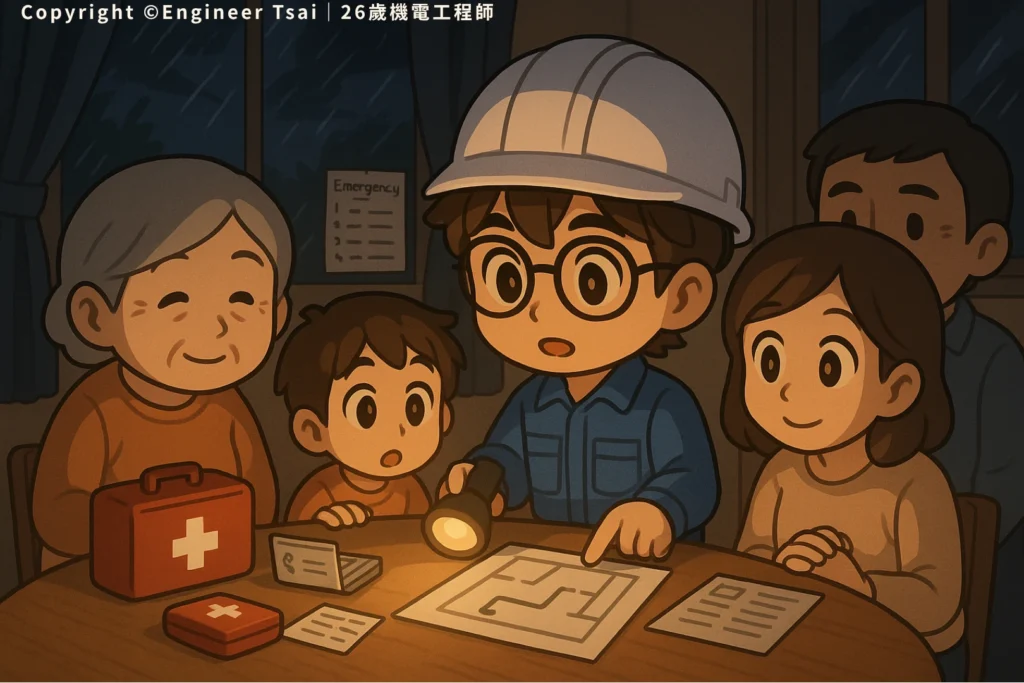
A line to remember for every family
“Preparedness is always easier than recovery.”
If you spend a little time now filling in your own hurricane preparedness checklist, you can help your family ride out the next storm night with a lot more peace of mind.
Wrap-up
You can’t control where every hurricane goes, but you can control how prepared your household is when the forecast changes.
Don’t wait until the news is full of damage photos to start scrambling. Your hurricane preparedness checklist is something you can start checking off right now, one square at a time.
⚠️ This article is written from the perspective of everyday families and summarizes general preparedness tips only. For real-time storm tracking, evacuation orders, school closures, and shelter information, always follow the latest guidance from federal and local emergency management agencies.
⛑ To track hurricanes and storm paths in real time, use official sources such as the National Hurricane Center (NHC) and Ready.gov – Hurricanes. Combine those updates with this hurricane preparedness checklist to keep your plan up to date.
📌 Further reading:
🔹“What Is Grounding and How Does It Keep You Safe?”
The basic electrical safety concept every home should know. Proper grounding makes everyday use safer and gives you more confidence when storms hit.
🔹“Home Breaker Tripping Guide: Simple Steps to Check and Restore Power Safely”
When the power goes out, don’t panic. Learn how to systematically check your breakers and restore basic power while staying safe.
🔹“5 Essential Electrical Tools Every Household Should Own”
With a small, well-chosen toolkit, you’re much more capable of handling minor issues calmly and protecting your family during emergencies.
How do you usually prepare when a hurricane or major storm is on the way?
Have you ever gone through a serious outage or flooding? Share your experience in the comments — your story might be exactly what helps another family improve their own hurricane preparedness checklist.
Hurricane preparedness checklist FAQ
Q1: I live in a small apartment or I’m renting. Do I still need a hurricane preparedness checklist?
Yes. Even in a small rental, it’s smart to keep a simple checklist: (1) at least three days of drinking water and easy-to-eat food that doesn’t require full cooking; (2) a power bank plus a flashlight or headlamp; (3) contact information for your landlord, neighbors, and family. These basics are often the first things you’ll be grateful for when a storm hits.
Q2: Do I really need to buy a UPS or backup power system?
If your budget is tight, focus first on keeping communication and basic lighting alive, then think about fridges and medical devices. A UPS or home battery is great, but not always affordable. Start by fully charging phones and power banks before the storm, consider small USB-powered lights or fans, and only then decide whether investing in a UPS, small generator, or other backup system makes sense for your household.
Q3: How much drinking water should I store?
A common guideline in the U.S. is at least 1 gallon of water per person per day for a minimum of 3 days. If you live in a flood-prone, remote, or island area where resupply may be delayed, consider preparing 5–7 days of water if you have the space. Think of bottled water as a rotating stock: use it during the year, replace it before it expires, and always keep your “storm stash” topped up.
Q4: What should I add if we have seniors, young kids, or pets at home?
Households with seniors, young children, or pets should add a dedicated section to their hurricane preparedness checklist. For seniors: regular medications, basic medical equipment, mobility aids, and key medical information. For babies and young kids: formula, diapers, wipes, familiar snacks, and comfort items. For pets: food, treats, any meds, waste bags, and a secure carrier or leash. Ideally, pack these into small “go bags” you can grab quickly if you need to leave.
Make preparedness part of everyday life.
That way, when the news says a major hurricane is approaching, you can calmly pull out your hurricane preparedness checklist and walk through it step by step — instead of letting fear and panic push you around.
Read next in this topic
- What Is a Short Circuit? 7 Things Every Homeowner Should Know
- Smart Home Energy Management: A Simple Starter Guide for Safer, Cheaper Power at Home
- What Is Electrical Grounding? A Simple Guide to Safer Power at Home
- How to Choose Home Lighting: A Practical Guide from an Engineer Who Learned the Hard Way
- Home Electrical Safety: Turning Off Your Main Breaker Made Simple
- Home Electrical Safety and Power Outage Preparedness: A Practical Guide for U.S. Households
- What to Do When Your Breaker Keeps Tripping at Home
- How to Avoid Electrical Fires When Using Smart Outlets at Home
- From Power Outages to Food Shortages: Hurricane Prep Made Simple
- 6 Common Signs of Electrical Problems in Your Home (And What to Do First)
- Loose Electrical Outlet? Here’s How to Repair It Safely
- Top Mistakes in Home Electrical Setup (and How to Fix Them)
- Do Home Wires Really Wear Out? The Truth About Old House Wiring In The U.S.
- How to Weatherproof Your Home: Windows and Doors Made Easy
- Static Shock in Winter? 5 Causes + 5 Fixes (Home + Clothes)
- Electric Meter Reading Explained (5-Step Guide): What kWh Really Means on Your Bill
- Home Electrical Safety in the AI Era: From Short Circuits to Old Wiring (and Your First 0–3 Months as an Electrician)
- How to Choose an Extension Cord Safely: 5 Rules to Prevent Overheating
- Home Electrical Panel and Outlet Guide: How to Plan Safer Circuits for Your Home
- Same Breaker Keeps Tripping? 7 Real Reasons (Wattage, Inrush, Loose Connections)

