On this page
Table of contents
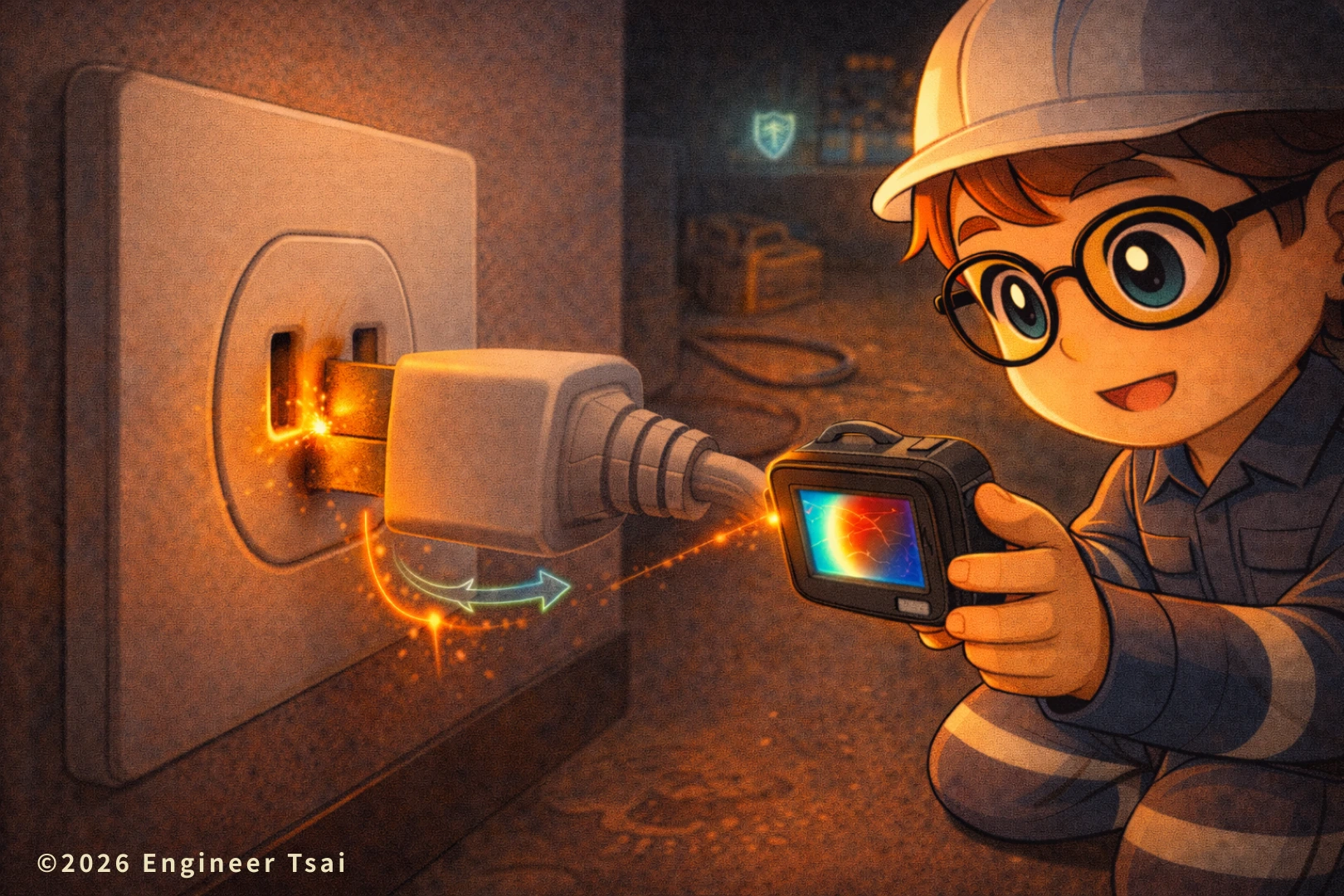
Outlet amperage rating is one of those phrases most people ignore—until the day you notice something feels “off”: the plug smells burnt when you pull it out, the outlet face has a dark ring, or the plug and receptacle feel warm (or hot) to the touch. In many cases, it’s not just “this thing is old.” It’s contact resistance quietly turning electrical energy into heat. Give it enough time and it oxidizes metal, yellows plastic, and leaves the scorch marks you can actually see.
In this article, I’ll break down three things in plain, US-home terms: what an outlet amperage rating really limits, why contact resistance creates burn marks, and what you should do when you see heat or discoloration. You don’t have to memorize formulas—but you will know what’s safe to observe and what’s a “stop using it and call a licensed electrician” situation.
▶️ Watch now: 90 seconds on outlet ratings, contact resistance, and burn marks
Let’s stitch the visuals together first: a typical 15A receptacle, common appliance wattage, and why a loose outlet or a corroded terminal can increase contact resistance, spike localized temperature, and leave burn marks on the plug blades and the plastic body.
Chapter 1 — What an outlet amperage rating really means (and why it’s linked to burn marks)
Let’s start with the most overlooked sentence in home electrical safety:
An outlet or switch rating tells you the maximum current and voltage it can carry safely under normal conditions—it does not mean you can run it at the edge forever and assume nothing will happen.
In a typical US home, you’ll commonly see:
- Most general-purpose outlets are 120V, 15A (often NEMA 5-15R).
- Kitchen/bath/garage circuits and newer builds often have 120V, 20A receptacles/circuits (you may see the “T-slot” on a 5-20R).
- Wall switches are commonly marked 120/277V with 15A (or other values) depending on use and product line.
Those markings are based on real engineering constraints—conductor size, contact area, heat dissipation, and material temperature limits. It’s not a random sticker. The problem is what happens in real houses when either of these shows up:
- One outlet/power strip is asked to carry high-wattage loads day after day (space heater, microwave, air fryer, toaster oven, electric kettle—stacked on the same spot).
- The connection quality degrades—loose plug fit, worn receptacle tension, backstabbed connections that loosen over time, corrosion/oxidation, or a terminal screw that wasn’t torqued properly.
Here’s the key: even if your load is still “under 15A on paper,” a single bad contact point can run hot. Over time that heat causes discoloration, melted plastic, carbon tracking, and eventually the scorch marks people call “burn marks.” This is why the real-world equation is: outlet amperage rating + contact resistance = whether you see burn marks (or worse).
Understanding the outlet amperage rating as a real-world safety limit—not just a printed number—changes how you plan loads in your home.
Chapter 2 — One table to decode: outlet/switch markings vs real-world wattage
Let’s make the “rating” feel more intuitive with one table. For simplicity, assume a 120V system (always verify the device nameplate and your actual circuit):
| Common marking | Typical system (US) | Theoretical max power (approx.) | Better for long runs | Everyday examples |
|---|---|---|---|---|
| 15A / 125V receptacle | 120V branch circuit | 1,800 W | ~80%: ~1,440 W | TV, laptop/chargers, small fan, lights; short use for higher loads |
| 20A / 125V receptacle | 120V 20A circuit | 2,400 W | ~1,920 W | Kitchen loads (air fryer, toaster oven), shop tools (depends on circuit design) |
| Switch 15A (120/277V) | Lighting control | Depends on voltage/load type | Stay conservative | Lighting, bath fan; not ideal for repeatedly switching large resistive loads |
| Power strip label (e.g., 15A) | 120V plug-in strip | 1,800 W total | Keep margin | Low-watt electronics; avoid space heaters/microwaves on cheap strips |
When you read an outlet amperage rating, always compare it to the total wattage actually running—not just the biggest appliance plugged in.
Two practical takeaways:
- A rating is not a “forever safe operating point”—for long continuous use, leaving headroom is smarter.
- Total wattage on the same outlet matters. You add it up; you don’t judge each plug in isolation.
If you often run into “the outlet or power strip gets warm,” the root cause is usually the same math: total load + heat + connection quality. (If you have a related deep-dive on total circuit load in English, link it here—otherwise you can keep your original Chinese link for now.) “Why circuits trip: scenarios + total wattage logic” (Chinese).
Chapter 3 — What contact resistance is (and why a tiny issue becomes heat + discoloration)
Now to the real “villain” behind most outlet burn marks: contact resistance. The idea is simple:
Wire resistance is already low. But where two metal surfaces touch (plug blade to receptacle contact, screw terminal to conductor), there’s always a tiny extra resistance. Most of the time you don’t notice it. But when current is high and the contact area gets worse (loose fit, crooked insertion, oxidation, corrosion), that tiny resistance becomes a very effective little heater.
Electricians often keep a rough mental model like this:
Heat ≈ I² × R
If contact resistance increases slightly, heat rises fast—at 10A vs 5A, the heating can be roughly 4× under the same resistance.
This is why even when you stay technically under the outlet amperage rating, poor contact can still create overheating.
That’s why you’ll see real-world patterns like:
- The outlet feels “a little loose,” but a space heater or toaster oven makes the plug blades discolor quickly.
- The cord looks fine, but the hottest spot is right at the plug-to-outlet interface (a classic contact resistance signature).
- A switch or receptacle has a slightly loose terminal; months later the plastic near that screw turns brown, cracks, or shows carbon marks.
This is contact resistance “branding” the hardware: heat concentrates in a tiny area, darkens metal, bakes plastic, and in severe cases creates carbon tracking that can conduct electricity and increase fire risk.
An outlet amperage rating assumes “normal, healthy contact.” Once contact quality degrades, the same current can become overheating. That’s why ratings and contact resistance must be evaluated together in real homes.
Chapter 4 — Where burn marks show up most: power strips, old outlets, loose switches
Once you start paying attention, you’ll see the same hotspots over and over:
- Old power strips and bargain extension cords
Stuffed under desks, bent, dusty, sometimes slightly damp—then asked to run high-watt appliances. This combo is a burn-mark factory. - Wall outlets that get “half-in, half-out” use
Vacuums, portable heaters, seasonal appliances—lots of insert/remove cycles. Over time the receptacle tension weakens and contact area shrinks. - Aged switches that “still work” but are already loose inside
Loose terminals or worn contacts can create localized heating—especially when controlling multiple lights or a bathroom fan/light combo. - Stacks of adapters and plug converters
Every extra interface adds another potential contact resistance point. “Adapter + adapter + power strip + high-watt load” is a very common pattern at scorch scenes.
If you’ve already seen burn marks or smelled burning at a specific outlet, it’s not just “old.” It’s proof that your real-world use case is pushing that point into overheating. Don’t keep forcing it.
Chapter 5 — What you can check safely: touch (carefully), look, listen
Here’s a homeowner-friendly check you can do without opening anything. The rule is simple: safety first, no cover plates removed.
(1) After 10–20 minutes of a high-watt load, check temperature (carefully)
After running something like a space heater, toaster oven, kettle, or hair dryer, use the back of your hand near the plug and outlet face:
- Slight warmth can be normal.
- If it’s hot enough that you don’t want to keep your hand there, stop using that outlet and get it checked.
(2) Look for discoloration and burn marks
Unplug the device and inspect the plug blades and the outlet face:
- Plug blades that are darkened, yellowed, pitted, or rough in spots
- Outlet face that’s yellowed/browned, cracked, bubbled, or has a dark ring
- A faint “hot plastic” smell
Those are classic signs of contact resistance heating. It usually means the connection has been “baked” repeatedly.
(3) Listen for buzzing or crackling
In a quiet moment, listen near the outlet or switch while a load is running. Buzzing/crackling can indicate a poor connection and sometimes micro-arcing. Treat it as urgent.
(4) Don’t remove the cover plate to “take a look”
If you’re not trained, don’t open outlets or switches. You may not know what’s still energized or how to confirm de-energized safely. If your eyes/nose/hands tell you something’s wrong, stop using it and hand it off to a licensed electrician.
Chapter 6 — Quick safety SOP: what to do if you smell burning or see scorching
If you see burn marks, smell burning, or feel obvious heat at an outlet, follow this order:
Step 1 — Stop using that outlet or switch immediately
Unplug the device (dry hands, dry floor—don’t stand in water). Don’t keep “testing it.”
Step 2 — Check whether it’s just one point or the whole circuit
Feel nearby outlets on the same wall (carefully) and look at the panel. If multiple points feel warm, you may have an overloaded circuit or a broader wiring issue.
Step 3 — Spread high-watt appliances across different circuits
Until it’s inspected, move loads like space heaters, microwaves, kettles, toaster ovens, and air fryers away from that outlet and avoid stacking them on one power strip.
Step 4 — Have a licensed electrician inspect and replace the device
Burn marks usually aren’t “wipe it clean and keep going.” The contacts and terminals may be damaged, and the conductor behind the device may be heat-stressed. Replacement plus a quick inspection is the safer move.
Step 5 — Long-term fix: load planning + protection check
If the same area keeps running hot or tripping breakers, it’s not just one outlet—it’s a load design issue. You may need a dedicated circuit for high-watt appliances, or a review of breaker size and protection (GFCI/AFCI) to match the real use case. Long term, respecting the outlet amperage rating means designing your load distribution instead of forcing more adapters into one location.
Chapter 7 — 3 common myths that quietly speed up failure
Three things I hear all the time—each one accelerates wear and increases risk:
Myth 1 — “It says 15A, so using 15A all the time is fine.”
The rating is a limit, not a recommended forever target. Continuous high load plus even a small increase in contact resistance can push the connection into overheating. Leaving headroom is cheaper than replacing scorched hardware.
Myth 2 — “A warm plug is normal; appliances make heat.”
Appliances can be warm. But heat at the plug blades or the outlet face is a different story—it usually means the heat is being generated at the connection point, not in the intended heating element.
Myth 3 — “Adapters fix it. I don’t need a new circuit.”
Adapters solve “not enough outlets,” not “too much current.” Every extra adapter adds another contact interface. More interfaces = more chances for loose fit and contact resistance.
FAQ — Outlet ratings and contact resistance (quick answers)
Q1: How do I find my outlet or switch rating?
A: Many receptacles and switches have the rating molded or printed on the device (often visible when the cover is removed). If you can’t see it without opening anything, don’t guess—ask a licensed electrician during replacement or inspection. Your breaker panel labeling can also provide clues about 15A vs 20A circuits, but the device rating still matters.
Q2: My outlet has burn marks but still works. Can I keep using it?
A: Not recommended. Burn marks usually mean the connection has overheated repeatedly and materials have degraded. Contact resistance often increases after overheating, which makes future heating more likely. Stop using it and have it replaced and inspected. Once overheating occurs, the effective safety margin of the outlet amperage rating may no longer apply.
Q3: Does a coiled extension cord really get hotter?
A: Yes. Coiling reduces heat dissipation and can trap heat in the cord. If you also have a poor plug contact, you’re heating both the cord and the connection point. For high-watt loads, use a properly rated cord fully extended—and avoid power strips for space heaters.
Q4: Can a regular wall switch control an outlet or high-watt appliance?
A: It depends on the switch rating and the load type. Many general lighting switches aren’t ideal for repeatedly switching heavy resistive loads. If you want switch control for higher loads, use properly rated devices and have a licensed electrician design the wiring.
Q5: Should I replace all outlets and switches in an older home?
A: If you have loose receptacles, frequent heating/burn marks, or your usage has changed (more high-watt appliances than the house was designed for), a staged replacement plus a load/circuit review is often worth it. It’s usually cheaper to fix early than to wait for a failure.
📌 Related reads
🔹“Why circuits trip: scenarios + total wattage logic” (Chinese)
If you often see breaker trips along with heat at outlets, this piece breaks down the “total load” logic and why protective devices behave the way they do.
🔹“Breaker label cheat sheet: what 20A and trip curves mean” (Chinese)
Outlet ratings are only one piece. Breaker sizing and protection work together—this helps you read the panel without guessing.
🔹“Home electrical safety overview” (Chinese)
A bookmark-style overview: short circuits, ground faults, aging wiring, and what to do when something feels unsafe.
🔹“How to choose an extension cord (and why coiling runs hotter)” (Chinese)
Many outlet burn marks start with cords and strips. This one covers cord rating, storage, and heat dissipation basics.
🔹“Outlet wiring basics: neutral vs ground” (Chinese)
If you’re improving outlet safety, understanding neutral vs ground helps you communicate clearly with an electrician.
References
- Taiwan regulations database — User electrical installation rules (original Chinese reference)
- U.S. CPSC — Electrical safety guide
- ESFI — Home electrical safety
- NFPA — Home electrical safety and fire prevention
If you want, leave a comment and tell me which situation worries you most right now: burn marks on an outlet, a power strip that gets hot, or old switches that “still work” but feel questionable. If you share your setup (what device, roughly how many watts, and which room), I’ll help you map it to the most likely risk behind the scenes—and what the safest next step looks like.
Read next in this topic
- What Is a Short Circuit? 7 Things Every Homeowner Should Know
- Smart Home Energy Management: A Simple Starter Guide for Safer, Cheaper Power at Home
- What Is Electrical Grounding? A Simple Guide to Safer Power at Home
- How to Choose Home Lighting: A Practical Guide from an Engineer Who Learned the Hard Way
- Home Electrical Safety: Turning Off Your Main Breaker Made Simple
- Home Electrical Safety and Power Outage Preparedness: A Practical Guide for U.S. Households
- What to Do When Your Breaker Keeps Tripping at Home
- How to Avoid Electrical Fires When Using Smart Outlets at Home
- From Power Outages to Food Shortages: Hurricane Prep Made Simple
- 6 Common Signs of Electrical Problems in Your Home (And What to Do First)
- Loose Electrical Outlet? Here’s How to Repair It Safely
- Top Mistakes in Home Electrical Setup (and How to Fix Them)
- Do Home Wires Really Wear Out? The Truth About Old House Wiring In The U.S.
- How to Weatherproof Your Home: Windows and Doors Made Easy
- Static Shock in Winter? 5 Causes + 5 Fixes (Home + Clothes)
- Electric Meter Reading Explained (5-Step Guide): What kWh Really Means on Your Bill
- Home Electrical Safety in the AI Era: From Short Circuits to Old Wiring (and Your First 0–3 Months as an Electrician)
- How to Choose an Extension Cord Safely: 5 Rules to Prevent Overheating
- Home Electrical Panel and Outlet Guide: How to Plan Safer Circuits for Your Home
- Same Breaker Keeps Tripping? 7 Real Reasons (Wattage, Inrush, Loose Connections)

