Materials identification / apprentice reference
Start with the two ends. A connector goes from EMT to a box; a coupling joins two conduit ends. [F001] [F002]
This picture guide covers 12 EMT fittings and related parts, including straps, bushings, a locknut, an MC cable connector and an LB conduit body. Use it to describe a part and ask a clearer question when a materials request is missing details.
These 12 reference cards follow the supplied First Shift family list. Related parts are included for comparison; check each card for its actual conduit or cable use.
01. Set-screw EMT connector
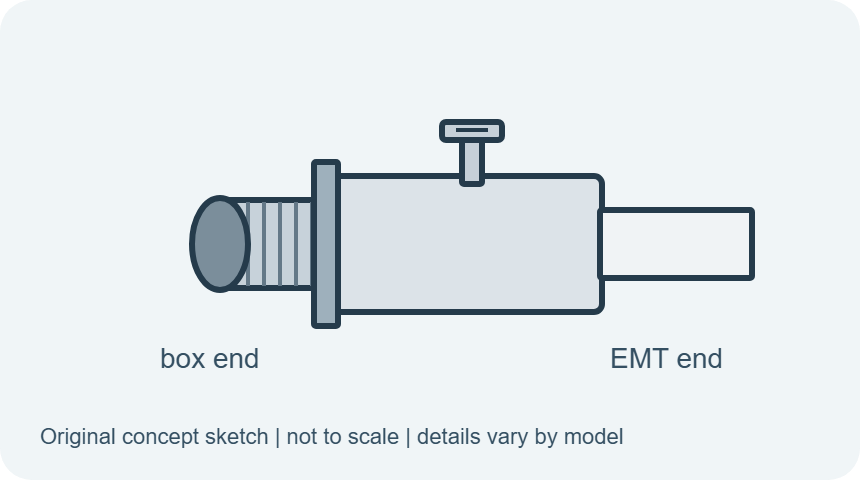
- Name and alternate wording
- Set-screw EMT connector. Catalog wording: Steel EMT connectors set-screw type [F005].
- What it is used for
- A set-screw EMT connector joins EMT to an electrical box or enclosure. [F003]
- How to recognize the example
- The example has a side screw and a threaded box end. [F004]
- Mix-up to avoid (editorial tip)
- Ordering a coupling when the request calls for a box connection. Check the two ends before naming the part.
Ask: “Do you need a box connector, and what trade size?”
02. Compression EMT connector
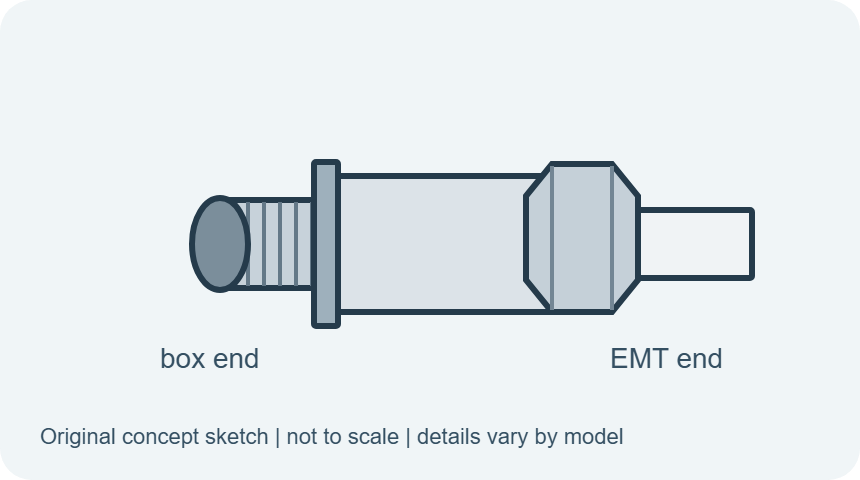
- Name and alternate wording
- Compression EMT connector. Catalog wording: Steel EMT connectors compression type [F008].
- What it is used for
- A compression EMT connector joins EMT to an electrical box or enclosure. [F006]
- How to recognize the example
- The example has a compression nut at the tubing end and a threaded box end. [F007]
- Mix-up to avoid (editorial tip)
- Giving only the word compression. Include connector and the exact model in the request.
Ask: “Which trade size and exact connector model?”
03. Set-screw EMT coupling
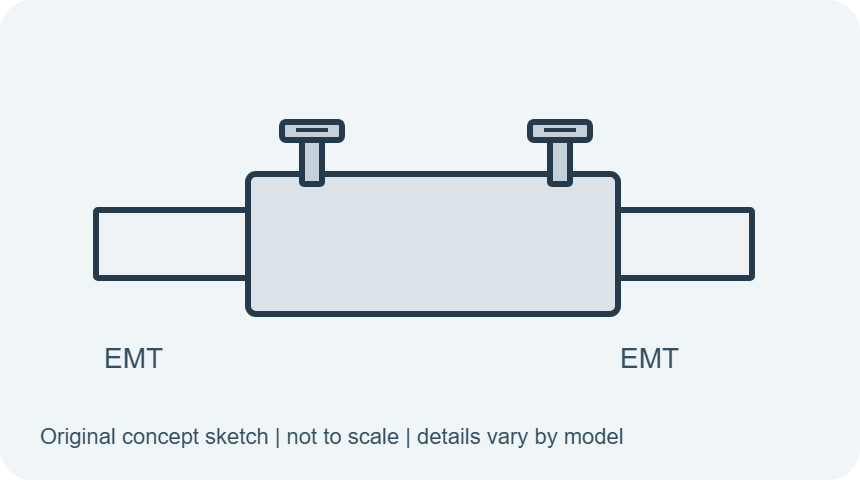
- Name and alternate wording
- Set-screw EMT coupling. Catalog wording: Steel EMT couplings set-screw type [F011].
- What it is used for
- A set-screw EMT coupling joins two EMT ends. [F009]
- How to recognize the example
- The example has a tubing opening at each end and screws on the body. [F010]
- Mix-up to avoid (editorial tip)
- Requesting a connector for a tube-to-tube joint. Describe both ends first.
Ask: “Is this EMT to EMT, and are both trade sizes the same?”
04. Compression EMT coupling
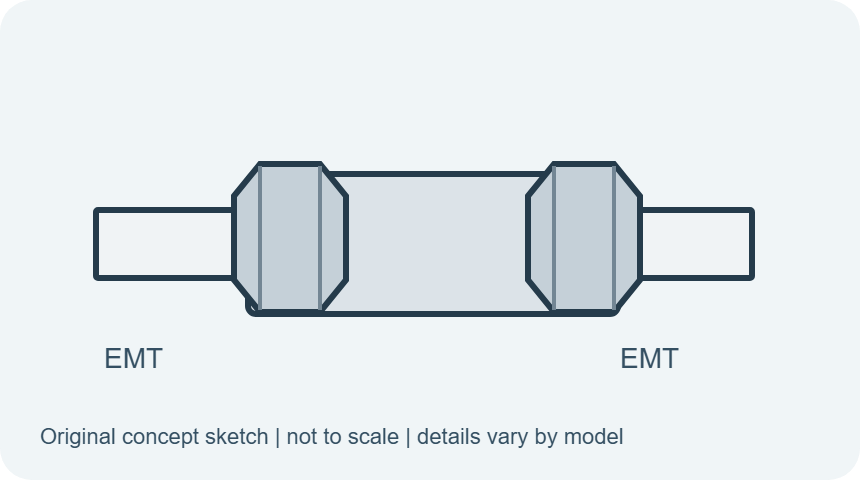
- Name and alternate wording
- Compression EMT coupling. Catalog wording: Steel EMT couplings compression type [F014].
- What it is used for
- A compression EMT coupling joins two EMT ends. [F012]
- How to recognize the example
- The example has a compression nut at each end. [F013]
- Mix-up to avoid (editorial tip)
- Omitting whether the compression part is a connector or coupling.
Ask: “A coupling rather than a box connector, correct?”
05. One-hole EMT strap
- Name and alternate wording
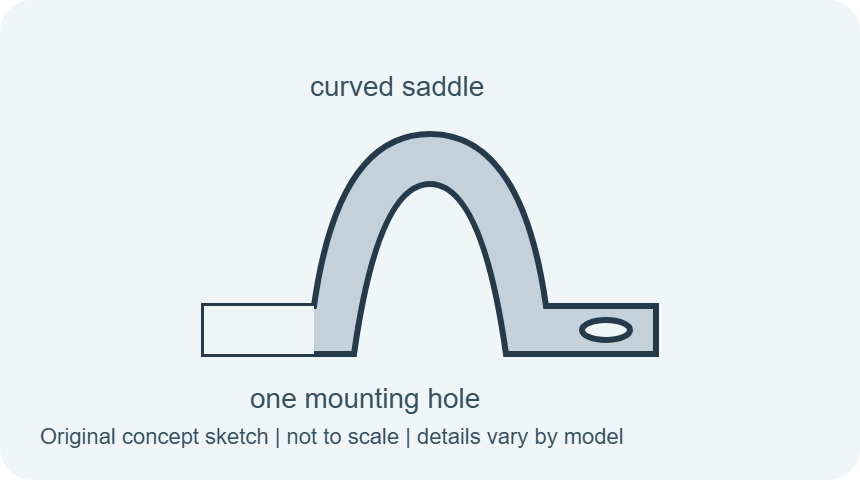
- One-hole EMT strap. Catalog wording: EMT straps 1-hole [F017].
- What it is used for
- A one-hole EMT strap supports EMT against a mounting surface. [F015]
- How to recognize the example
- The example has a curved saddle and one mounting hole. [F016]
- Mix-up to avoid (editorial tip)
- Ordering by hole count alone. Include EMT and the trade size in the request.
Ask: “One-hole EMT strap in which trade size?”
06. Two-hole EMT strap
- Name and alternate wording
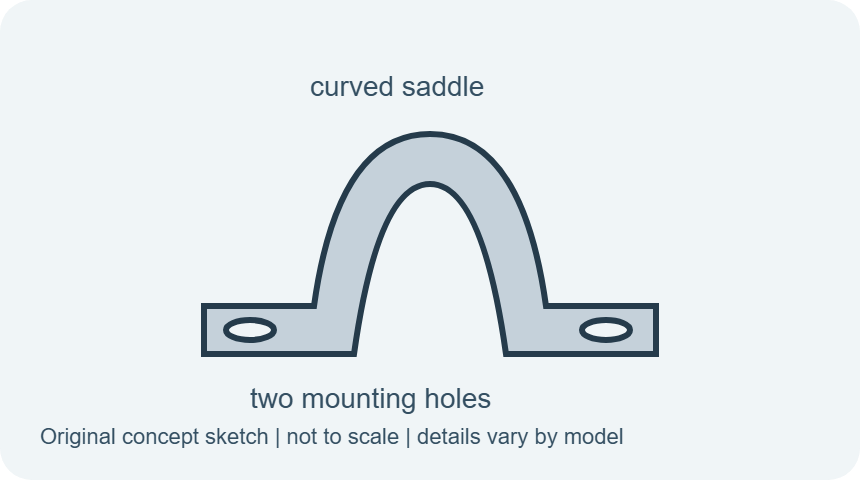
- Two-hole EMT strap. Catalog wording: EMT straps 2-hole [F020].
- What it is used for
- A two-hole EMT strap supports EMT against a mounting surface. [F018]
- How to recognize the example
- The example has a curved saddle between two mounting holes. [F019]
- Mix-up to avoid (editorial tip)
- Leaving out the hole count when the materials list specifies two holes.
Ask: “Two-hole EMT strap in which trade size?”
07. Conduit locknut
- Name and alternate wording
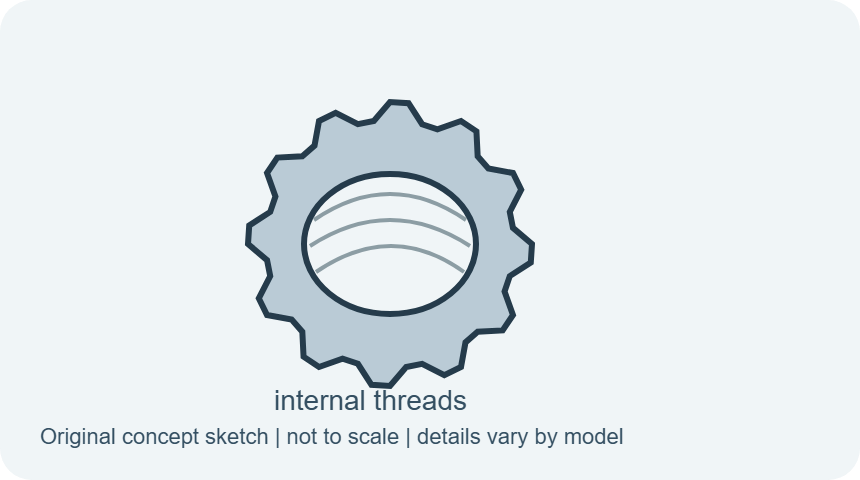
- Conduit locknut. Catalog wording: Steel conduit locknuts [F023].
- What it is used for
- A conduit locknut secures threaded conduit or a connector to a box or enclosure. [F021]
- How to recognize the example
- The steel example is a thin ring with internal threads and teeth around its edge. [F022]
- Mix-up to avoid (editorial tip)
- Requesting only a nut. Specify a conduit locknut and the matching trade size.
Ask: “Which threaded conduit or connector must this locknut match?”
08. Threaded plastic bushing
- Name and alternate wording
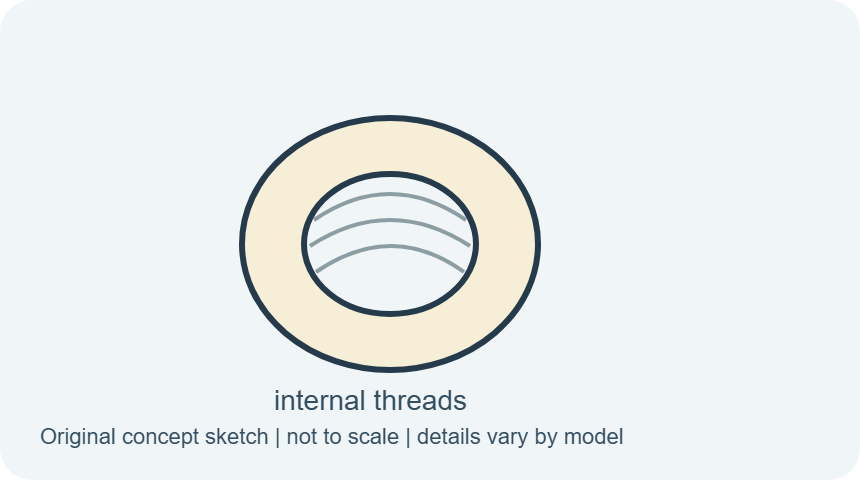
- Threaded plastic bushing. Catalog wording: Plastic insulating bushings [F026].
- What it is used for
- Orbit's threaded plastic bushing provides a rounded wire-contact surface at a threaded rigid or IMC conduit end. [F024]
- How to recognize the example
- The example is a plastic ring with internal threads and a rounded rim. [F025]
- Mix-up to avoid (editorial tip)
- Leaving out threaded when requesting a bushing. Ask for the exact bushing and conduit type.
Ask: “Is the request for a threaded plastic bushing, and for which conduit?”
09. Anti-short bushing
- Name and alternate wording
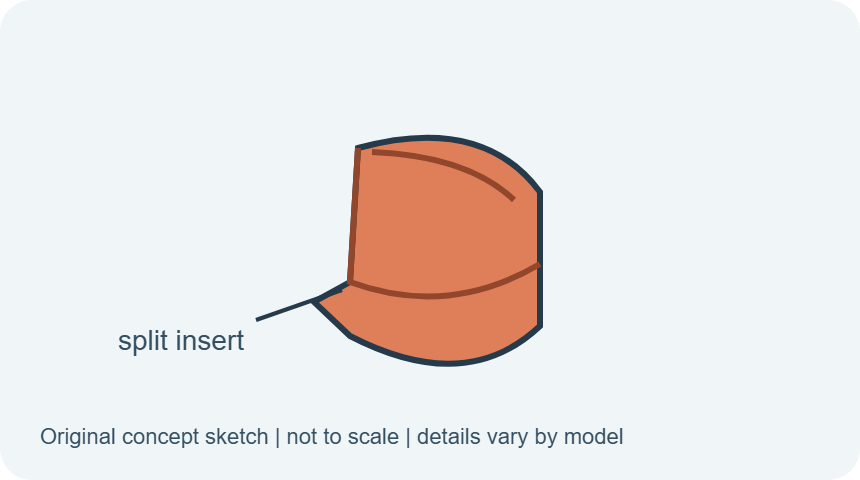
- Anti-short bushing. Catalog wording: Anti-short bushings thermoplastic [F029].
- What it is used for
- Orbit describes this bushing as an insulating barrier at the cut edge of flexible metal conduit. [F027]
- How to recognize the example
- The example is a split plastic insert; Orbit describes it as snapping onto the cut conduit edge. [F028]
- Mix-up to avoid (editorial tip)
- Using the word bushing without identifying the cable or conduit. Do not infer MC requirements from this picture.
Ask: “Which cable or conduit type and exact bushing are specified?”
10. Insulated grounding bushing
- Name and alternate wording
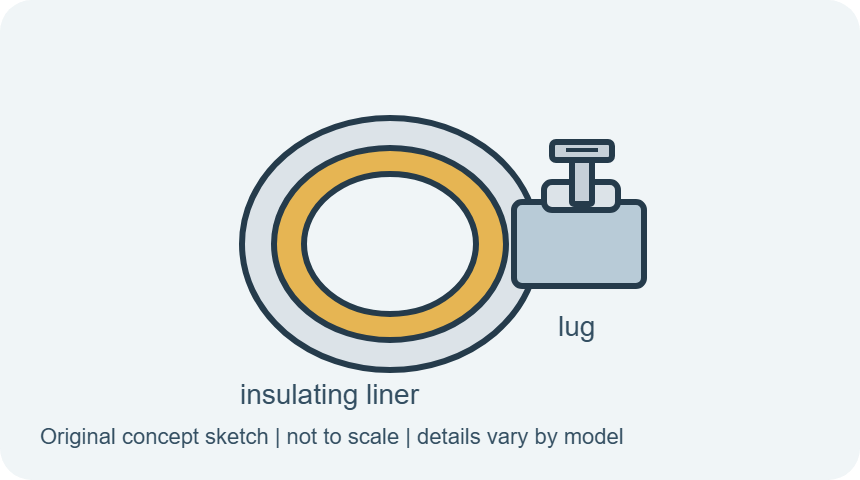
- Insulated grounding bushing. Catalog wording: Grounding bushings insulated universal lay-in lug [F032].
- What it is used for
- The illustrated Orbit bushing has a lay-in lug for a grounding conductor. [F030]
- How to recognize the example
- Look for the combination of a metal ring, an insulating liner and a separate lug. [F031]
- Mix-up to avoid (editorial tip)
- Requesting a plain plastic bushing when a grounding bushing with a lug is specified.
Ask: “Which bushing model, trade size and lug conductor range?”
11. MC cable connector
- Name and alternate wording
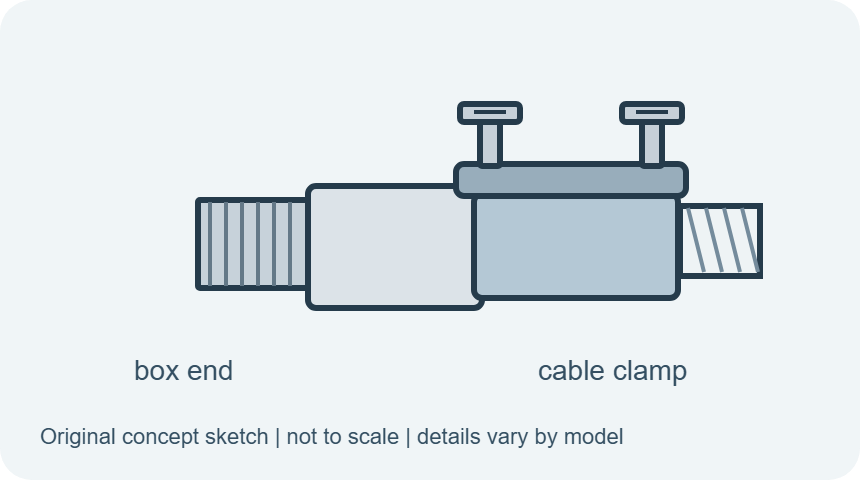
- MC cable connector. Catalog wording: Zinc all purpose cable connector, twin screw type [F035].
- What it is used for
- Orbit lists this particular two-screw connector for connecting AC/MC cable, NM cable or FMC to a fixture knockout. [F033]
- How to recognize the example
- The example has a two-screw cable clamp and a threaded box end. [F034]
- Mix-up to avoid (editorial tip)
- Assuming the name MC connector confirms every cable size. Request the exact connector and cable range.
Ask: “Which MC cable and outside diameter must the connector accept?”
12. LB conduit body
- Name and alternate wording
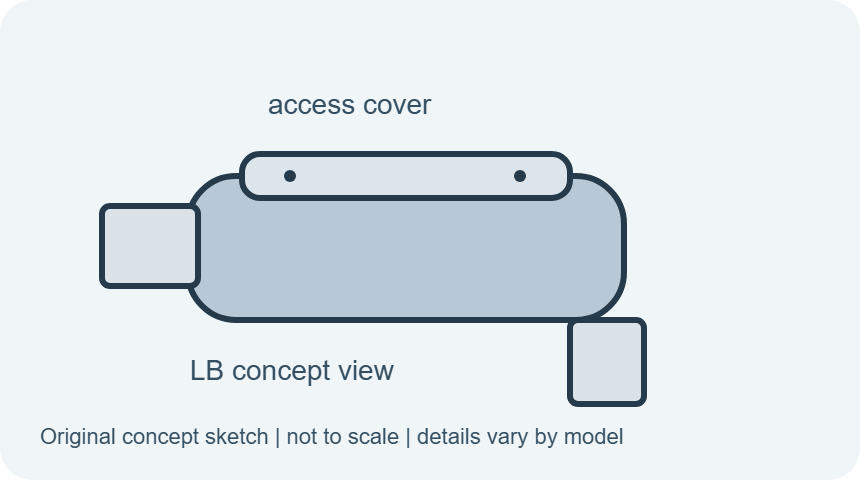
- LB conduit body. Catalog wording: AnyBODY conduit body, supplied as an LB [F038].
- What it is used for
- Arlington's 1/2 inch to 2 inch AnyBODY conduit bodies can connect EMT or rigid conduit. [F036]
- How to recognize the example
- The example has an access cover and openings at a right angle, with one opening opposite the cover. [F037]
- Mix-up to avoid (editorial tip)
- Using LB alone to specify the connection. Ask for the exact body model and hub style.
Ask: “Which LB body, trade size and conduit connection type?”
Frequently asked questions
What is the difference between an EMT connector and a coupling?
A connector joins EMT to a box or enclosure. A coupling joins two EMT ends. Start by identifying what each end connects to. [F039] [F040]
Are a threaded plastic bushing and an anti-short bushing the same part?
No. Orbit describes its threaded plastic bushing for threaded rigid or IMC conduit, and its anti-short bushing for the cut edge of flexible metal conduit. Identify the exact part and cable or conduit type. [F041] [F042]
Can I identify an exact fitting from a drawing?
Use the drawing to form a question, then confirm the exact model in the catalog. These concept drawings do not establish a trade size, fit or rating.
What details should I include in a materials request?
State the fitting name, both connection types and trade sizes, and any required variant. Ask for the exact model if the description is incomplete.
Does every LB conduit body accept EMT?
Check the exact body and connection details. For example, Arlington identifies its 1/2 inch to 2 inch metallic AnyBODY versions as combination EMT and rigid, rather than relying on the letters LB alone. [F043]
What does First Shift help me practice?
First Shift is a materials recognition practice pack. The supplied product draft describes 12 fitting families, an offline trainer and a fillable workbook. [F044] [F045] [F046]
Source note: technical descriptions link to the manufacturers’ named product pages. Recognition prompts are editorial suggestions. This guide contains no installation procedure or claim that a sketch confirms suitability.
Practice the name, then ask for the missing detail
Keep a short list of parts you mix up. Write one question beside each pair before your next materials request.
For more structured practice, explore First Shift. The supplied product draft includes an offline trainer [F047] and a fillable workbook. [F048]
Explore First Shift materials practice
草稿連結:上架後換正式網址。商品 8220 的公開狀態尚未由本次讀取驗證。
