These Electrical Guides turn core electrical concepts into short, field-tested lessons with diagrams and checklists. Start with the basics, then follow a learning path for home wiring, safety, and components. Each Electrical Guide ends with a quick task, a tool list, and a study map so you can practice today and return later with confidence.
First, search a topic. Then, pick one guide and finish a quick task. Afterward, use the checklist to confirm the result. Additionally, each article links to tools and study maps, so you can learn fast and act with confidence.
To start, browse the latest posts. Then, pick one guide and try a single task. Afterward, use the checklist to confirm the result. In addition, each article links to tools and study maps, so you can learn and act with confidence.
All articles
-
Texas Line Contractor Bid Pipeline and CRM Playbook
Build a measurable line contractor bid pipeline with target markets, CRM fields, follow-up owners, loss reasons and vendor-neutral software selection.
-
Texas Line Contractor Contract and Payment Control Review
Build a Texas line contractor record for contracts, change orders, invoices, retainage, lien review and waiver questions before payment rights are at…
-
Texas Electrical Contractor Owner Insurance, Contract, and Payment Review
Build review gates for TDLR insurance, project bonds, contract changes, payment records, and Texas lien documents without guessing legal outcomes.
-
Texas Electrical Contractor Owner Cash Flow and Job Record Review
Build a job-level record that keeps estimates, invoices, receipts, payables, profit review, and cash timing separate for a Texas contracting shop.
-
Texas Electrical Contractor Owner Setup and Tax Checkpoints
Separate Texas business formation, assumed-name, tax, and electrical contractor checkpoints before you file, quote, or collect tax.
-
Texas Utility Vendor Prequalification and Bid Control
Build a source-linked Texas utility supplier, prequalification, RFP and MSA control record without treating registration as an award.
-
Texas Line Contractor Business, Tax and Risk Control Map
Map Texas line contractor scope, entity, cash, tax, insurance and bond questions into source-linked records for responsible review.
-
Texas Third Party Inspection Firm Operating Controls
Build quality, qualification, cost, staff, entity, and authority controls for a Texas third party inspection firm without skipping official gates.
-
Texas Electrical Inspector Technical Knowledge and Update System
Build an evidence-led technical foundation and update system for Texas electrical inspection knowledge, credentials, policies, and interpretations.
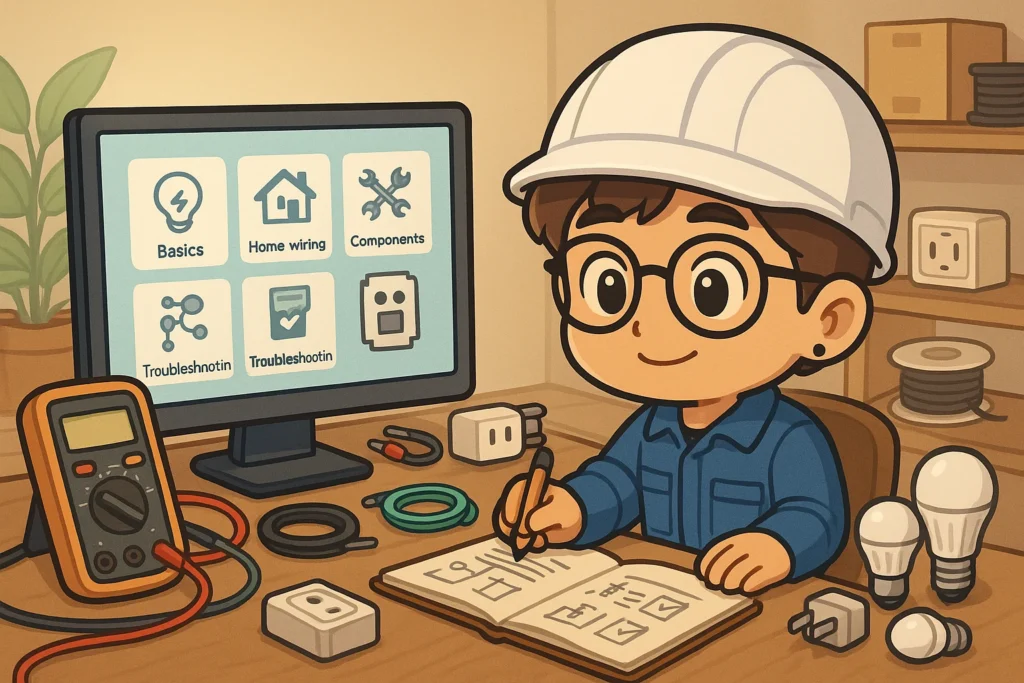
About this Electrical Guides Library
This page is your index for all electrical guides on Tsai Electro. Moreover, you can search and filter tutorials covering basics, home wiring, components, safety and troubleshooting. Because each guide keeps theory short and focuses on steps, diagrams and checklists, you learn faster. As a result, you can move from reading to doing with less guesswork.
Topics These Electrical Guides Cover
Electrical fundamentals · Ohm’s law · AC/DC basics · Home wiring and outlets · Protective devices and relays · Meters and safe measurement · Components and LED drivers · Troubleshooting common faults and practical fixes.
How to Use These Electrical Guides
- First, use the search box or category pills to find a topic.
- Next, open one guide and complete a single task with the checklist.
- Finally, save the tools and diagrams linked inside each article for later jobs.
FAQ
Where should beginners start?
For beginners, start with Tutorials, then the “Electrical Basics” path; after that, move to wiring and safety.
Are these tutorials safe for DIY?
Yes, but always follow safety notes; if unsure, consult a licensed professional.
What tools do I need?
Typically, a non-contact tester, a multimeter, insulated screwdrivers and proper PPE are enough.
What’s the difference between Articles and Tutorials?
In short, Tutorials are step-by-step lessons, whereas Articles are quick reads for specific topics.
Can I use these guides for my home wiring?
However, codes differ by region; therefore, always follow your local electrical code.
Popular paths: