Table of Contents
Table of Contents

Your starting point for becoming an electrician
If you’re starting from zero and working a full-time job, this page is for you.
These six electrician learning paths take you from “electricity feels scary” to “I can actually read my own panel.”
Choose from 6 learning paths
All six electrician learning paths are built for busy beginners. Pick one that matches your current goal, then follow the suggested shorts and blog posts instead of jumping around at random.
Path 1: What electricity is & basic measurements
From “what is electricity?” all the way to voltage, current, and power —
and how they show up in everyday life.
Best for: Total beginners who only remember a little high school science.
Path 2: Electromagnetics & waveforms
From magnetic fields and induced voltage
to sine waves, square waves, and frequency —
you’ll see why the real world is not just “straight DC lines.”
Best for: Learners who keep seeing terms like AC, EMI, filters, or VFDs and want a solid foundation.
Path 3: Power systems & protection
Breakers, fuses, grounding, GFCI (sometimes called RCD outside North America),
and why “just flipping breakers back on” is a bad habit.
Best for: Anyone who has a lot of questions about your breaker panel (panelboard), nuisance tripping, and “why the lights keep going out.”
Path 4: Components & control
Switches, relays, contactors, capacitors, inductors —
all the scary-sounding names that are actually just there
to turn power on, off, and in between.
Best for: People who want to get into motor control or PLCs but still feel fuzzy about what a relay actually does.
Path 5: Real-world applications — Home / EV / Solar / Wind
Take everything you’ve learned and plug it into the real world:
receptacles, extension cords, EV charging, solar, and small-scale wind.
Best for: Homeowners and renters who want to make their home safer first,
then branch out into EVs and renewable energy.
Path 6: On-the-job skills — Move-in Lite / Pro & future courses
Checklists, move-in inspections, troubleshooting,
and the practical tools from the Move-in series you can use right away.
Best for: Career-switchers who can already picture themselves taking jobs,
doing service calls, or even running their own small electrical business.
Path 1: What electricity is & basic measurements
What this path covers
From “what is electricity, really?” to voltage, current, resistance, and DC vs AC.
We reconnect your old high school science with how power actually shows up at home and on the job.
By the end of this path, numbers like V, A, W, and Ah on your meter or tools will stop feeling like a foreign language.
Who this is for
- Office workers and students who only remember “V = I × R”
- People considering the electrical trade but not sure if they’ll “get” the theory
- Anyone who wants a solid foundation before jumping into wiring, tools, or trade school
How to work through this path
Instead of binge-watching randomly, go through these three missions in order. Each mission is short enough for one or two evenings after work.
🔹 Mission 1: Big picture — what electricity actually is (EP001–EP004)
- EP001 – “What Is Electricity? Basic idea of electric current” (Extended reading)
- EP002 – “Current vs Voltage – What’s the difference?” (Extended reading)
- EP003 – “DC vs AC – What’s the difference?” (Extended reading)
- EP004 – “Basic parts of a circuit – Source, conductors, and loads” (Extended reading)
🔹 Mission 2: Materials & safety basics (EP005)
🔹 Mission 3: Make the math feel natural (EP006–EP008, EP011, EP013)
- EP006 – “Ohm’s Law – The relationship between voltage, current, and resistance” (Extended reading)
- EP007 – “What is resistance? The key player in circuits” (Extended reading)
- EP008 – “Series vs parallel circuits” (Extended reading)
- EP011 – “How voltage drives current” (Extended reading)
- EP013 – “How batteries work – The secret of power sources” (Extended reading)
Want to go a bit further? These are good “next-step” topics once the basics feel comfortable:
- EP018 – “How electrical energy turns into other forms of energy” (Extended reading)
- EP033 – “Current & heating – Why devices get hot” (Extended reading)
- EP055 – “Where static electricity comes from – Why it ‘snaps’ and how to avoid it” (Extended reading coming soon)
Path 2: Electromagnetics & waveforms
What this path covers
From magnetic fields and electromagnetic induction to sine waves, square waves, dB, EMI, and wireless.
The core idea: electricity doesn’t just flow in a straight line — it oscillates, radiates, and interferes.
This path gives you the shared “language” behind transformers, coils, antennas, and filters.
Who this is for
- Learners who already understand basic voltage/current and keep hearing “EM” or “EMI” everywhere
- People who want to understand the physics behind transformers, motors, VFDs, and EMI
- Anyone curious about wireless, antennas, and dB/dBm/dBi
How to work through this path
Think of this as three steps: magnetic fields ➝ induction ➝ waveforms and signals. Go in order and it’ll feel much less abstract.
🔹 Mission 1: Magnetic fields & current (EP009, EP014, EP020, EP021, EP022)
- EP009 – “How electromagnetic waves relate to power” (Extended reading)
- EP014 – “Ampère’s Law – Relationship between current and magnetic field” (Extended reading)
- EP020 – “How magnetic fields interact with current” (Extended reading)
- EP021 – “How magnets work – Exploring electromagnetic principles” (Extended reading)
- EP022 – “What is inductance? How does it affect circuits?” (Extended reading)
🔹 Mission 2: Electromagnetic induction (EP029)
🔹 Mission 3: Waveforms and how signals look (EP039)
Want to go deeper? These are great “Level 2” topics once the basics above make sense:
- EP023 – “Impedance – Resistance, inductive reactance, and capacitive reactance” (Extended reading)
- EP035 – “What do windings actually do?” (Extended reading)
- EP036 – “How inductors affect AC circuits” (Extended reading)
- EP051 – Wireless (1): Putting signals onto a carrier – modulation basics (Extended reading coming soon)
- EP052 – Wireless (2): Antennas & propagation – λ/4, matching, polarization, path loss (Extended reading coming soon)
- EP053 – Hall effect – How magnetic fields become signals (Extended reading coming soon)
- EP054 – Superconductors – A world with no resistance (Extended reading coming soon)
- EP056 – dB / dBm / dBi – Making sense of decibels (Extended reading coming soon)
- EP057 – Electromagnetic interference (EMI) – How it affects electronics (Extended reading coming soon)
- EP058 – Filters – How we “clean up” electrical signals (Extended reading coming soon)
Path 3: Power systems & protection
What this path covers
Short circuits, grounding, breakers, plus transformers, generators, power factor, and protective relays.
You’ll see how a power system safely delivers energy from the plant all the way down to your wall outlet.
Who this is for
- People who constantly deal with tripping breakers, low voltage, or “mystery outages”
- Learners aiming toward panelboards, industrial power systems, or substations
- Anyone who keeps hearing “power factor” and “protective relay” at work
How to work through this path
Start with “what goes wrong” (short circuits and grounding), then learn where power actually comes from, and finally dig into power factor and protection.
🔹 Mission 1: Shorts, grounding, and safety (EP010, EP019)
- EP010 – “What is a short circuit? How do we prevent it?” (Extended reading)
- EP019 – “What is grounding? How does it keep us safe?” (Extended reading)
🔹 Mission 2: Where power comes from — transformers & generators (EP027, EP030, EP031)
- EP027 – “How transformers change voltage levels” (Extended reading)
- EP030 – “How AC generators produce power” (Extended reading)
- EP031 – “How DC generators produce stable current” (Extended reading)
🔹 Mission 3: Power, power factor, and protection (EP028, EP040, EP042)
- EP028 – “Power in electronic equipment – How to calculate and control it” (Extended reading)
- EP040 – “What is power factor? How does it affect efficiency?” (Extended reading)
- EP042 – “Protective relays – What they do and where they’re used” (Extended reading)
Next-step topics: we’ll later add more content on panel layouts, residential vs industrial vs substation systems, and real fault case studies. (coming soon)
Path 4: Components & control
What this path covers
We introduce the “cast of characters” in your circuits one by one: capacitors, inductors, diodes, transistors, LEDs, relays, switches, rectifiers, VFDs, and PCBs.
You’ll see that each symbol on a schematic has a clear job — it’s not just decoration.
Who this is for
- People who already do basic wiring and want to understand what the components actually do
- Learners interested in electronics, control, motor drives, and power conversion
- Future PLC / motor control / PCB design folks who want a strong foundation
How to work through this path
First meet the key components, then see how they turn electricity into motion and controlled power, then add relays and switches on top.
🔹 Mission 1: Core components — caps, semiconductors, and basic control (EP015, EP024, EP025, EP026)
- EP015 – “What do capacitors do – storing and releasing energy” (Extended reading)
- EP024 – “Semiconductors – The foundation of modern electronics” (Extended reading)
- EP025 – “What is a diode? How does it control current flow?” (Extended reading)
- EP026 – “What is a transistor? How does it amplify current?” (Extended reading)
🔹 Mission 2: From electricity to motion & controlled power (EP032, EP037, EP038)
- EP032 – “What is an electric motor? From electricity to motion” (Extended reading)
- EP037 – “What is a variable frequency drive (VFD)? How does it control motors?” (Extended reading)
- EP038 – “How rectifiers turn AC into DC” (Extended reading)
🔹 Mission 3: Relays & switches (EP044, EP045)
- EP044 – “Electromagnetic relays – principles and applications” (Extended reading coming soon)
- EP045 – “Types of switches – how to choose the right one” (Extended reading coming soon)
Want to go further toward design? These “next-step” topics connect directly to chargers, PCBs, and power electronics:
- EP017 – “How AC turns into DC – what’s really inside chargers” (Extended reading)
- EP046 – “PCB basics – how circuit boards are designed” (Extended reading coming soon)
- EP047 – “How PCBs are manufactured” (Extended reading coming soon)
- EP059 – “What voltage regulators do and where we use them” (Extended reading coming soon)
Path 5: Applications — Home / EV / Solar / Wind
What this path covers
We drop your electrical knowledge into real-life scenes: wall outlets, extension cords, lighting, EVs, solar, wind, LEDs, energy savings, and safety.
Who this is for
- Renters and homeowners who want safer, more efficient homes
- People interested in EVs and renewable energy and want to understand the electrical side
- Career-switchers who use these topics as their motivation to go deeper
How to work through this path
Start with your own home, then move outward to batteries, LEDs, and finally EV / solar / wind. Treat it like zooming out from your panel to the whole grid.
🔹 Mission 1: Understand what’s happening at home (EP012, EP016, EP060)
- EP012 – “Smart ways to manage home electrical usage” (Extended reading)
- EP016 – “Types of wires – how to choose the right one” (Extended reading)
- EP060 – “What your power meter is measuring – reading kWh and usage” (Extended reading coming soon)
🔹 Mission 2: Batteries, chemistry, and LEDs (EP034, EP041, EP043)
- EP034 – “Electrolysis & electroplating – chemical effects of current” (Extended reading)
- EP041 – “How current affects battery life” (Extended reading)
- EP043 – “How LED lamps work – why they’re more efficient” (Extended reading)
🔹 Mission 3: EV, solar, and wind (EP048, EP049, EP050)
- EP048 – “EV basics – how electric cars work” (Extended reading coming soon)
- EP049 – “Solar power basics – turning light into electricity” (Extended reading coming soon)
- EP050 – “Wind power – turning wind into electricity” (Extended reading coming soon)
Next-step topics: later we’ll add practical guides on home energy-saving projects, EV charger planning, and small solar setups. (coming soon)
Path 6: On-the-job practice — Move-in Lite / Pro & future courses
What this path covers
This is the most hands-on of the six electrician learning paths, for people who really want to work in the field — as an electrician, a service tech, or a small contractor.
Using the Move-in Lite / Pro checklists and real-world examples, you’ll walk step-by-step from “I understand the ideas” to “I can actually do something useful in a home.”
Right now it focuses on topics most related to home safety and electrical checkups from the first 60 episodes. Over time, we’ll add more dedicated hands-on videos and courses so this path becomes your practical starting point for an electrician career.
Who this is for
- Office workers and apprentices who have decided to move toward the electrical trade
- People who want to use the free Move-in Lite checklist to run a “home electrical checkup” on their own place
- Anyone who eventually wants to turn this process into a paid service or a personal brand
How to use this path
- Step 1: Download Move-in Lite and run a 30-minute quick check on your own home first.
- Step 2: Any time you see a term or check you don’t understand, jump back into the earlier Paths (1–5) and use the shorts/blog posts as your “theory reference.”
- Step 3: If you want to help friends/family or start taking small jobs, upgrade to Move-in Pro and practice using the label templates and troubleshooting flowcharts as if you were writing a report for a client.
Starter shorts & blog posts
(we’ll pull together a focused “practical playlist” from the episodes most related to home safety and inspections — coming soon)
Coming soon in this path
- Move-in Lite – “30-Minute Whole-Home Electrical Checkup” (free checklist)
- Move-in Pro – Panel labeling templates, GFCI/RCD test steps, and troubleshooting flowcharts
- Real cases: pre-move-in checks, old-home renovation assessments, and common issues (in progress)
Hands-on tutorials picked for you this week
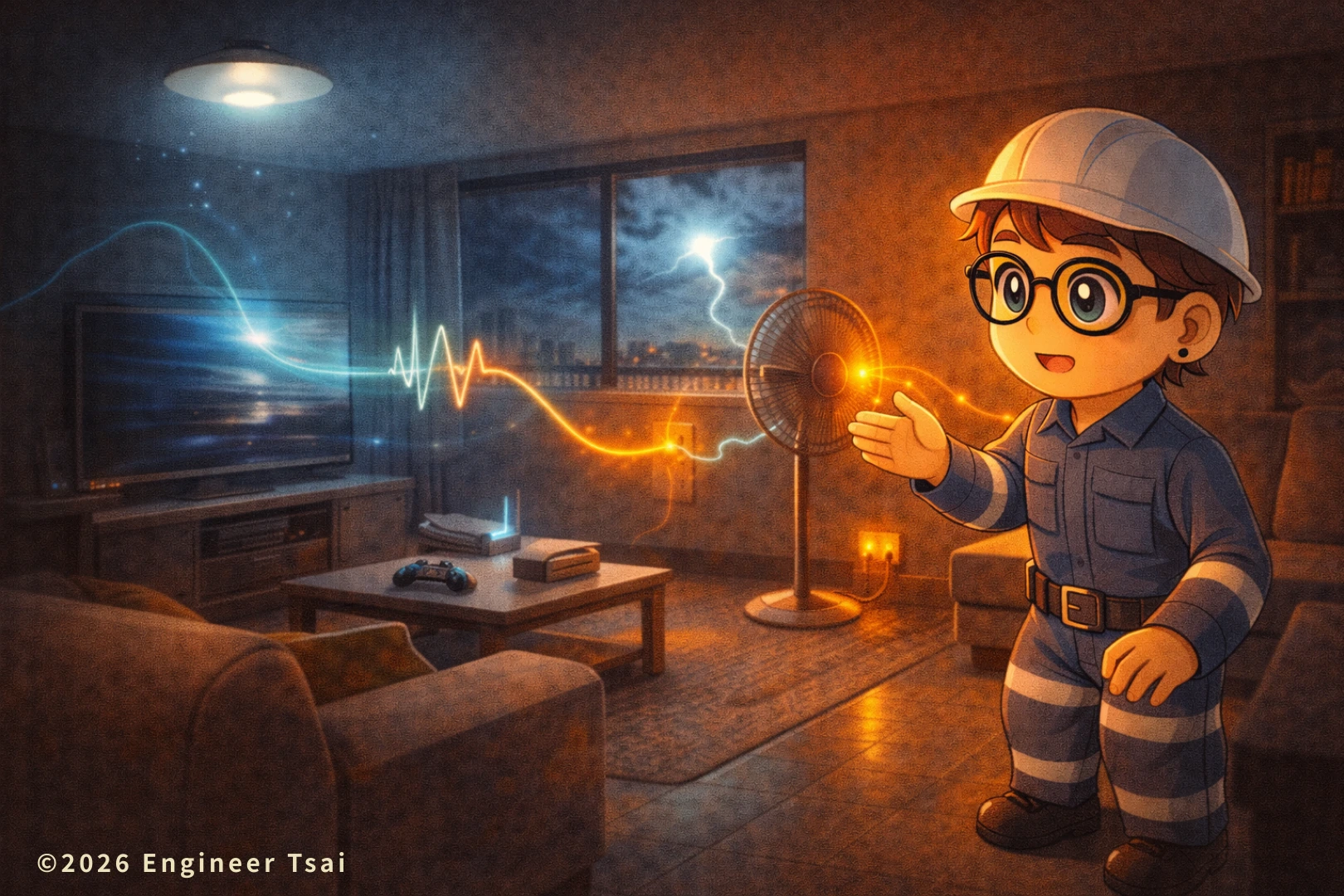
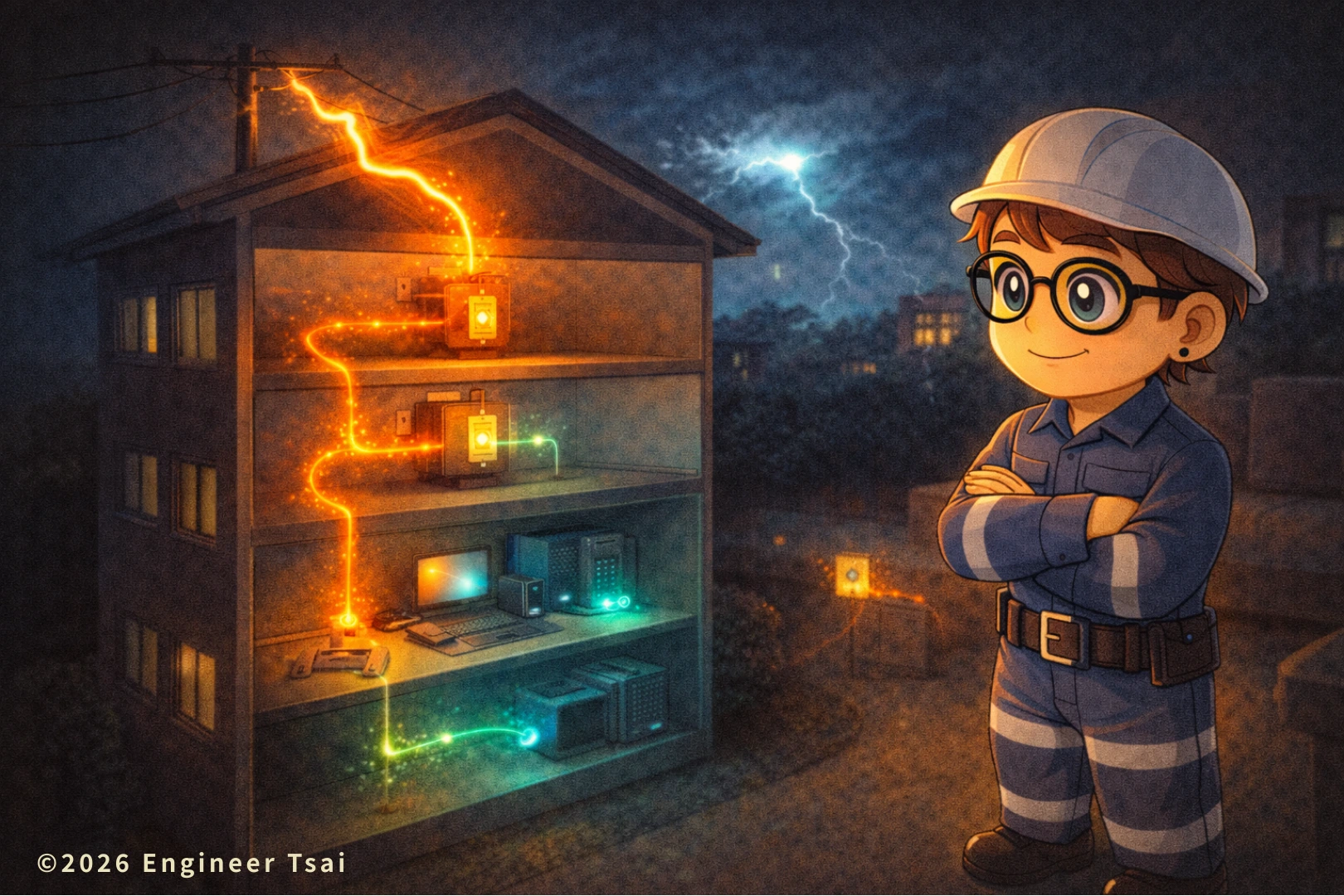
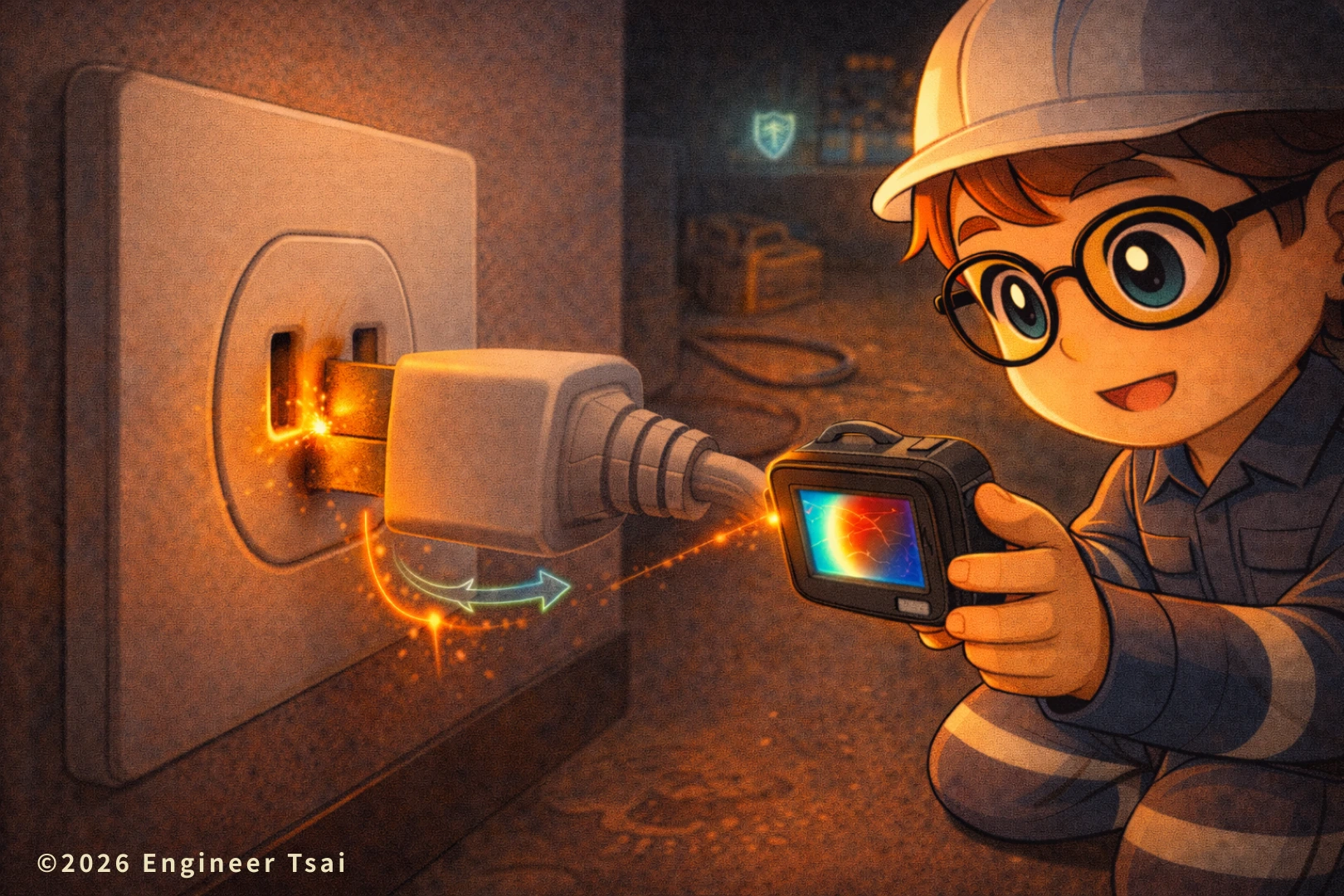
Beginner playlist – Start here and follow along
FAQ – How to use these 6 learning paths
Q1: I’m starting from zero. Which path should I take first?
If all you know about electricity is
“it’s scary” and “it can kill you,”
start with Path 1: What electricity is & basic measurements.
Your first milestone is simple:
get comfortable with the words voltage, current, and power.
Once you can:
roughly understand what your home panel is doing
hear “V, A, W” and not go completely blank
…you’ve basically cleared Path 1 once.
Then you can decide whether to branch into other paths.
Q2: I only have 10 minutes a day. How should I use these paths?
Pick one main path as your “focus path of the month”,
and treat the others as electives.
A simple plan:
Every day (10 minutes): watch one short video or read one small section of a post
Once a week (say, Sunday): spend 30 minutes reviewing and organizing your notes
Example:
This month you focus on Path 1.
Next month, you switch to Path 2.
If you try to “do all six at once,”
you’ll just overload yourself and stall out.
Q3: Which path is most useful for trade school and licensing exams?
If your goal is trade school + license + getting on job sites,
you can prioritize like this:
1. Path 1 – What electricity is & basic measurements
2. Path 3 – Power systems & protection
3. Path 4 – Components & control
4. Path 6 – On-the-job practice (Move-in Lite / Pro)
Path 1 fixes the “I can’t even read the question” problem.
Paths 3 and 4 cover concepts that show up again and again
in both exams and real-world work.
Path 6 shows you how those ideas are actually used on site.
Q4: I’m just an office worker. I’m not sure I really want to switch careers yet. Is this still for me?
Absolutely.
These electrician learning paths are not only for people
who have already quit their jobs.
They’re designed for people who are
“a bit anxious about the future but still exploring.”
You can use them like this:
Start with Paths 1 and 5:
get your home power usage and basic safety under control
Then look at Path 6 and notice how you feel about real field work —
curious or resistant?
Even if you never change careers,
you’ll still walk away with a skill set that can
keep your family safer and your home more reliable.
Q5: I already have some electrical/electronics background. What can I skip?
If you studied electrical/electronic engineering
or have worked in related jobs, you can:
Use Path 1 as a quick review — focus on anything that feels fuzzy
Treat Paths 2, 3, and 4 as “bridges” from classroom theory to field work
Spend extra time on Path 6, imagining how you would handle the real-world cases
You’re not starting from scratch.
You’re translating what you already know
into the language of panelboards, job sites, and home wiring.
Q6: I just want my home to be safe. Which paths should I follow?
Build yourself a “home safety bundle”:
1. Path 1: foundation – voltage, current, power
2. Path 3: tripping, short circuits, grounding, safety protection
3. Path 5: outlets, extension cords, LEDs, meters, and kWh
4. Path 6: use Move-in Lite to actually walk through your home
After these, you’ll know:
which outlets are already overloaded
which breakers you shouldn’t randomly flip
when you can handle an issue yourself
and when you really need a licensed electrician
Q7: Do I have to go through all six paths in order? What if I choose the “wrong” path?
No, you don’t have to follow them in strict order.
Think of this hub as a subway map:
Most people “board the train” at Path 1
You can transfer to Paths 2, 3, or 4 based on your interests
When you want real-world examples, hop over to Path 5
When you’re ready to think about career change or side jobs, ride Path 6
If you start a path and feel zero connection to it, that’s fine.
Step back and return to topics you genuinely care about.
Your motivation will be much stronger.
Q8: How do I know if I’ve really learned a path?
Use this simple three-part check:
1. Can you explain it?
Can you explain the core idea of that path to a friend in your own words?
(Example: “what power factor is,” “what a short circuit is.”)
2. Can you recognize it?
When you see related news, videos, or exam questions,
can you roughly understand what they’re talking about
instead of feeling like it’s all alien?
3. Can you use it at least once?
Finish at least one small task, for example:
Path 1: roughly understand the labels in your panelboard
Path 3: know where your home has GFCI/RCD protection
and which circuits are heavily loaded
Path 5: read your power bill and understand what the kWh and rate mean
If you can check off two out of three,
you can call that path “cleared at the beginner level”
and move on to the next one.