
On this page
Table of contents
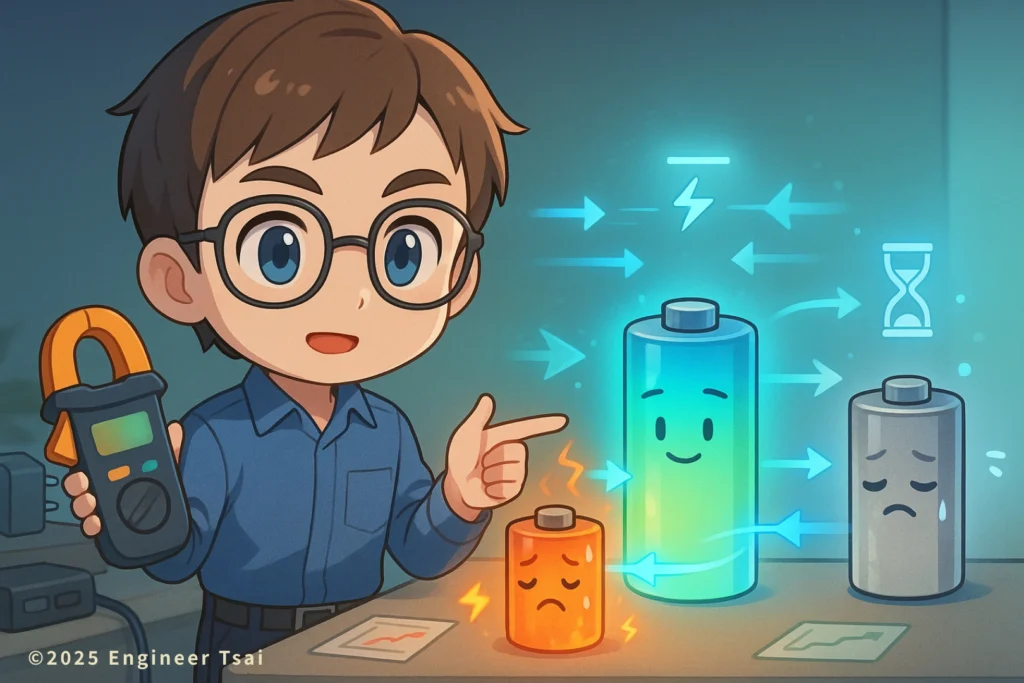
If you’re still building your foundation in basic electricity, start with this beginner-friendly overview: 🔹 “Electricity 101: The Complete Beginner’s Guide to How Power Really Works”
After reading it, the concepts in this article will make a lot more sense.
How current affects battery life is one of the most overlooked parts of everyday tech. Most phones, laptops, power tools, and even EV batteries don’t “suddenly” go bad — they are slowly damaged over time by the way we charge them and the amount of current we push through them.
▶️ Watch now: Why your battery keeps getting worse (and how current is the real culprit)
It’s usually not that your phone is “too old” — it’s that the way current flows in and out has quietly beaten up the battery over time.
High current heats your battery and accelerates aging, but ultra-low current isn’t always better for battery lifespan either.
Intro | Your battery didn’t “get unlucky” — charging current quietly killed it
If you don’t have time to read the whole article, remember these three ideas:
- High current = high heat = faster battery wear-out. Fast charging is convenient, but high-temperature fast charging is one of the worst things you can do for battery lifespan.
- Low current is not automatically “safe”. Keeping a lithium battery sitting at high voltage for a long time, even with gentle current, can also shorten battery life.
- The real question isn’t “how fast,” it’s “is this the right current for this situation?” Using the original or certified charger, avoiding heat, and not stressing the battery while it’s charging are still the most practical, high-impact ways to extend battery life.
Ever had this feeling? You buy a new phone or laptop, and for the first year it feels great. Then suddenly, one day… it just doesn’t last like it used to.
You didn’t drop it. You didn’t drown it. But somehow, the battery went from “all-day” to “where’s my charger?”
Most people blame it on “battery capacity shrinking” or “bad product design.” In reality, the real culprit is often the current you’ve been feeding the battery this whole time.
It’s not just about charging too often or using your device too hard. Over the long term, the size and pattern of charging current has a huge impact on battery health.
This article doesn’t focus on capacity numbers. Instead, we’ll zoom in on current — the “slow killer” that quietly steals years off your battery’s life if you don’t understand how it works.
Chapter 1 | What is current? Understanding current so you can protect battery life
First, let’s clean up a common misunderstanding: voltage is not current. They’re related, but they’re not the same thing.
If you imagine your electrical system as a water pipe:
- Voltage is like water pressure — it’s what pushes the water and decides whether it can move at all.
- Current is the actual flow of water — how much is moving through the pipe per second.
So electrically, current is the rate and amount of charge flowing through a conductor. We measure it in amperes (A).
Does that mean the more current, the better?
Not exactly. Especially for batteries, pushing too much current can be the beginning of real trouble.
Current and heat: the hidden enemy of battery life
Have you ever noticed how your phone gets hot when you charge and play games at the same time?
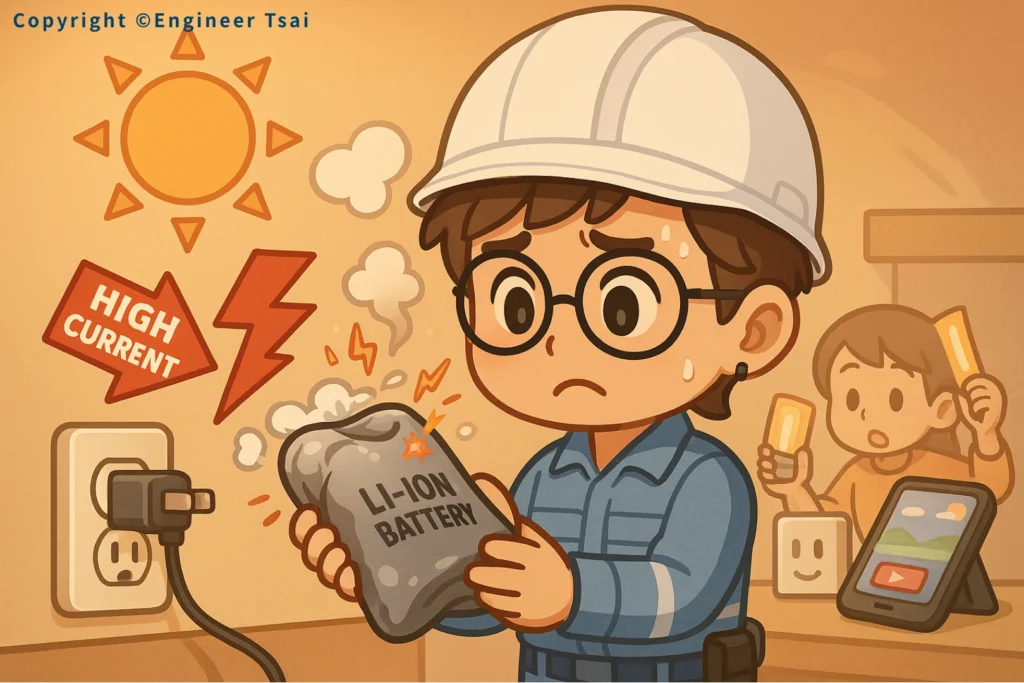
That’s what happens when current gets too high: lots of energy is being converted to heat. This heat speeds up chemical aging inside the battery, and in worst cases, can cause swelling, deformation, or even failure.
In short, if you want to understand how long your battery will stay healthy, you first need to understand how current affects battery life in your specific device.
Chapter 2 | How Current Affects Battery Life: 3 Hidden Ways High Current Damages Your Battery
If we had to summarize the downside of high current in one sentence, it would be this: the impact of current on battery life quietly adds up every time you fast-charge, making your battery a little weaker each day.
Let’s break down exactly how high current wears down a battery.
🔥 Overheating: internal materials get damaged
High current makes the inside of the battery heat up. Over time, that heat causes the active materials on the electrodes to expand, crack, or break apart. In extreme cases, it can trigger thermal runaway — the same kind of event you see in those scary “phone exploded” news stories.
🧯 Electrolyte aging: the main reason your capacity drops
Inside the battery, the electrolyte is the “highway” that ions travel through. High current, especially at high temperature, breaks that highway down faster — the electrolyte decomposes and changes. The result: the battery charges more slowly, fills less, and discharges faster.
🧨 Chemical degradation: cycle life takes a big hit
Lithium-ion batteries store and release energy through chemical reactions. High current pushes those reactions harder than they were designed for, which can cause unwanted side reactions, crystal formation, and loss of active material. That directly reduces the number of healthy charge–discharge cycles you get.
You might think your battery is just “slowly being used up.”
But in many cases, it’s actually being accelerated into old age by repeated high-current charging.
Why is high current so damaging?
What exactly happens when current is too high? Picture forcing a huge volume of water through a narrow pipe. Pressure rises, friction increases, and temperature goes up.
Inside a lithium-ion battery, that translates into several nasty side effects:
- Active material falls off: the chemical coating on the electrodes literally flakes off with repeated heat and stress, reducing capacity.
- SEI layer damage: lithium-ion batteries depend on a thin protective layer called the SEI. High current repeatedly damages and rebuilds that layer, which burns through capacity each time.
- Internal resistance goes up: like arteries hardening in your body, higher internal resistance means more heat for the same current, and worse efficiency overall.
You think fast charging is just “more convenient.” In reality, you might be quietly signing your battery up for early retirement.

Chapter 3 | How Current Affects Battery Life at Low Current Levels: Why “Gentle Charging” Isn’t Always Safe
Some people assume that if “high current is bad,” then turning current way down must be completely safe. Unfortunately, real batteries don’t work that simply. Very low current over a long time can keep the battery sitting at a high state of charge, which creates its own kind of stress.
So what if we go the other direction and say: “I’ll just use super low current. Then I’m safe, right?”
The answer: not always.
⚠️ The hidden problems with low current
- Very long charge times can keep the battery at high voltage for hours and hours. That increases the risk of lithium plating and dendrite formation — tiny metal “spikes” that can pierce the separator and cause internal shorts.
- If the device’s power management isn’t designed well, too little current can cause the system to repeatedly wake up and sleep, adding extra wear in other ways.
So too much current is bad, but too little isn’t automatically good either.
The real goal is to stay in the battery’s “just right” current zone.
Why fast charging gets blamed — but we still love it
Fast charging is addictive. Getting hours of use from a 10-minute top-up feels amazing. But if it’s so risky for battery life, why do manufacturers push it so hard?
The key is modern smart charging protocols (like USB-PD, Qualcomm Quick Charge, VOOC, etc.).
These systems adjust voltage and current on the fly based on the device’s temperature, state of charge, and internal limits. It’s not just blindly blasting full power — it’s “intelligent acceleration.”
But there’s a catch: those protections assume you’re using certified chargers and cables. If you mix in random cheap bricks and mystery cables, the system can misread what’s happening and either overheat or cut out unexpectedly.
So fast charging itself isn’t evil. The real rules are simple: use good hardware, at the right time. Don’t fast-charge while gaming, and don’t fast-charge a phone that’s already roasting in a hot car.
Chapter 4 | Ideal charging current by device: finding the “battery life sweet spot”
Every device has its own “ideal current zone,” just like every person has their own ideal daily water intake. Too little and it doesn’t work right. Too much and you cause damage. Batteries are the same: get the current wrong, and even an expensive battery will wear out early.
📱 Phones and tablets: don’t overstuff them
Most phone chargers start around 5 V at 1–2 A. Fast charging raises either the voltage, the current, or both, to speed things up. Chasing the highest wattage number isn’t always better — especially in a hot environment, that extra speed can cost you months of battery life.
👉 My rule of thumb: for everyday use, stick with the original charger or a certified replacement and let your phone charge at a moderate pace. Save the fastest modes for when you really need them.
🔋 Power banks: smart control is real protection
Many modern power banks can automatically detect your device’s needs and adjust output current accordingly. Those are the ones that really “take care” of your battery instead of just blasting max power all the time.
👉 When shopping, look for phrases like “smart current detection,” “intelligent output,” or “device recognition” in the spec sheet.
🚗 EVs: fast charging is tempting, but use it in moderation
Fast charging an EV is like slamming an energy drink. Sometimes you really need it — road trips, tight schedules — but it’s not something you want to rely on every single day.
👉 For most drivers, the healthiest pattern is slow or Level 2 charging for daily use, with DC fast charging reserved for long highway days or real emergencies — and ideally not during extreme heat or cold.
🛠️ Industrial batteries: design and real-world use must match
For things like UPS systems, telecom backup banks, or large lead-acid or lithium storage systems, there’s often a gap between the current they were designed for and the current they see in real-world use. Too much current leads to overheating; too little can tank efficiency or fail to meet load demands.
👉 On real job sites, you want proper current monitoring and protection. If you only find out something’s wrong when the battery fails during an outage, you’re finding out way too late.
Chapter 5 | Five practical ways to extend battery life
Now that you know how current affects battery life on a technical level, let’s turn that into a few simple habits you can actually follow every day.
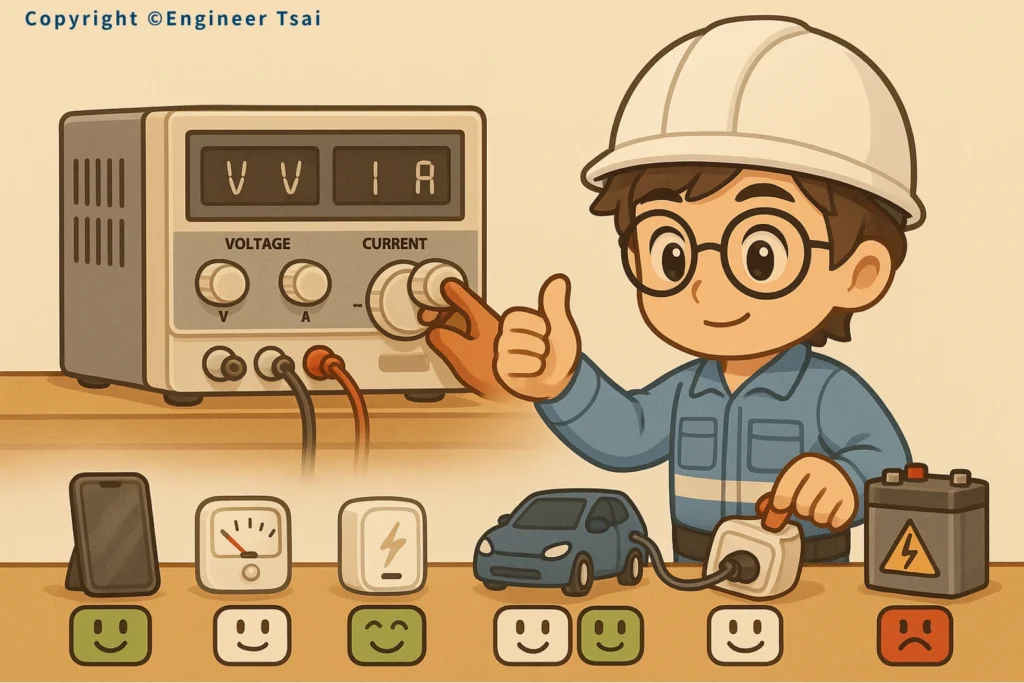
Talking theory is nice, but what actually helps your batteries live longer, starting today? Here are five actions you can take right away.
- Use the right charger
“If it fits, it ships” does not apply to chargers. Stick to original or certified chargers and cables. Random, ultra-cheap bricks can have unstable voltage and current that quietly abuse your battery. - Avoid fast charging in high heat
Don’t fast-charge your phone in a baking-hot car or under a pillow on the couch. High temperature + high current is one of the fastest ways to destroy battery health. - Don’t “max out” your device while charging
Streaming, gaming, or live-streaming while charging means the battery is trying to charge and discharge at the same time. That “tug-of-war” at high temperature is brutal on battery lifespan. Let it charge, then go hard. - Occasionally do a full discharge–charge for calibration
For lithium-ion, this is mainly about helping the system recalibrate the battery meter, not “conditioning” the battery itself. Doing this once every month or two is more than enough. Don’t force it to 0% every day. - Learn the specs and choose sane current levels
Different devices tolerate different current levels. Reading the label — and understanding how charging current affects battery life — helps you avoid “helping” in ways that actually shorten lifespan.
Chapter 6 | The future: how BMS uses current control to protect battery life
The batteries of the future won’t just “take whatever power you give them.” They’ll actively choose what they want. The brain behind that is the BMS (Battery Management System).
🧠 What is a BMS?
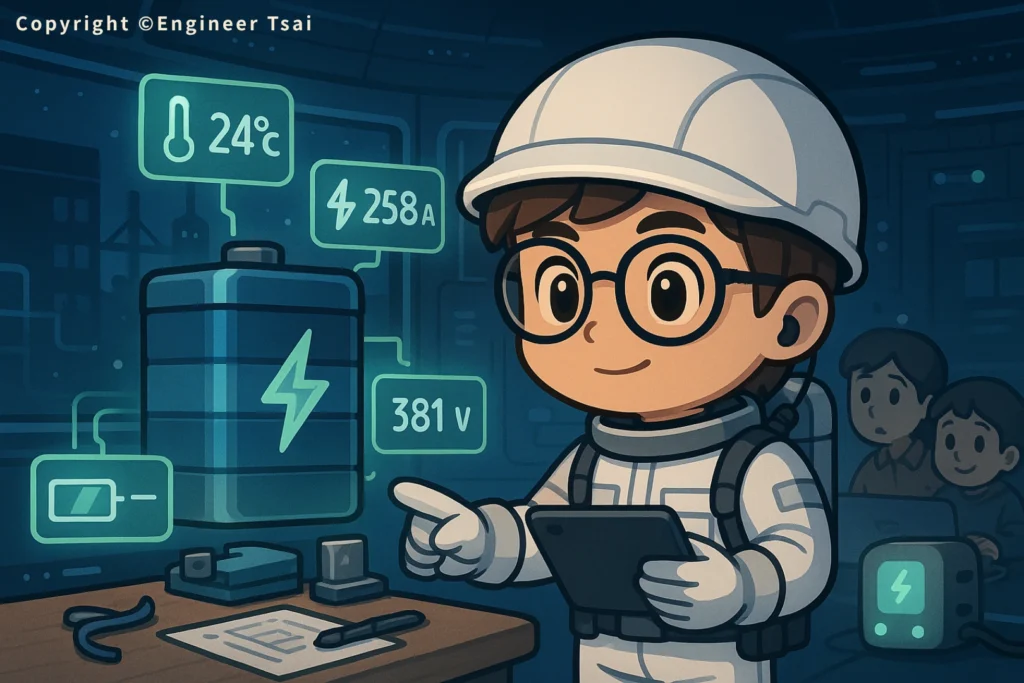
Think of a BMS as the battery’s personal manager. It watches temperature, voltage, current, and state of charge, and then controls how much current goes in or out to keep things safe — preventing overcharge, over-discharge, and overheating.
🍎 What Apple, Tesla and others are doing
Apple’s iPhone already uses “optimized battery charging”: at night it may pause around 80% and only top up to 100% closer to when it thinks you’ll wake up. That’s current management plus behavior learning at work.
Tesla uses battery pre-heating, cell balancing, and current shaping during fast charging to reduce stress on the pack over time.
As battery tech evolves, packs will get even smarter: they’ll predict your patterns and choose different charging curves automatically. In other words, current will become personalized — not just a dumb, fixed number.
From iPhone to EVs: how brands actually protect battery life
On the phone side, Apple’s iOS has long had built-in battery health protection. It quietly slows down charging at high states of charge, and avoids keeping the battery at a hot 100% any longer than it has to.
On the EV side, Tesla’s BMS goes even further. It can pre-condition the battery before fast charging, limit current when the pack is cold or too hot, and even suggest better charging habits through the UI.
Other brands — from Samsung and Huawei to many laptop makers — now offer “battery protection modes” that cap charge at around 80% for people who keep their devices plugged in most of the day.
All of these features have the same core idea: control current and state of charge based on real-world usage.
Manufacturers know very well that what kills batteries isn’t usage itself — it’s using them in the wrong way for too long.
Conclusion: How Current Affects Battery Life in Real Life (and What You Can Control)
To wrap it up: the way current flows into and out of your battery shapes its entire lifespan. It’s rarely a single “bad charge” that kills a battery — it’s the pattern you repeat every day.
Most people focus on battery capacity — the number on the spec sheet. But in day-to-day reality, how charging current affects battery life matters just as much: how hard you push it, at what temperature, and how long you hold it at high charge.
Current is a double-edged sword.
Used in the “just right” zone, it balances efficiency and longevity.
Pushed too high, it overheats your battery and ages it fast.
Turned too low for too long, it can waste time and still create stress behind the scenes.
If you want your batteries to stick with you for years instead of months, start by watching — and respecting — the current you feed them.
From “battery life” to “usage habits”: the new skill we all need
Looking back, we’ve seen that too much current is bad, and too little isn’t automatically good.
The real upgrade we all need is this: learning how to match current and charging style to the device and situation. That kind of “electricity common sense” is becoming part of basic digital literacy.
In the future — with more EVs, home batteries, off-grid systems, and smart homes — every battery will quietly record our habits in its health data.
So if a battery fails early, it’s not always “bad luck.” Sometimes, it’s the battery’s way of saying: “You haven’t really learned how to live with me yet.”
📌 Further reading:
🔹“How Batteries Work: The Hidden Rules Behind Your Power Source”
Before you can extend battery life, it helps to understand how a battery is built and what’s happening inside.
🔹“Current vs. Voltage for DIYers: Unlocking the Basics”
If you keep mixing up current and voltage, this is the quick reset that makes the rest of your electrical learning easier.
🔹“What Is a VFD and How Does It Control Motors?”
From motor control to energy savings, see how smart control of current and frequency changes the whole system.
🔹“Smart Power Management: How to Manage Home Electricity the Smart Way”
When your power and devices work together, you get better efficiency, lower bills, and longer-lasting gear.
For a deeper dive into lithium-ion battery aging, you can check this practical guide from Battery University, which many engineers and hobbyists use as a reference.
The U.S. Department of Energy also has a clear FAQ on EV batteries, charging, and long-term performance for everyday drivers.
❓ FAQ | Battery life and charging habits
Different people use their devices in very different ways, so how current affects battery life for you might not be the same as for a gamer, a ride-share driver, or someone who only checks email twice a day.
Q1 | Does using fast charging all the time dramatically shorten phone battery life?
It does have an impact, but the real question is how you fast-charge. Modern phones and protocols (like USB-PD or Quick Charge) include a lot of built-in protection. As long as you’re using an original or certified charger in normal temperature conditions and only fast-charging occasionally, it’s usually fine. The real battery killers are scenarios like: fast charging in a hot car on a summer day, or gaming hard while fast charging — that’s when you hit the dangerous combo of high heat + high current.
Q2 | Is it better to stop charging at 80% instead of 100%?
In theory, lithium-ion batteries are “happiest” spending most of their time between about 20% and 80%. Staying at 100% for long periods, especially when hot, does accelerate aging. But you don’t have to obsess over it for everyday use. If you’re a typical commuter or office worker, just avoid leaving your phone plugged in at 100% overnight in a hot spot, or running a laptop at 100% 24/7 as a “desktop.” If you’re extremely battery-health-focused, use “80% charge limit” modes when your device offers them, especially for devices that stay plugged in most of the time.
Q3 | How bad is gaming while charging for battery health?
Gaming while charging makes the battery discharge hard and charge hard at the same time. In other words, you’re creating a high-temperature tug-of-war inside the pack. Occasionally doing this is no big deal, but if you game for hours every day while plugged in, you’re very likely to see swelling, rapid capacity loss, or sudden shutdowns much earlier in the battery’s life. A healthier pattern: charge up to around 80–90%, unplug, then game.
Q4 | If I fast-charge my EV almost every day, will the battery die quickly?
Your EV’s BMS (battery management system) is constantly protecting the pack, but the same principles still apply: high current plus high temperature speeds up degradation. Using DC fast charging once in a while on road trips is totally expected. But if you fast-charge almost every day from low state-of-charge up to a very high state-of-charge, you will see more degradation than someone who mostly slow-charges and only fast-charges occasionally. The healthier pattern: use home or workplace Level 2 charging for daily needs, and treat DC fast charging as a powerful backup, not your default.
Q5 | How do I read charger and cable current ratings so I don’t damage my battery?
Start with two places:
① The charger label: You’ll see output ratings like 5V 3A or 9V 2A. As long as these are within what your device officially supports, the charger won’t “force” extra current into the battery beyond what the device requests.
② The cable and certifications: Use cables that clearly list their supported current (for example, “up to 3A” or “up to 5A”) and have proper certifications like USB-IF, MFi for Apple gear, or safety marks such as UL/ETL in North America. Skip the ultra-cheap, no-name bricks and mystery cables. They may not explode on day one, but unstable voltage and current can keep your battery under constant stress behind the scenes.
—
Have you ever killed a battery because of the way you charged it — or found a charging habit that clearly helped your batteries last longer? Share your experience in the comments and let’s learn to be smarter, more battery-friendly power users together.
Read next in this topic
- What Is Electricity ? Everything You Need to Know
- Current & Voltage for DIY Enthusiasts : Unlock the Basics
- AC vs DC: What’s the Difference and Why It Matters (From Phone Charging to 120 V Home Power)
- Basic Parts of an Electric Circuit (Power Source, Wires, Loads)
- Conductor vs Insulator: How Your Home’s Wiring Keeps You from Getting Shocked
- Ohm’s Law Explained: V = IR for 120V Home Circuits
- What Is a Resistor? How It Works, Types, and How to Choose the Right One
- Series vs Parallel Circuits: Simple Guide for Home Wiring (With Formulas & Examples)
- How Electromagnetic Wave and Electricity Shape Modern Technology
- What Is Voltage? Simple Definition, Everyday Examples, and Safety Tips
- What Is a Battery? How It Works, Types, and Everyday Uses Explained
- What Is Ampere’s Law? A Visual Guide to How Current Creates Magnetic Fields
- What Does a Capacitor Do? Uses, Energy Storage, and Everyday Examples
- Types of Electrical Wire: How to Choose the Right One for Your Home
- How AC Power Is Converted to DC: What’s Really Inside Your Phone Charger?
- Electrical Energy Conversion: How Energy Transforms for Everyday Use
- Magnetic Field and Current: The Core Relationship Behind Motors, Generators, and Wireless Charging
- How Do Magnets Work? From Fridge Magnets to Maglev Trains
- What Is Inductance? Inductor Basics for Real-World Circuits
- What Is Impedance? A Plain-Language Guide to Resistance, Inductive Reactance, and Capacitive Reactance