These Electrical Guides turn core electrical concepts into short, field-tested lessons with diagrams and checklists. Start with the basics, then follow a learning path for home wiring, safety, and components. Each Electrical Guide ends with a quick task, a tool list, and a study map so you can practice today and return later with confidence.
First, search a topic. Then, pick one guide and finish a quick task. Afterward, use the checklist to confirm the result. Additionally, each article links to tools and study maps, so you can learn fast and act with confidence.
To start, browse the latest posts. Then, pick one guide and try a single task. Afterward, use the checklist to confirm the result. In addition, each article links to tools and study maps, so you can learn and act with confidence.
All articles
-
Volts, Amps, Ohms and Watts: Four Quantities, One Worked Example
Learn voltage, current, resistance and power through a resistive DC example, unit checks and three worked calculation questions.
-
Follow a Single-Line Diagram: Source, Distribution and Load
Read a single-line diagram as a functional map of source, distribution and load, then check the legend, tags and related schedules.
-
Moving From a House to a Commercial Site? Recheck the Assumptions
Compare residential and commercial electrical work using the actual drawings, system, occupancy, environment and approved task requirements.
-
Jobsite English for Electrical Apprentices: Confirm the Task, Device and Procedure
Practice jobsite English for apprentices with task readbacks, clear equipment questions and the meanings of PPE, SDS, GFCI, AFCI and LOTO.
-
Before Buying Work Boots: Confirm the Site Requirement and the Fit
Choose apprentice work boots after confirming the task’s footwear specification, proper fit, payment category and replacement process.
-
First-Day Electrical Apprentice Orientation: Check In and Find Your Responsible Contacts
Use first-day apprentice orientation to confirm the check-in point, assigned-work contact, safety contact and route for handing over open questions.
-
Tape Measure Practice for Apprentices: Inches, Fractions and Reference Points
Practice tape measure fractions, feet-to-inches conversion and repeat readings from stated reference points with three worked questions.
-
Understand Your Safety Training: Ask, Explain It Back and Resolve the Gap
Request safety training language you understand, explain the instruction back and record the exact step that still needs a trainer’s explanation.
-
Will Your Device Work for Class? An Online-Course Readiness Check
Test your online class setup against the provider’s requirements: lessons, documents, sample submissions, sound and connection-loss support.
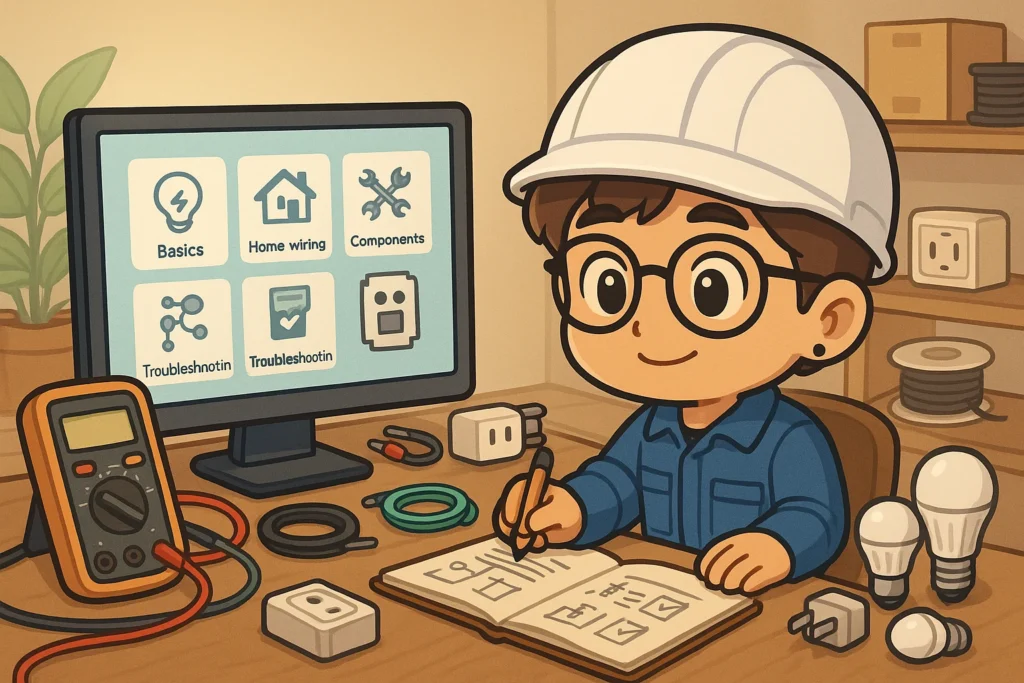
About this Electrical Guides Library
This page is your index for all electrical guides on Tsai Electro. Moreover, you can search and filter tutorials covering basics, home wiring, components, safety and troubleshooting. Because each guide keeps theory short and focuses on steps, diagrams and checklists, you learn faster. As a result, you can move from reading to doing with less guesswork.
Topics These Electrical Guides Cover
Electrical fundamentals · Ohm’s law · AC/DC basics · Home wiring and outlets · Protective devices and relays · Meters and safe measurement · Components and LED drivers · Troubleshooting common faults and practical fixes.
How to Use These Electrical Guides
- First, use the search box or category pills to find a topic.
- Next, open one guide and complete a single task with the checklist.
- Finally, save the tools and diagrams linked inside each article for later jobs.
FAQ
Where should beginners start?
For beginners, start with Tutorials, then the “Electrical Basics” path; after that, move to wiring and safety.
Are these tutorials safe for DIY?
Yes, but always follow safety notes; if unsure, consult a licensed professional.
What tools do I need?
Typically, a non-contact tester, a multimeter, insulated screwdrivers and proper PPE are enough.
What’s the difference between Articles and Tutorials?
In short, Tutorials are step-by-step lessons, whereas Articles are quick reads for specific topics.
Can I use these guides for my home wiring?
However, codes differ by region; therefore, always follow your local electrical code.
Popular paths: