These Electrical Guides turn core electrical concepts into short, field-tested lessons with diagrams and checklists. Start with the basics, then follow a learning path for home wiring, safety, and components. Each Electrical Guide ends with a quick task, a tool list, and a study map so you can practice today and return later with confidence.
First, search a topic. Then, pick one guide and finish a quick task. Afterward, use the checklist to confirm the result. Additionally, each article links to tools and study maps, so you can learn fast and act with confidence.
To start, browse the latest posts. Then, pick one guide and try a single task. Afterward, use the checklist to confirm the result. In addition, each article links to tools and study maps, so you can learn and act with confidence.
All articles
-
Before Moving the Material: Check the Load, Route and Better Method
Build a material handling plan around the load, route, suitable aid, trained help and awkward movements that need the supervisor’s attention.
-
Heat Symptoms at Work: Report Early and Recognize an Emergency
Learn how to report heat illness symptoms, give the work location and recognize signs that require immediate emergency action.
-
Starting Hot Work: Understand Your Heat-Acclimatization Schedule
Discuss a heat acclimatization schedule, calculate the stated exposure time and ask how the employer handles recovery and a return after time…
-
Before You Use That Tool: Inspect, Set Aside and Report Damage
Use an apprentice tool inspection checklist to describe visible damage, report the defect and find the site’s return-to-use decision-maker.
-
Moved or Changed Your Phone? Keep Your TDLR Electrician Contact Details Up to Date
Why a Texas apprentice electrician should keep their address and email current with TDLR, where to update them, and a checklist for…
-
Texas Apprentice Electrician License Expiration Check: Avoid Finding Out Too Late
How long a Texas Apprentice Electrician license lasts, what happens at each stage after it expires, and a quick check that shows…
-
Check Your Apprentice Electrician Hours Against Pay Stubs and Program Records in Texas
How a Texas apprentice electrician can compare their own hours log with pay stubs and apprenticeship program records, and a calculator that…
-
Worked Under More Than One Master Electrician in Texas? Get a Verification From Each One
How Texas experience verification works when several Master Electricians supervised you, and a calculator that shows how many forms and hours are…
-
Get Your Master Electrician’s Experience Verification Before You Change Companies in Texas
Why a Texas apprentice should ask their supervising Master Electrician for a signed Experience Verification Form before leaving a job, and a…
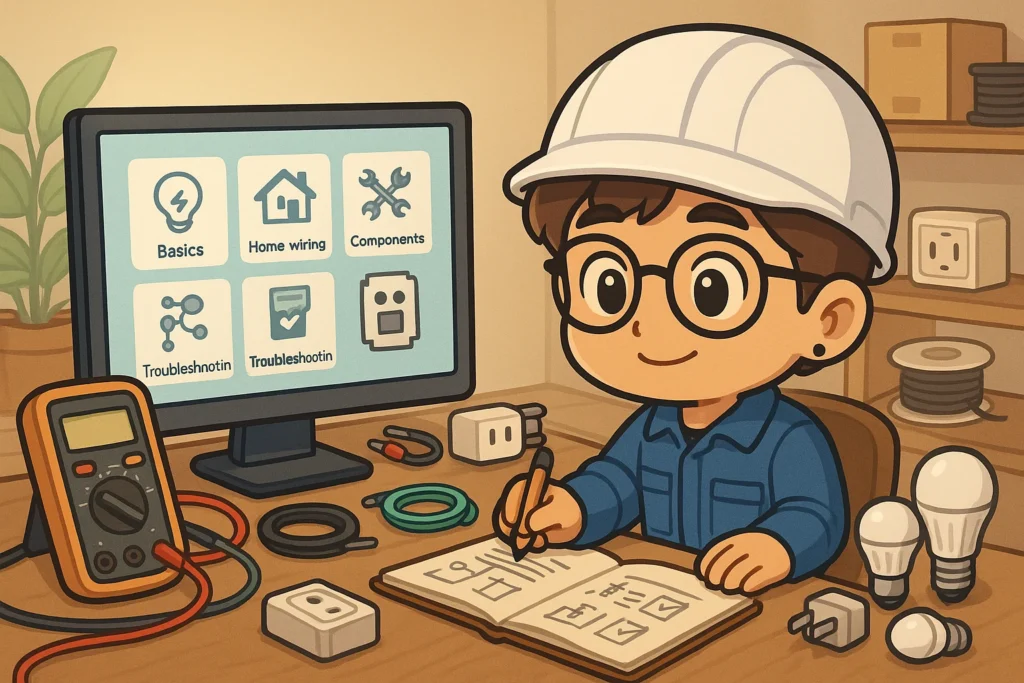
About this Electrical Guides Library
This page is your index for all electrical guides on Tsai Electro. Moreover, you can search and filter tutorials covering basics, home wiring, components, safety and troubleshooting. Because each guide keeps theory short and focuses on steps, diagrams and checklists, you learn faster. As a result, you can move from reading to doing with less guesswork.
Topics These Electrical Guides Cover
Electrical fundamentals · Ohm’s law · AC/DC basics · Home wiring and outlets · Protective devices and relays · Meters and safe measurement · Components and LED drivers · Troubleshooting common faults and practical fixes.
How to Use These Electrical Guides
- First, use the search box or category pills to find a topic.
- Next, open one guide and complete a single task with the checklist.
- Finally, save the tools and diagrams linked inside each article for later jobs.
FAQ
Where should beginners start?
For beginners, start with Tutorials, then the “Electrical Basics” path; after that, move to wiring and safety.
Are these tutorials safe for DIY?
Yes, but always follow safety notes; if unsure, consult a licensed professional.
What tools do I need?
Typically, a non-contact tester, a multimeter, insulated screwdrivers and proper PPE are enough.
What’s the difference between Articles and Tutorials?
In short, Tutorials are step-by-step lessons, whereas Articles are quick reads for specific topics.
Can I use these guides for my home wiring?
However, codes differ by region; therefore, always follow your local electrical code.
Popular paths: